
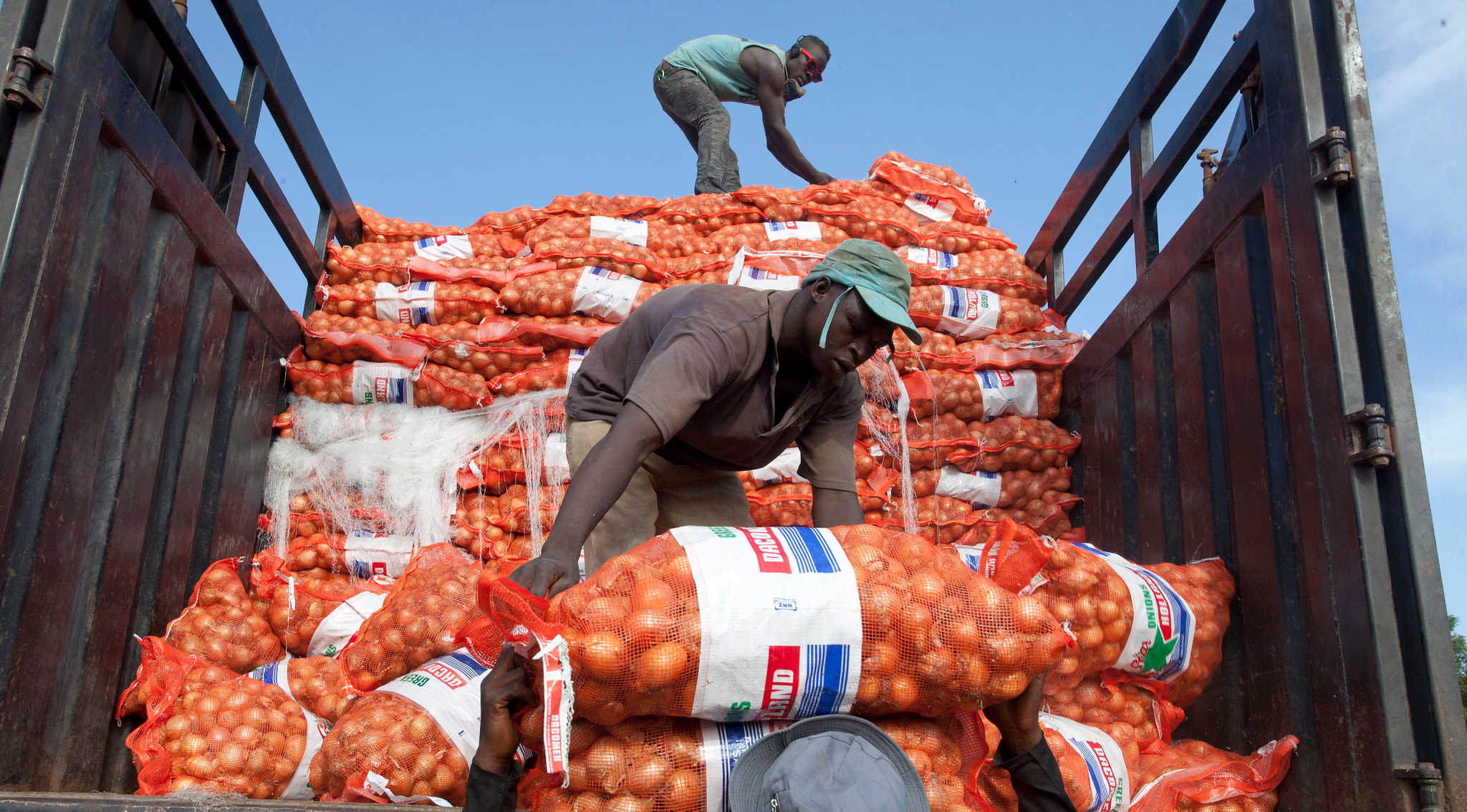
New findings from the Financing Agri-SMEs in Africa initiative show that while investor interest in agricultural innovation remains strong, access to funding has become more selective, competitive, and highly scrutinised, particularly for early-stage enterprises.
BusinessAgri-Food Startups Face Tougher Funding Climate as Investors Tighten Scrutiny Globally
After a decade of rapid capital inflows into food systems innovation, agri-food startups in Nigeria and across the world are now navigating a significantly tougher fundraising environment, as investors become more cautious following business failures, rising interest rates, and broader market corrections.
Agri-SMEs in Africa
The 2026 study, which tracked 175 Africa-focused agri-SME funds, revealed that 117 funds are currently raising capital with a combined target of about $6 billion. However, approximately $4.6 billion of that target is yet to be secured, underscoring a persistent financing gap within Africa’s agricultural sector.
Read also: Sahara and Sahel Observatory official: combating climate change in Africa faces funding challenges (Exclusive)
The report projects that the market could eventually stabilise between $3.2 billion and $4.9 billion, depending on the level of catalytic funding required to attract commercial investors into the space.
A structural shift
It also highlights a structural shift in the investment ecosystem, noting that two-thirds of emerging fund managers are now based in Africa, compared to just 21% in previous generations.
In addition, the share of African-nationality fund managers has risen from 26% to 44%, while women-led funds now account for 32% of those currently fundraising, up from 9% in earlier cycles where funds were fully raised.
Several structural challenges
Despite these gains, the report warns that several structural challenges continue to limit financing for local agribusinesses.
About 86% of funds plan to invest mainly in hard currency, while 94% of the surveyed funds are denominated in dollars or euros. Only 14% intend to deploy capital in local currencies, exposing agribusinesses to exchange rate risks and restricting access to affordable local financing.
Read also: At COP30, African frustration over inadequate funding for TFFF
The study also notes a growing preference for smaller investments, with nearly 60% of targeted capital directed toward deals below $2 million as investors shift focus toward early-stage ventures that were previously underserved by traditional financiers.
According to the report, about $1.15 billion in anchor investments could unlock the broader $6 billion fundraising pipeline through blended finance structures and leverage mechanisms aimed at crowding in private capital.
“Our work is not just about deploying more capital; it is about making capital work better,” the report stated.
F&A NEXT Summit
The tightening investment climate is also being felt beyond Africa. At the F&A NEXT Summit in Wageningen, Netherlands, founders and investors described a more demanding global fundraising environment where capital remains available but scrutiny has increased significantly.
Read also: COP30, landmark report finds countries’ climate agrifood ambitions undermined by funding gaps
Some analysts argue that the current slowdown reflects a normal investment cycle following years of rapid expansion rather than a prolonged crisis.
According to the 2026 Global AgriFoodTech Investment Report by AgFunder, global agrifood tech funding reached $16.2 billion in 2025, remaining largely stable year-on-year but showing major shifts in where capital is flowing. Investment in upstream farm-level technologies rose 7% to $9 billion, while funding for grocery delivery startups has declined sharply from previous peak levels.
Debt financing is also becoming more prominent, accounting for 18.2% of total agrifood tech funding in 2025, its highest level in a decade, reflecting the increasing maturity and revenue stability of some agritech companies.
More details: