
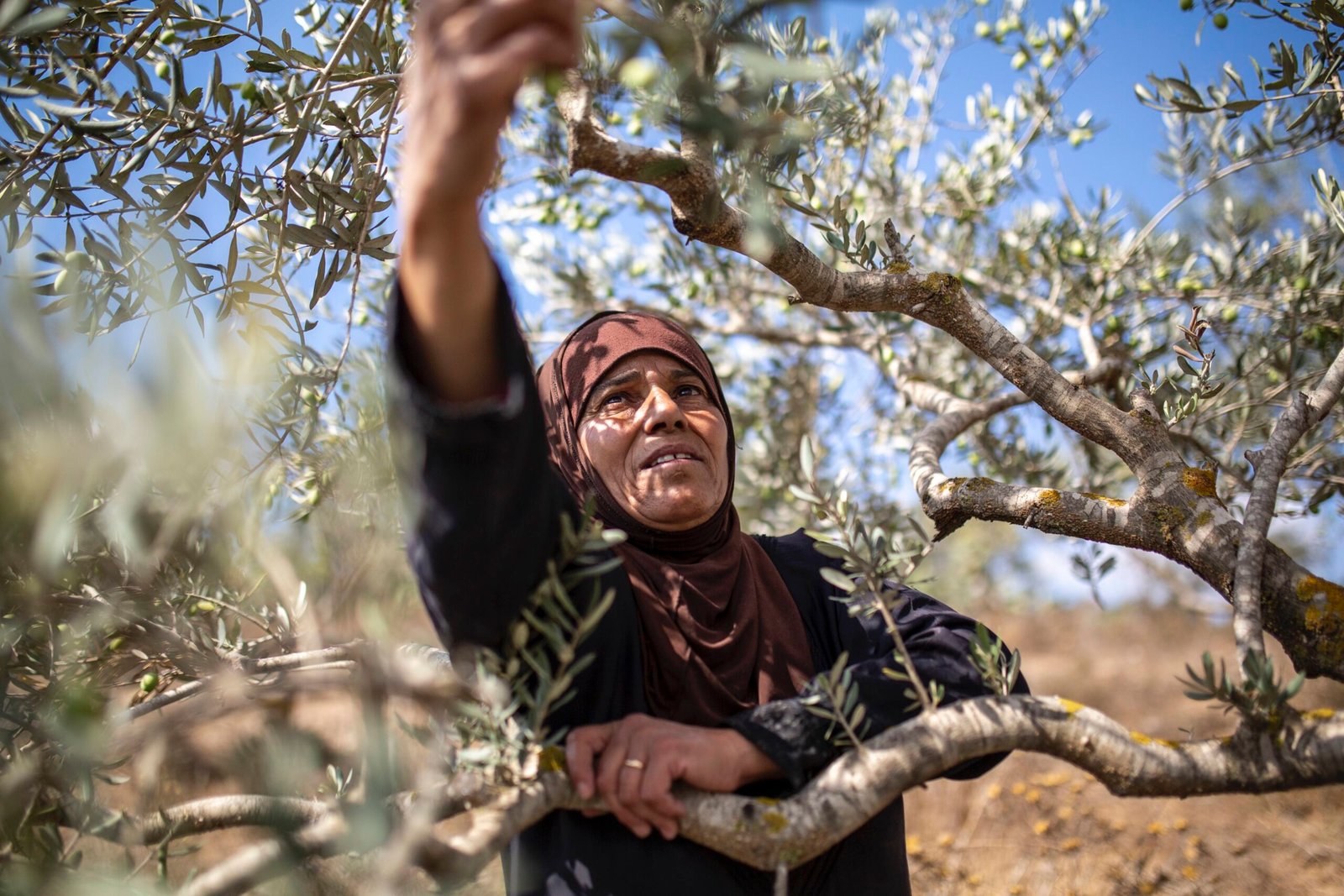
Israel has turned the olive harvest season in occupied Palestine into a death trap for farmers, a crop that represents the sole means of livelihood for more than 60,000 people.
The Palestinian Ministry of Health announced the death of a Palestinian man on Wednesday, October 7, 2026, in an Israeli settler attack while harvesting olives near the village of Burq’ in the occupied West Bank.
The olive harvest season comes amid escalating violence
The attack came amid mounting violence from militant Israeli settlers during the Palestinian olive harvest, which has seen settlers fire live ammunition at farmers, attack journalists, and damage the trees.
The Israeli military said both soldiers and settlers had opened fire in Wednesday’s incident. It said soldiers were responding to a report of a Palestinian throwing a rock at a settler but did not say why the settlers were in the area.
Read also: Only 3% of Gaza’s cropland remains accessible and undamaged
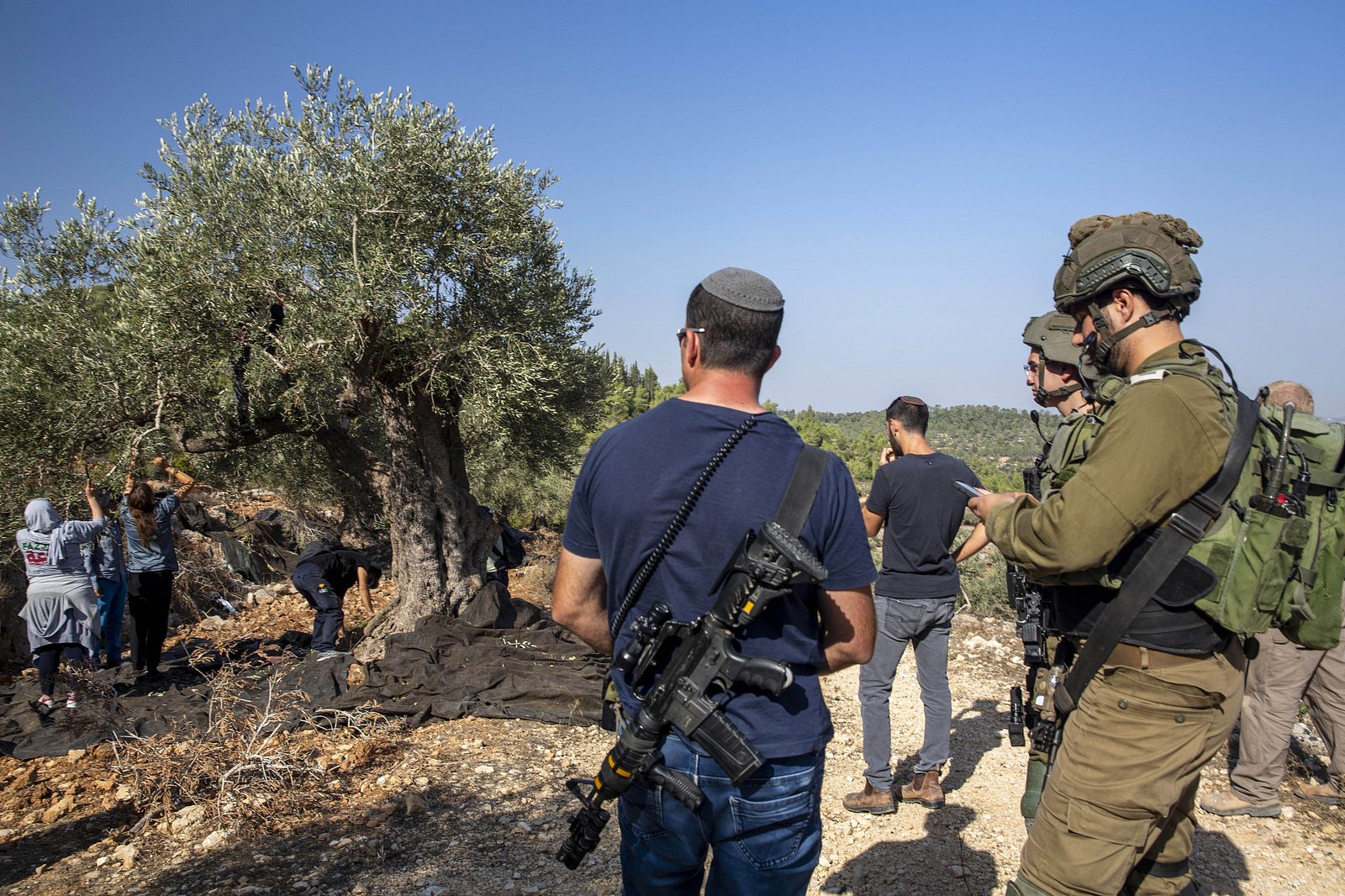
Reuters journalists have witnessed several incidents in the past two weeks in which the Israeli military and settlers have prevented Palestinians from accessing their olive groves.
The Palestinian health ministry identified the dead man as 44-year-old Ali Hassan Yusor al-Bazzari. It was not immediately clear whether the Israeli military or settlers had killed him.
At the funeral following the attack, al-Bazzari’s son Danial, 12, wept over his father’s body, which was later draped in a Palestinian flag.
The olive harvest, which runs from October to November, has come amid a surge of violence in the West Bank, where Israeli settlers have killed at least 30 Palestinians this year, according to the Palestinian Authority.
More than45,000 trees were cut down or damaged
It has also reported that more than 45,000 trees, including more than 26,000 olive trees, were cut down or damaged across the West Bank during the first half of 2026.
The olive trees bear great significance for Palestinians, representing their connection to the land as well as providing a vital source of income, amid mounting economic pressures.
“For us, the olive tree is life,” said Tayseer Al-Sheikh, a 64-year-old Palestinian farmer, from the outskirts of Rantis village, northwest of Ramallah.
Read also: Angelina Jolie between Gaza and Los Angeles, food aid amid war and wildfires
Fear of settler violence prevented him from accessing and tending to his olives for a year. He was only able to access them this harvest while accompanied by activists providing a protective presence.
For Al-Sheikh, the loss is not measured merely by the number of trees or the quantity of oil produced, but also by the changing relationship of people to their land.
“In the past, everyone used to come to the olives, young and old. Today, many people are afraid to reach their lands,” he told Reuters.
National symbol
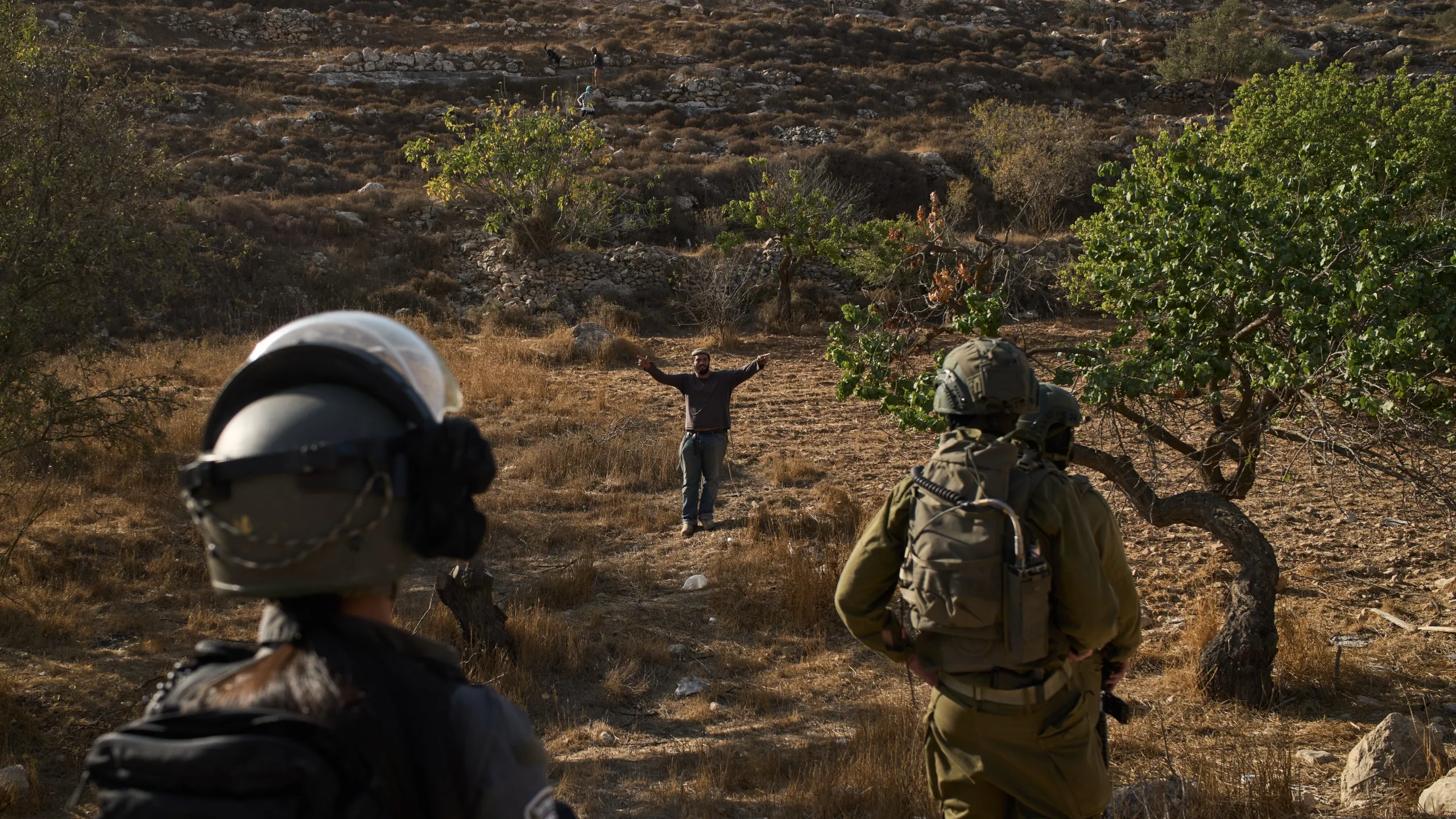
Jerusalem Post said: “The settlers serve the military, and the military serves the settlers. Both share a common goal: to prevent the harvesting and cultivation of agricultural land and to economically harm Palestinians”.
A map of the closure orders for the olive harvest season in the West Bank was published by the Israeli Civil Administration on September 29.
This set of orders, also known as the “coordination mechanism,” covers approximately 90,000 dunams this year – an area equivalent in size to the combined area of Tel Aviv-Jaffa, Ramat Gan, and Herzliya.
In these extensive areas, the military prevents Palestinian landowners from entering their privately owned land without “coordination.” What appears to be yet another routine set of orders issued by the military in territory occupied by Israel is, in fact, a draconian bureaucratic mechanism that completes the violent reality on the ground.
The olive harvest is a national and cultural Palestinian symbol, as well as a significant source of livelihood for tens of thousands of families in the West Bank who depend on it for their livelihood.
Read also: The crises of food security in Gaza persists despite fragile gains (UN Report)
More details: