
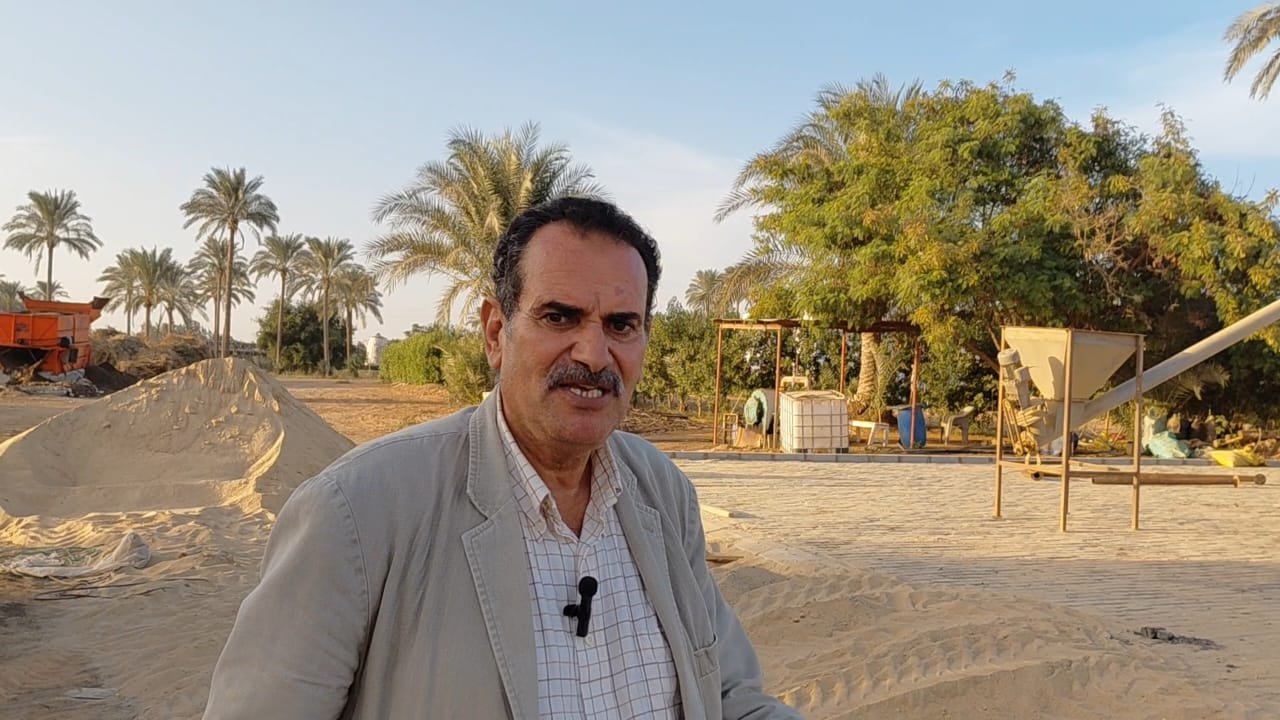
SEKEM’s products are based on organic farming, and therefore, it produces bio-fertilizers. One of the components of these fertilizers is cow manure. The company established a cattle farm for this purpose, and a key feature of this farm is the company’s success in reintroducing the original Egyptian cow, depicted on temple walls, to be a key component alongside other breeds.
During a tour for a group of journalists, including Food & Climate, of SEKEM’s farms in Belbeis, Sharqia Governorate (located about 60 kilometers northeast of Cairo), Gamal ElSayed, the company’s school director, explained the bio-fertilizer production process and how the original Egyptian “Brown” cow breed was reintroduced after being found in Switzerland, due to its disease resistance.
SEKEM is working on implementing a range of agricultural practices aimed at restoring soil vitality and compensating for the elements lost due to the absence of the silt that the Nile River carried after the construction of the High Dam in the 1960s, in addition to reducing water consumption and limiting carbon emissions.
Cows are a crucial component of the organic farming system
ElSayed stated that cows are a crucial component of the organic farming system, not only for milk and meat production but also for utilizing their manure in the production of organic fertilizer, which is used to nourish the soil and improve its fertility.
He explained that cow manure is mixed with plant residues and natural fertilizers, such as herbal extracts, to produce compost. He noted that the company focuses on raising cattle breeds suited to Egyptian conditions, including the Brown breed, which he described as closely related to ancient Egyptian breeds.
He further explained that this breed is distinguished by its ability to adapt to the local environment, produce milk, and resist diseases, in addition to other breeds such as hybrids and Friesians.
Read also: UNEP: SEKEM Egypt is one of the Champions of the Earth in 2024 for Fighting desertification and drought
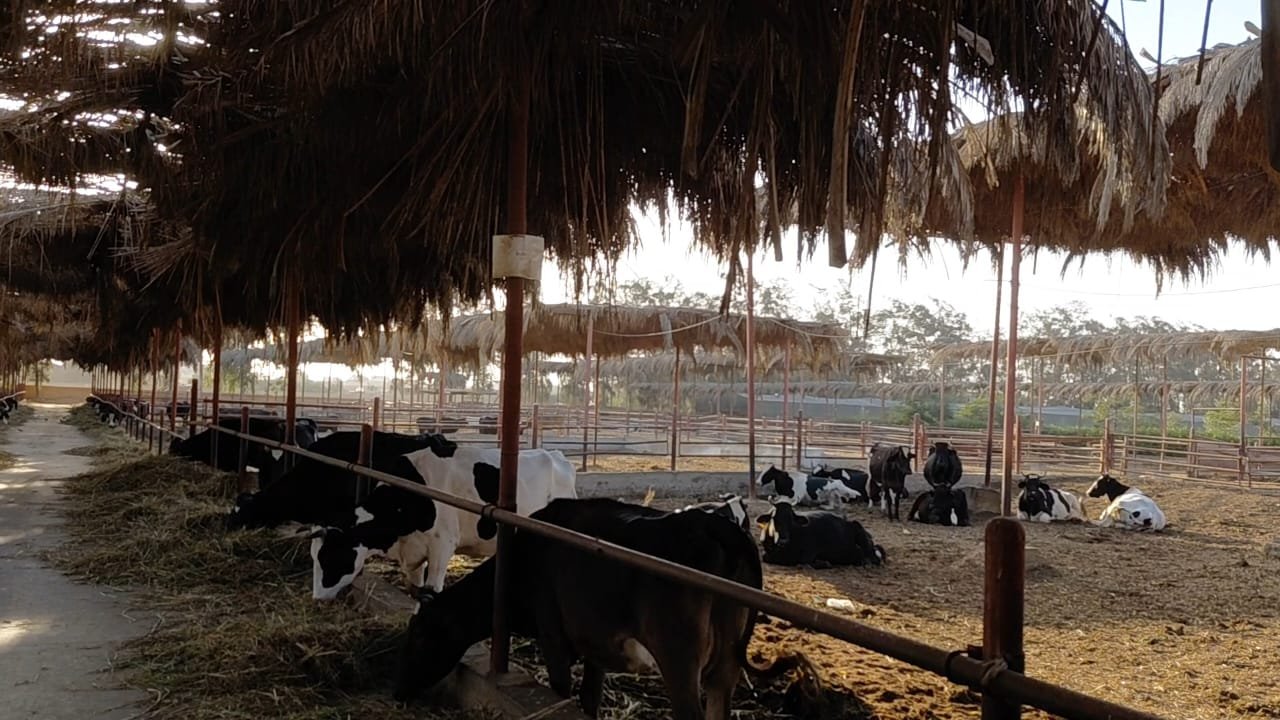
He added that the benefits derived from cows extend beyond milk, meat, and manure products. The horns are used to produce what is known as “horn compost,” by placing a mixture of medicinal herbs inside the horn along with the dung and burying it for six months, following a schedule linked to the lunar cycle.
This product is used in small quantities; one gram is sufficient to activate microorganisms in approximately two cubic meters of compost, thus enhancing the activity of beneficial bacteria.
SEKEM adopts compost as an alternative to clay
ElSayed explained that SEKEM’s compost is made from various organic wastes, including tree branches, straw, plant residues, rice straw, and cow manure. These components are collected in a single pile, and water is added to provide the necessary moisture for bacterial activity.
The pile undergoes regular turning, four times during the first month, three times in the second month, and twice in the third month, until it transforms into humus-like soil with an aromatic scent and rich in microorganisms and nutrients.
Read also: Turning food waste into a climate solution by biomanufacturing
According to ElSayed using compost helps reduce water consumption by 17-20% due to the humus-like soil’s ability to retain moisture and water for a longer period. The temperature of the compost heap reaches between 60 and 70 degrees Celsius during decomposition, which helps eliminate harmful plant seeds while allowing beneficial bacteria to remain active through aerobic decomposition.
He added that converting organic waste into compost also allows for the use of carbon credits, as farmers can receive compensation for sequestering carbon dioxide in the soil instead of burning the waste and releasing emissions.
Bio-phosphate for soil improvement
As part of reducing reliance on chemical inputs, ElSayed pointed to the use of bio-phosphate, which is produced by beneficial bacteria that convert naturally occurring phosphate, which is not easily soluble in water, into a soluble form, instead of chemically treating it with sulfuric acid to produce superphosphate.
He explained that this method allows for the natural addition of phosphate to the soil, preserves beneficial microorganisms, and is less expensive than competing alternatives.
Read also: The beetle war in Sudan, combating water hyacinth by a biological weapon (Interview)
Gamal ElSayed noted that transitioning to pesticide-free and chemical-free agriculture requires a period of 3 to 5 years for the soil to recover and eliminate the effects of previous chemical inputs.
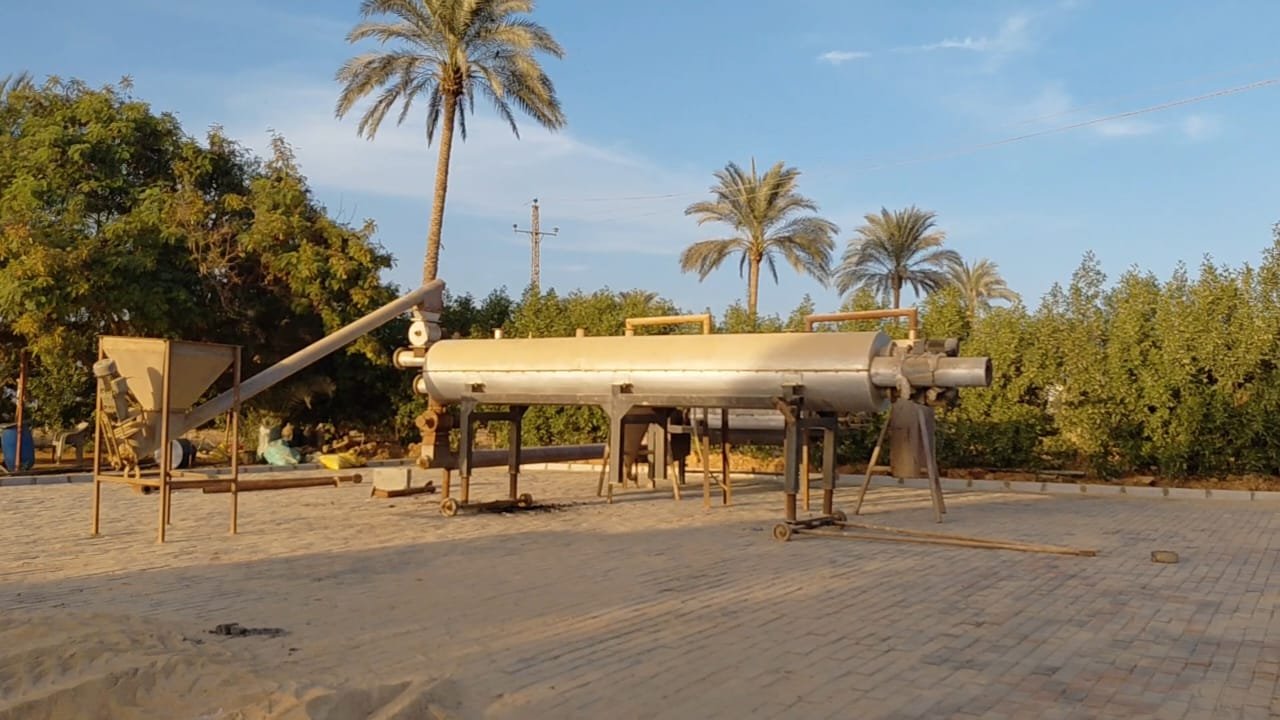
Practices also include: utilizing wood waste and organic materials through the “biochar” technology, which relies on heating waste in the absence of oxygen to convert it into a form of carbon that can be added to the soil, helping to retain carbon within it instead of emitting it into the atmosphere, as well as improving its fertility.