
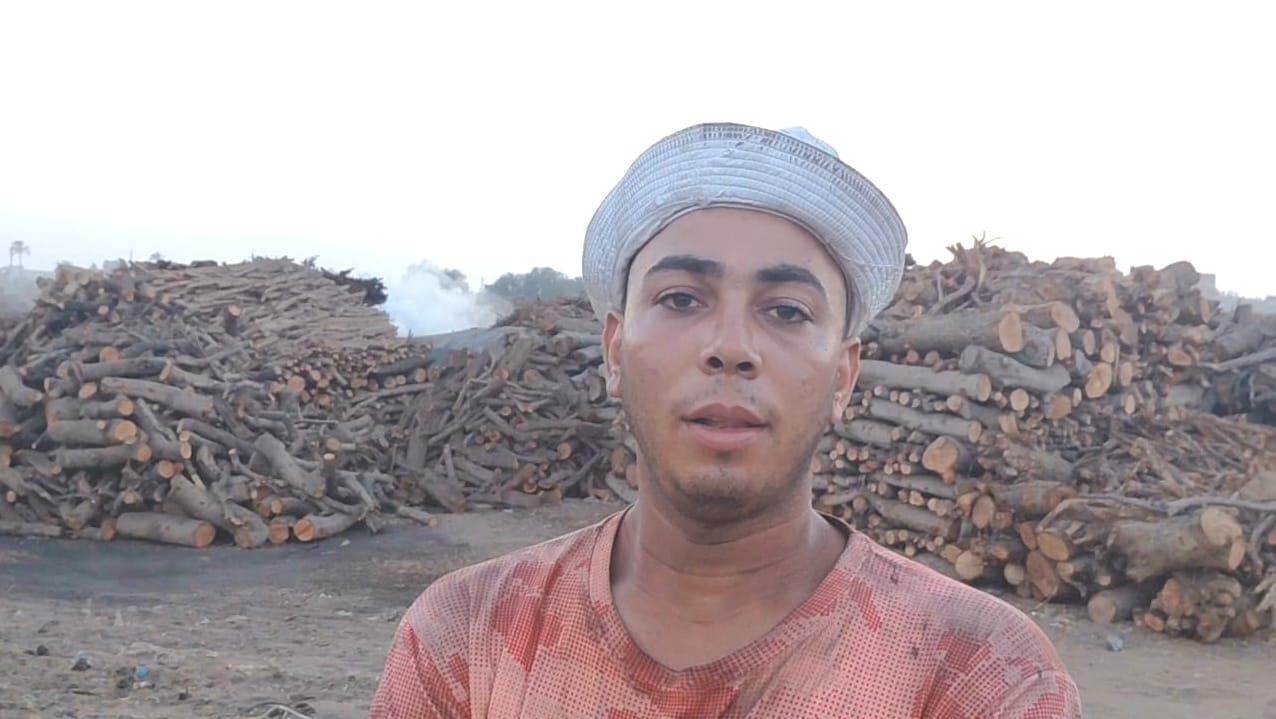
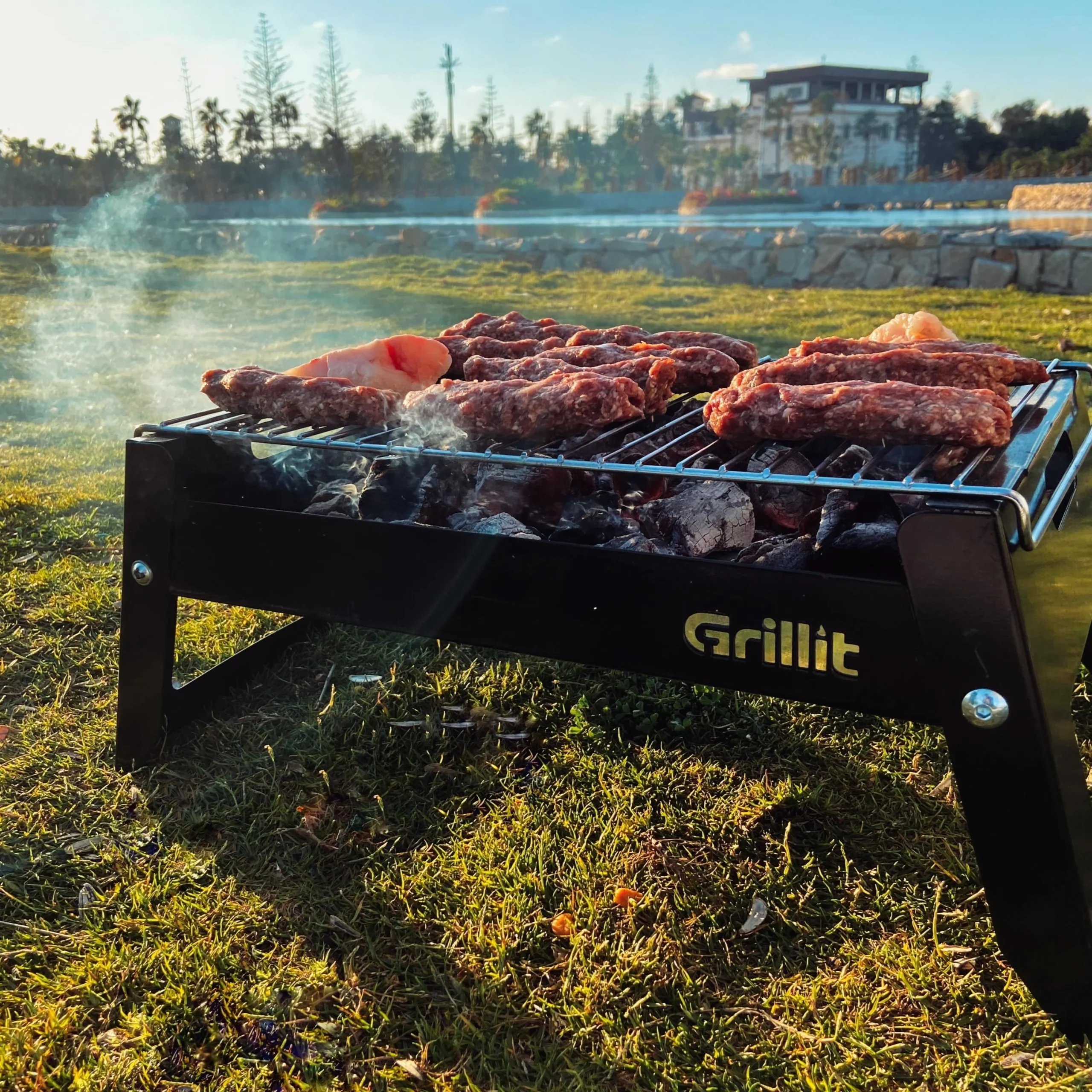
Various types of charcoal are available in Egyptian markets for grilling meat and cooking various dishes, as well as for use in cafes. However, Ibrahim Ahmed, owner of an Egyptian traditional charcoal kiln, warned in an interview with “Food & Climate” that some types of charcoal on the market may contain “potas” and starch, which is artificial charcoal.
Traditional charcoal kilns are widespread in Egypt, which exports significant quantities of charcoal, reaching up to 3% of global production, according to previous statements by government officials. Many of these kilns are located along the Cairo-Ismailia agricultural road, and some even display their products to potential buyers.
The owners of these kilns along the aforementioned road rent agricultural land to produce charcoal using traditional, less expensive methods.
The kilns are usually located on the edge of the land, near the asphalt, to facilitate the transport of the wood and charcoal after burning, the smoke of which is unmistakable to travelers on the road.
Ibrahim Ahmed, who owns an Egyptian traditional charcoal kiln on the Cairo-Ismailia agricultural road, mostly located in the Sharqia Governorate, explained to “Food & Climate” the stages of production and transportation, the types of wood, the best for barbecuing, and the most common type used in cafes for shisha, in the following interview:
To begin, tell us about your work, as an Egyptian traditional charcoal kiln owner?
I work as an accountant, but I also own a charcoal production business. We buy wood from several governorates, including Ismailia and Qalyubia, and then go through several production stages until the charcoal is ready for sale or export.
How does the production process begin?
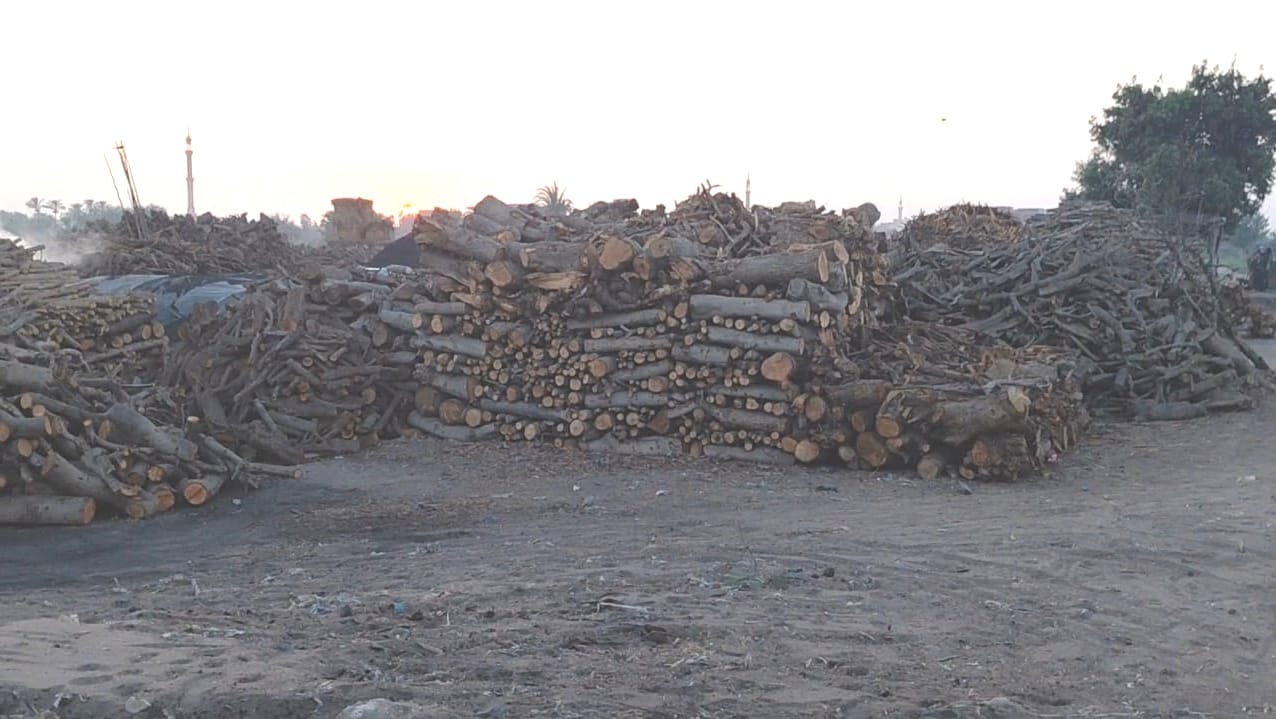
We buy wood from traders and then leave it for 5-6 months to dry thoroughly and remove all moisture. After that, it goes into the kiln for the carbonization process.
Read also: India’s wheat and rice yields down by 10% due to coal-fired power stations
The natural charcoal production process begins by leaving it for up to 6 months before it enters the kilns.
What are the stages of the carbonization process in Egyptian traditional charcoal kiln ?
The wood is arranged inside the kiln in a specific way, then covered with a layer of straw followed by a layer of sand to prevent air from reaching the wood during combustion. A fire is then lit, and the charring process continues for more than 15 days. Finally, the charcoal is extinguished with water and packed into sacks, ready for sale or distribution.
What is the difference between natural and manufactured charcoal?
Natural charcoal is produced directly from wood without the addition of any chemicals, making it safe for use in grilling, cooking, and shisha in cafes. Manufactured charcoal, on the other hand, is made from ground charcoal residue mixed with starch and “potas”.
(“potas”=Petacean hydroxide, or caustic soda, is a very strong and effective chemical used for cleaning and unclogging drains.) Other materials are also added, and the mixture is then shaped into various forms such as cubes, bars, or hexagons.
How can consumers distinguish between the two types?
Artificial charcoal is characterized by its uniformity in shape and size, whether in the form of cubes or sticks. Natural charcoal, on the other hand, does not have uniform pieces; its size and shape vary depending on the type of wood used and the carbonization method.
Natural charcoal is more expensive than industrial charcoal due to its complete reliance on natural wood and its higher production costs. For example, a ton of mango charcoal costs around 12,000 Egyptian pounds, while a ton of orange charcoal costs between 14,000 and 15,000 Egyptian pounds. A ton of industrial charcoal costs approximately 10,000 Egyptian pounds.
Orange charcoal is considered one of the highest qualities and most expensive types, making it more commonly used for export.
There is also charcoal produced from olive wood, which is the best and most expensive, whether for grilling or even for export for home heating. Apple wood charcoal is also available, but it is less common in Egypt.
What are the main uses of natural charcoal?
Natural charcoal is primarily used for grilling and cooking. It is also used in cafes and some restaurants. The types used vary depending on consumer needs and the target markets.
Is the majority of the production exported or sold locally?
Certain types of charcoal are designated for export, most notably orange charcoal due to its high quality. A significant portion of the remaining production is sold locally to meet the needs of restaurants, barbecue shops, and consumers.
Read also: Controlled Environment Agriculture of leafy greens in land-locked countries reduces emissions (A study)
Local demand increases significantly during the summer months, as well as during holidays and special occasions, particularly Eid al-Adha, when barbecues and picnics become more popular, which in turn boosts sales.
What happens to the charcoal residue generated during the production process?
We strive to utilize it as much as possible. Some of it is reused in the carbonization process, while another portion is sold to industrial charcoal factories. These factories grind it, add other materials, shape it, and dry it before releasing it to the market.
What about the environmental effects of smoke from carbonization processes?
Undoubtedly, smoke from carbonization causes some fatigue for workers, so we always try to avoid direct exposure to it as much as possible. Its effects also vary depending on weather conditions; it dissipates more quickly during the summer compared to the winter, when the smoke is denser due to lower temperatures and higher humidity.