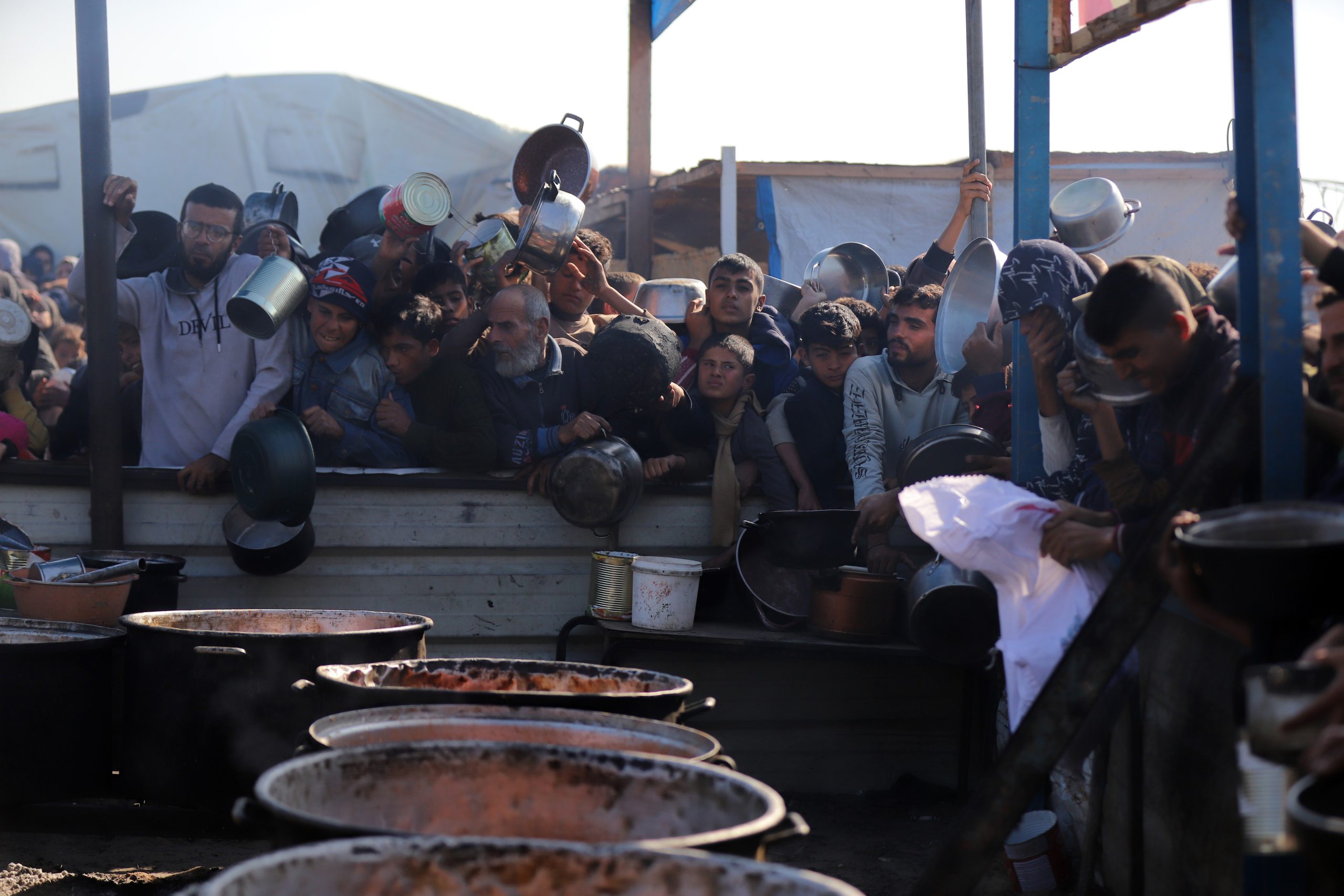
67% of Gaza’s population - are currently experiencing crisis or worse levels of acute food insecurity
New analysis released today shows improvements in food security in Gaza Strip. However, the United Nations cautioned that the progress, driven largely by expanded access to humanitarian food, nutrition, agricultural and health assistance, remains fragile.
While access into Gaza has improved, only one crossing – Kerem Shalom/ Abu Salem – in the south of Gaza remains open, limiting the flow of essential goods that can assist with recovery and leaving the majority of the population dependent on humanitarian aid.
The people of Gaza are still struggling to recover their livelihoods, local food systems and essential services.
According to the report that Food & Climate received, The Food and Agriculture Organization of the United Nations (FAO), UNICEF, and the United Nations World Food Programme (WFP) highlighted that improvements in food security and nutrition indicators show how quickly conditions can improve when humanitarian response and commercial activity are scaled-up. However, the agencies warned that families in Gaza are still struggling to meet basic needs and improvements could be reversed quickly without sustained humanitarian aid, private sector reactivation, funding, and investment in recovery.
Child nutrition and food security in Gaza
The latest Integrated Food Security Phase Classification (IPC) analysis outlined populations in greatest need and showed improvements in child nutrition and food security in Gaza since December 2025:
An estimated 1.4 million people – 67% of Gaza’s population – are currently experiencing crisis or worse levels of acute food insecurity (IPC Phase 3 or above). This is a decrease from 1.6 million people, or 77% of the population, at the end of last year.
An estimated 212,000 people remain in Emergency conditions (IPC Phase 4), many of them living in areas near the Israeli military-controlled line where access to humanitarian aid and services remains particularly challenging.
Four governorates (North Gaza, Gaza, Deir Al-Balah and Khan Younis) are expected to face “alert” levels of malnutrition (IPC phase 2). Some areas near the “yellow line” remained inaccessible to analysts during the survey period, leaving insufficient data for a classification.
A significant scale-up in food and nutrition assistance has taken place since the ceasefire agreement was reached in October 2025. In May 2026 alone:
Food parcels reached around 1.5 million people
Multipurpose cash assistance peaked at around 700 000 people
Nutrition support reached 60% of children under-5 with access to acute malnutrition treatment also increasing.
This compares to September 2025, when around 500,000 people were reached with some form of food assistance and nutrition coverage for children under-5 was less than 1 percent. Immediate improvements in food security were observed following the scale-up and this IPC confirms the trend has continued. Despite these gains, food rations remain insufficient in quantity, quality and dietary diversity. Compounding the problem, commercial imports of fresh produce and proteins are inconsistent.
Rapid expansion of nutrition prevention programmes
An overall improvement in malnutrition rates is largely attributable to the rapid expansion of nutrition prevention programmes, alongside increased access to treatment for severe and moderate malnutrition. These gains remain highly dependent on sustained humanitarian assistance and have occurred despite continued shortages of nutritious foods, recurrent disease outbreaks, limited access to safe water and sanitation, and the near collapse of livelihoods. Some 74,000 children are still expected to require treatment for acute malnutrition over the coming year, with approximately 25,000 pregnant and breastfeeding women requiring nutrition support in the same period.
Local food production can be restored
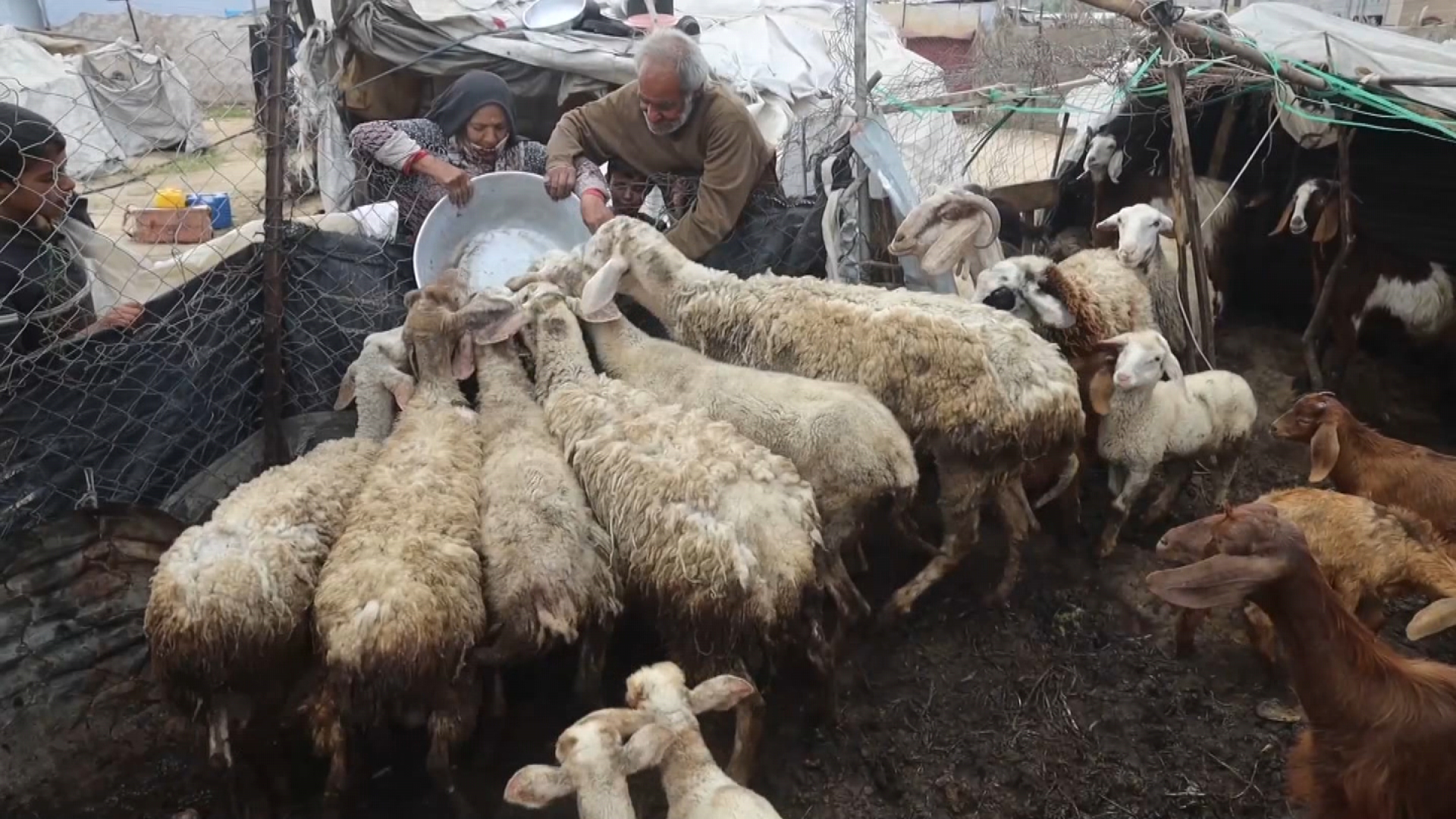
While any significant recovery of livelihoods or broader economic activity has yet to begin, there are early signs that local food production can be restored where farmers and herders are able to access cropland, agricultural inputs, productive assets, veterinary support and other essential services such as energy for irrigation. This is already evident in the livestock sector, where sheep inventories have increased by 33% in areas where support has been sustained.
However, this can only go so far without the removal of restrictions on what enters the Strip. More than 70% of Gaza’s cropland is not accessible, placing it out of reach regardless of damage or input access, and only 3% is currently usable.
Recovery cannot happen at scale while this land remains inaccessible and while there are continued restrictions on the commercial import and humanitarian delivery of agricultural inputs. This includes the import of non-dual-use agricultural inputs, such as seeds, organic fertilizers, fertilized eggs and small animals, for both commercial and humanitarian actors. Sea access also remains prohibited, limiting people’s ability to produce food, earn an income and rebuild their lives.