
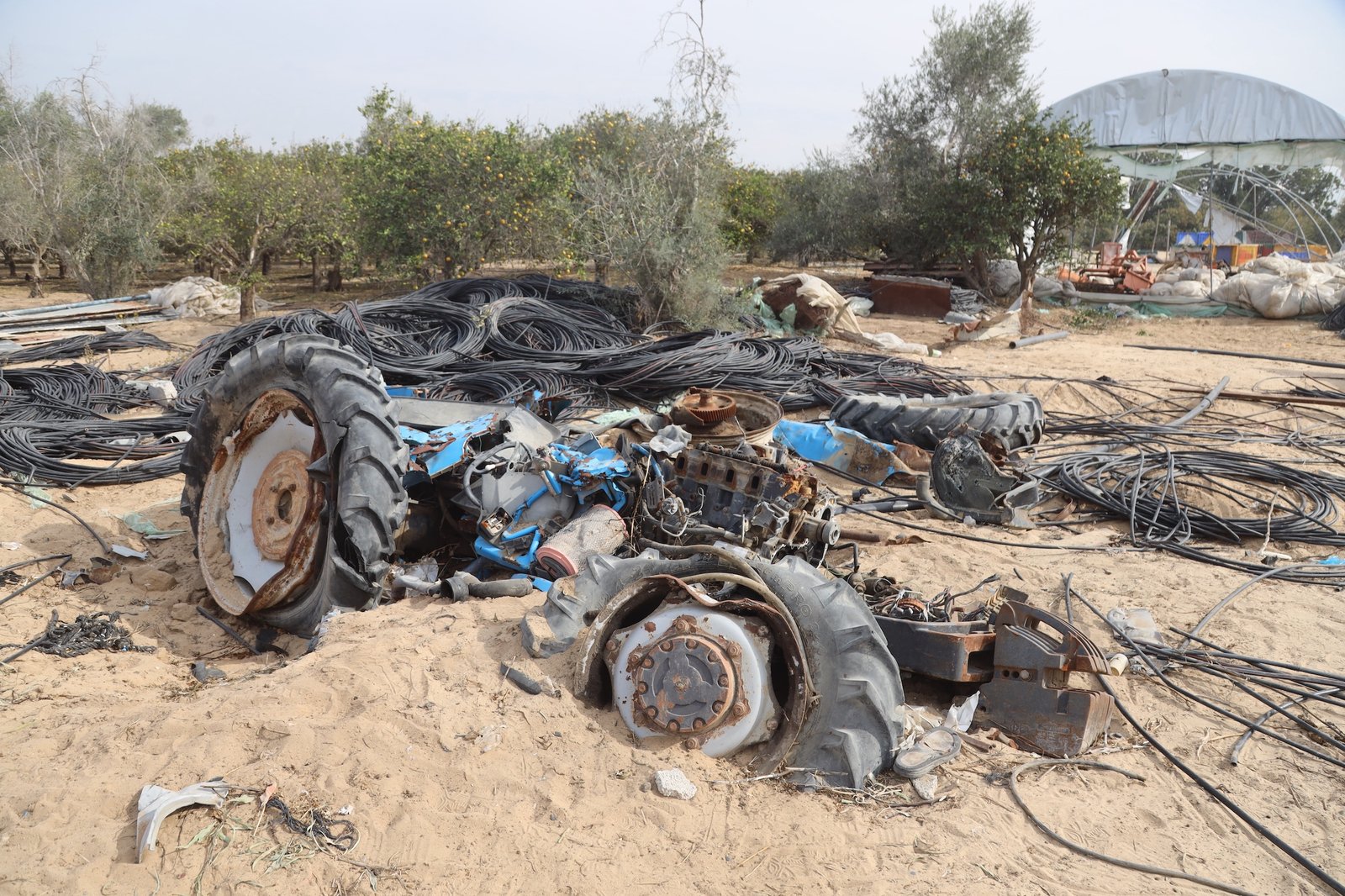
Only 3 percent of the Gaza’s cropland remains both accessible and undamaged, according to a new geospatial assessment released by the Food and Agriculture Organization of the United Nations (FAO) and the United Nations Satellite Centre (UNOSAT).
A report issued on Tuesday, August 18, 2026, and received by Food & Climate, indicated that as of June 24, 2026, the area of arable land was 4,091 hectares, equivalent to 27% of the total agricultural land in Gaza.
However, only 448 hectares were arable and undamaged. The remaining 3,643 hectares, which were arable, were damaged and require rehabilitation before cultivation can resume.
Gaza’s cropland damaged since the ceasefire agreement
Since October 2025, the area of arable and undamaged land in the Gaza Strip has decreased from 601 hectares to 448 hectares, a loss of 153 hectares, or 25.5%. The Deir al-Balah and Khan Younis areas recorded the largest decreases in this area.
It is worth noting that the first phase of the ceasefire agreement in the Gaza Strip, brokered by Egypt, Qatar, and the United States, came into effect on October 10, 2025.
Read also: The crises of food security in Gaza persists despite fragile gains (UN Report)
This decline reflects the difficulty of accessing of Gaza’s cropland since the ceasefire, primarily due to the westward expansion of the so-called “yellow line,” which separates the ceasefire zone from the area under Israeli military control.
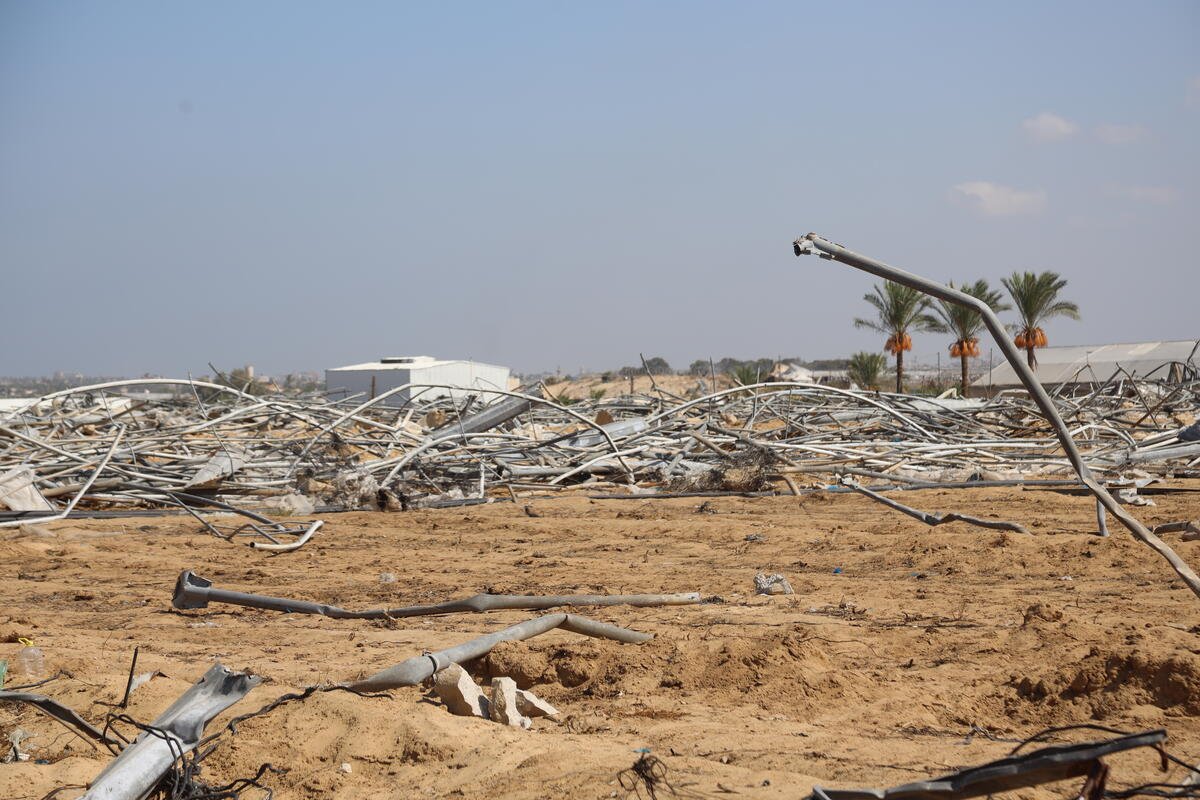
Greenhouse decline
The area of greenhouses has decreased compared to the October 2025 assessment.
The assessment of Gaza’s cropland concluded that 224 hectares, or 16.6% of the greenhouse area, remain arable and undamaged, down from 226 hectares, or 17.3%, in October 2025. Deir al-Balah recorded the largest decrease.
The findings show that reduced access—rather than additional physical damage—is the primary driver of the decline in agricultural land availability since October 2025.
Rafah is the most affected in terms of accessibility, with 97.2% of agricultural land and 98.4% of greenhouse area inaccessible.
The most widespread physical damage remains concentrated in northern Gaza and Gaza Governorate.
Read also: Angelina Jolie between Gaza and Los Angeles, food aid amid war and wildfires
“This latest assessment paints a grim picture of the ongoing deterioration of the agricultural sector in Gaza,” said Rein Poulsen, Director of the FAO’s Emergency and Resilience Office. “The loss of access to agricultural land is reducing the area available for farmers to produce food, even in areas where agricultural assets remain intact.”
He added: “Gaza’s farmers have repeatedly demonstrated that when land and agricultural inputs are available, production is possible. But without urgent action to restore safe access and provide farmers with the necessary support, the prospects for restoring local food production will continue to diminish.”
Restrictions on the import and distribution of essential agricultural inputs are hindering the recovery of agricultural activity in Gaza, according to a report released today.
With limited access to agricultural land in Gaza, farmers face severe shortages of seeds, fertilizers, irrigation equipment, fuel, and other production inputs.
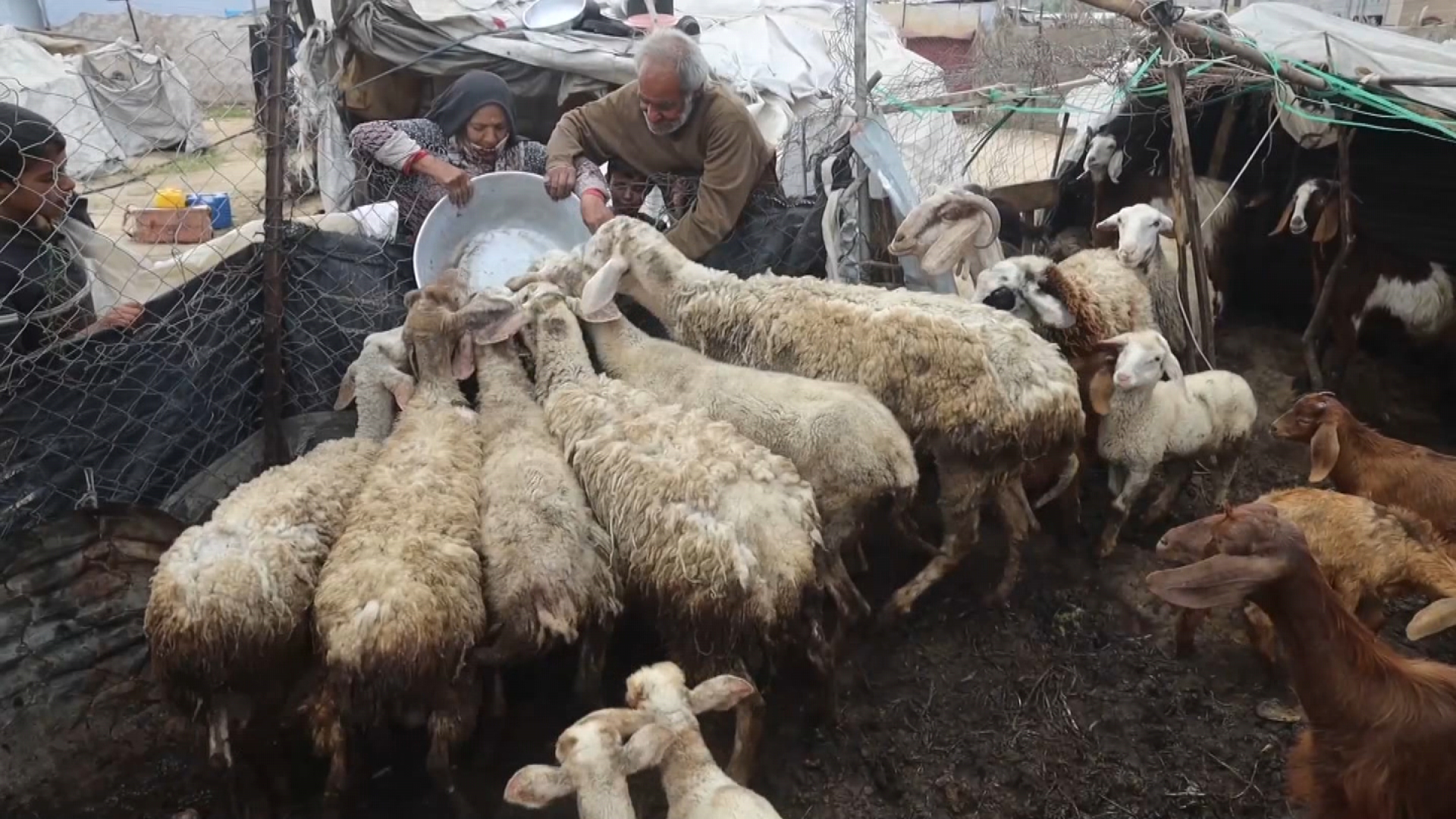
Livestock farmers struggle to access feed
Livestock farmers also face difficulties in accessing feed, veterinary supplies, and animal health services.
The FAO’s ability to import feed and other materials needed to protect and rehabilitate herds remains inconsistent, and the limited agricultural inputs available in Gaza are often of poor quality and prohibitively expensive for farming families.
Before the escalation of hostilities in October 2023, agriculture accounted for approximately 10% of Gaza’s economy, providing livelihoods for more than 560,000 people through crop production, livestock farming, and fishing.
Read also: Only 1.5 % of cropland in Gaza is accessible and not damaged (UN)
The FAO calls for urgent and sustained action to restore agricultural production in Gaza by ensuring farmers’ safe access to their land, facilitating the entry of essential agricultural inputs—including commercial imports of non-dual-use materials—and supporting the rehabilitation of damaged farmland.
Safe and unhindered access to farmland, reliable access to production inputs, and sustainable investment are essential for rebuilding Gaza’s agricultural food system, boosting local food production, and restoring agricultural livelihoods.
More details: