
Egyptian Technoland has converted a system used for home cooling in South Africa into rain irrigation in Egypt, making it available in the country for the first time.
According to Eslam Omran, the company’s founder and CEO, the system offers significant advantages, most notably reducing water consumption by up to 40%.
Omran stated that rain irrigation is one of the innovative solutions that has begun to find its way into the Egyptian market, having proven its ability to conserve water, reduce operating costs, and improve crop growth and increase productivity.
In his interview with “Food & Climate,” on the sidelines of the (Agritech 2026) Forum and Exhibition, which concluded a week ago in Cairo, Omran added that rain irrigation reduces water consumption by 30-40% compared to other modern irrigation systems, while savings exceed 70% compared to flood irrigation.
The CEO of Egyptian Technoland pointed out that most farmers currently prefer the traditional systems they are accustomed to. He elaborated further information in the following interview:
What is the rain irrigation system that Egyptian Technoland offers to the country?
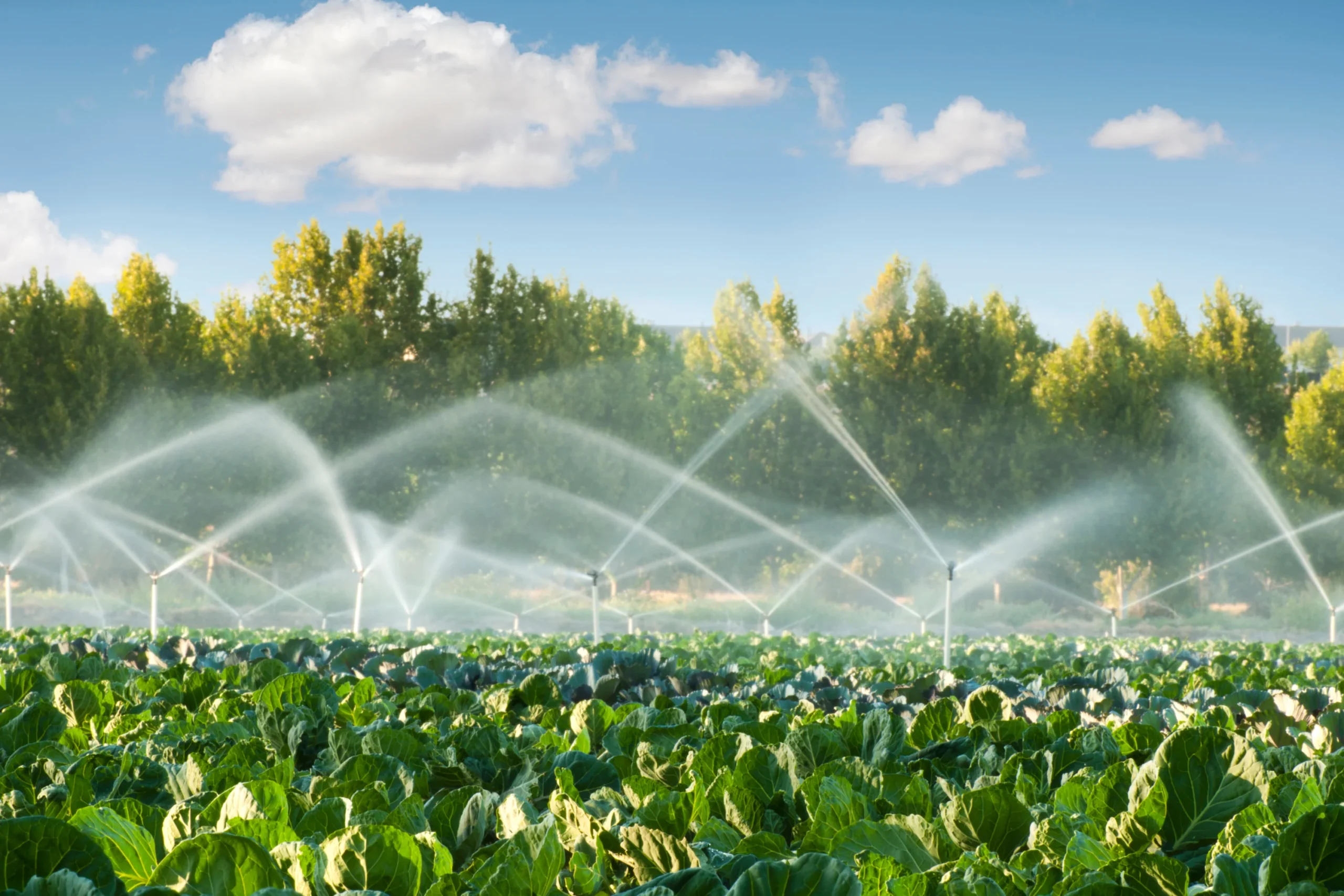
Rain irrigation is a sustainable irrigation system that mimics natural rainfall. It allows complete control over the amount of water reaching the plants, achieving maximum water use efficiency.
This saves 30-40% of water consumption compared to other modern irrigation systems, while savings exceed 70% compared to flood irrigation. This makes it suitable for addressing water scarcity challenges, especially in areas that rely on non-renewable groundwater.
Read also: Irrigation efficiency improvement project reduces water consumption in Egypt by 30%
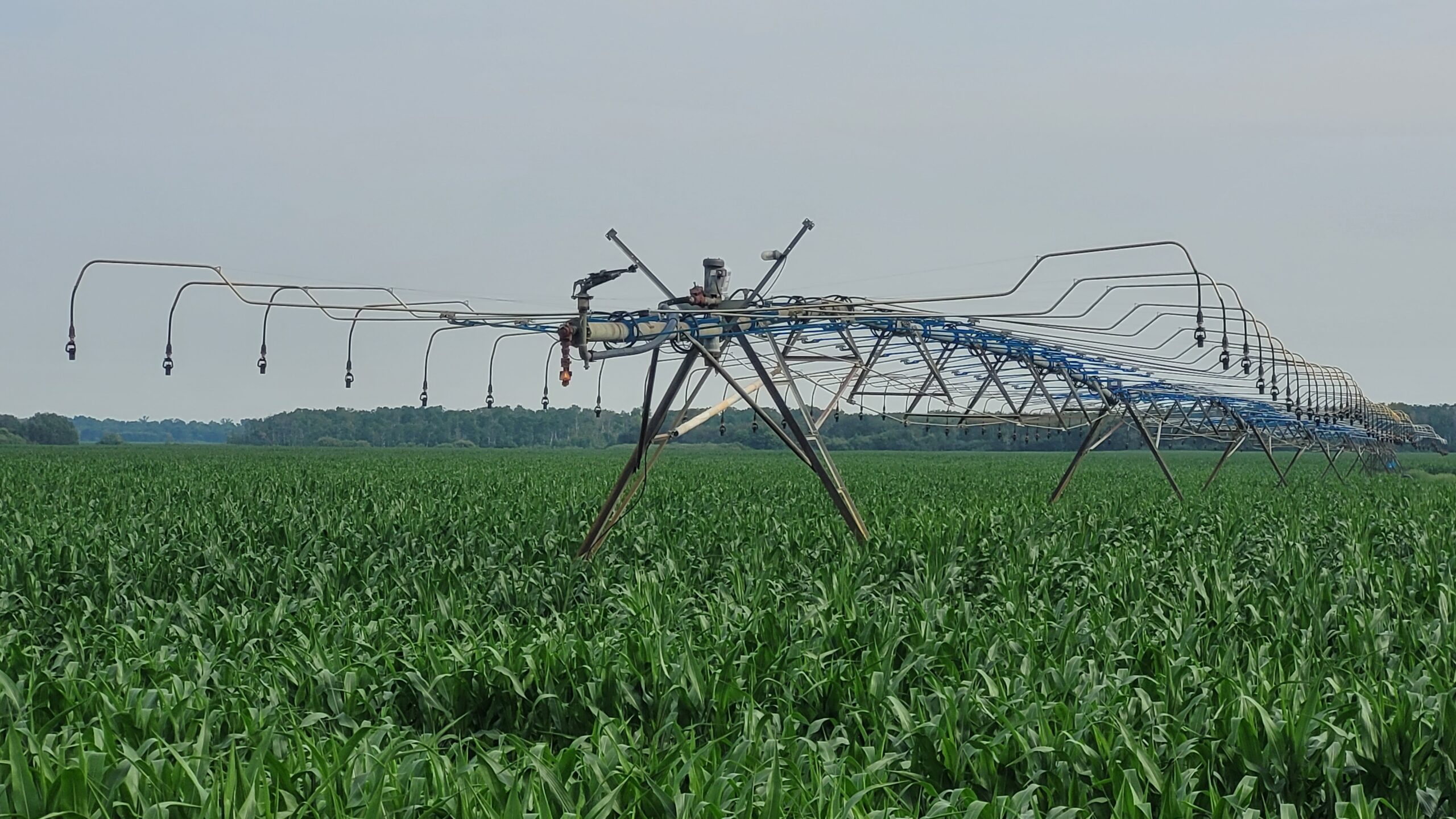
The core technology of the system originated in South Africa, but we developed it to suit the nature of Egyptian agriculture. One of the most prominent developments is the design of a suspended irrigation system at a height of 5 meters. This allows agricultural equipment to move freely beneath the irrigation network without any obstacles, facilitating all agricultural operations from soil preparation to harvesting.
In South Africa, the system was used to cool rural homes during the summer. It wasn’t used in agriculture and relied on wooden poles, but due to the high cost of wood in Egypt, we replaced them with rust-resistant galvanized steel poles. We also developed models based on restressed concrete poles to reduce costs and make the system accessible to small farmers and investors.
Why is the system’s adoption still limited in Egypt?
Most farmers prefer the traditional systems they are accustomed to, so the system needs more practical trials to prove its efficiency.
“We are not rushing to expand; rather, we are focusing on the success of existing projects to serve as a practical model for farmers, demonstrating the system’s efficiency.”
When did the system begin to be implemented in Egypt?
Egyptian Technoland, specializing in smart and sustainable rain irrigation systems, implemented the first project in the country in 2016 in the village of Dashlout, Assiut Governorate. We have other projects in the Elwady Elgadeed Governorate since 2019 and 2020.
We also implemented a project in Sudan. The company’s largest project in Egypt relied on rain-fed irrigation, covering an area of over 4,000 acres in the Wadi El Malak region on the Cairo-Ismailia Desert Road.
Egyptian Technoland holds the exclusive agency in Egypt for the technology of the South African company, Lobby Sprinkler.
Does the system require regular maintenance?
This is one of its most significant advantages. Maintenance costs are virtually nonexistent compared to other systems. After project handover, the client typically only needs to contact us in very exceptional circumstances, as the system are designed to operate efficiently for many years.
The system supports 11 of the United Nations Sustainable Development Goals because it contributes to water conservation, reduces operating costs, increases agricultural production efficiency, and extends the operational lifespan of irrigation network components.
Is rain irrigation suitable only for specific crops?
It is suitable for both crops and trees and has proven its efficiency across various agricultural sectors.
It differs from sprinkler irrigation because it relies on mist sprinkler systems that produce small water droplets that evaporate quickly. In our system, the water droplets are larger, allowing them to reach the plant before evaporation. Evaporation losses do not exceed 2-3% of the total water used.
What is the difference between rain and drip irrigation?
Drip irrigation concentrates water at a specific point below the plant, providing water to the roots at a single point. Rain irrigation, on the other hand, distributes water across the entire soil surface, allowing it to reach and nourish the surface roots more effectively. This enables the plant to better utilize water and nutrients.
Read also: How we grow sweet corn with less water and same taste?
Rain irrigation also continuously washes the plant’s leaves, reducing dust accumulation and the presence of some pests.
Washing the plant does not lead to the spread of fungi because plants accustomed to rain irrigation adapt naturally from the outset without any harm. Problems only arise when plants that have adapted to drip irrigation are suddenly switched to rain irrigation, as they will have already adapted to the different system.
Is the system manually or automatically operated?
The system operates fully automatically. It relies on sensors installed in the soil, along with a weather station, to continuously measure soil moisture levels and the plant’s water needs. When irrigation is required, the system sends automatic activation commands, which open and close irrigation zones according to the needs of each area, thus achieving maximum water efficiency.