
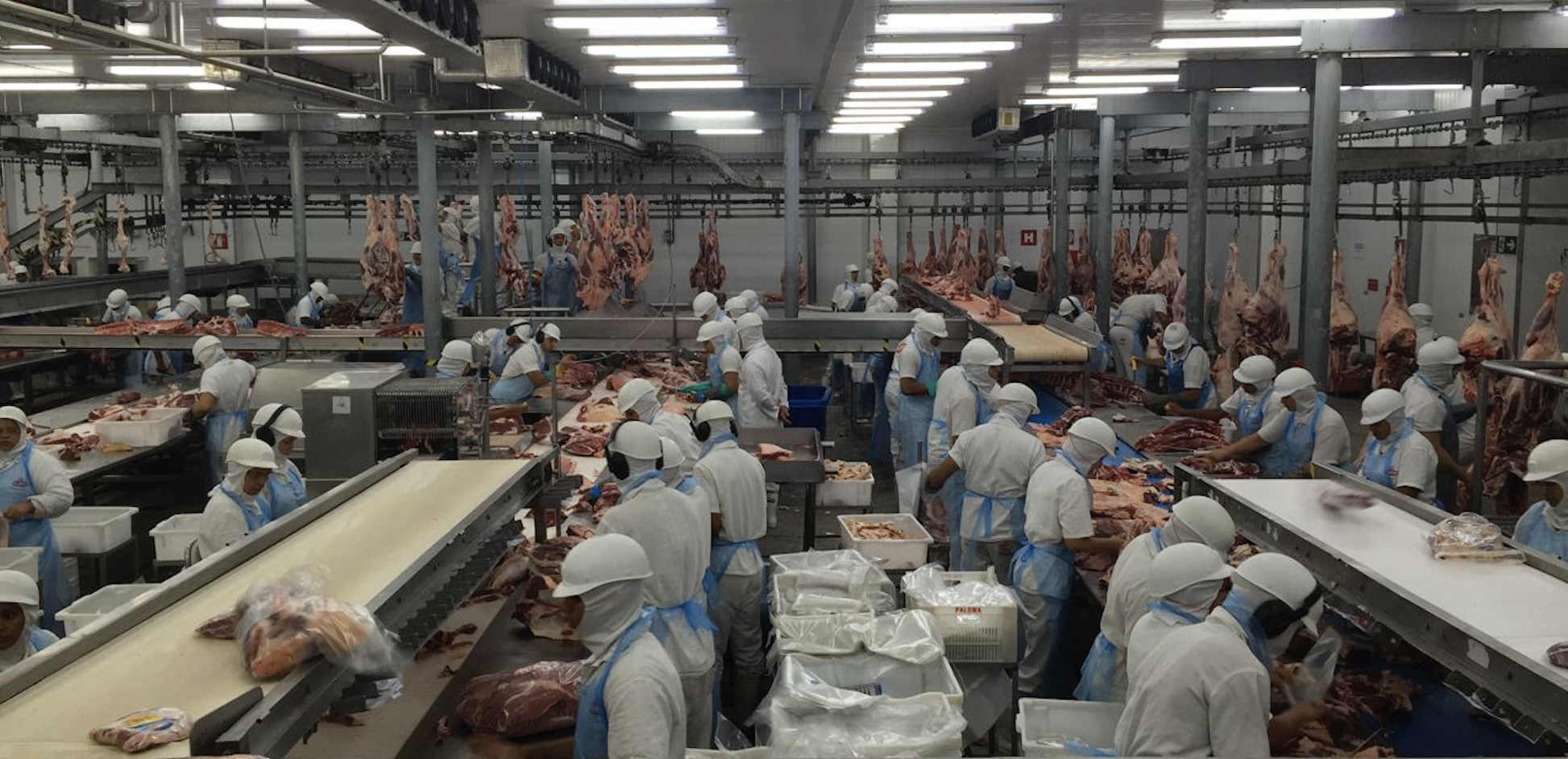
Concerns are mounting over accelerating the operation of US slaughterhouse lines, according to new proposals from the current Donald Trump administration, as these proposals, if implemented, increase the risks of worker disability, water consumption and pollution, in addition to increased greenhouse gas emissions.
Jill Mauer spent more than 30 years as a government inspector, watching over meat plants as workers slaughtered and processed animals into market-ready chops and wings. Now she has a warning.
In comments Mauer submitted last month to the U.S. Department of Agriculture, she wrote that recent Trump administration proposals to speed up processing in slaughterhouses will endanger workers, forcing them to work more quickly in already dangerous conditions.
“I am one of many meat inspectors who have raised concerns about the USDA’s efforts to increase line speeds through high-speed, reduced-inspection models and pilots. Many inspectors feel they cannot speak openly about what they have seen,” Mauer wrote. “I made the decision to step forward publicly because of what I witnessed firsthand over many years, particularly at my own plant.”
Slaughterhouse workers suffer an amputation
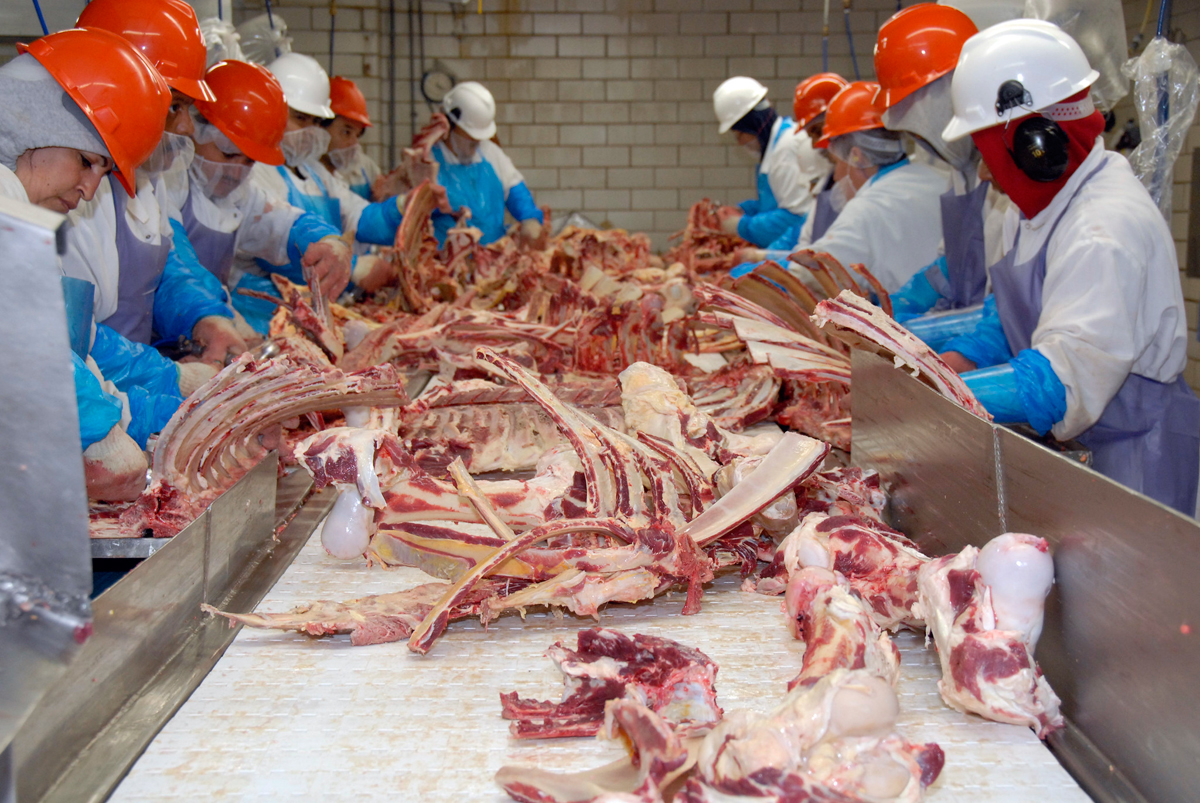
On average, 27 U.S. slaughterhouse workers suffer an amputation, loss of an eye or other injury serious enough to require hospitalization every day, according to data from the 29 states that are required to report to the federal Occupational Health and Safety Administration. Speeding up slaughter lines risks making this even worse, Mauer and other critics say.
Read also: War in Iran forces meat shipments to reroute from Arabian Gulf to China
Animal welfare, food safety and worker advocacy groups have railed against the proposals, and against waivers the first Trump administration gave the meat industry that allowed dozens of slaughterhouses to surpass existing line speed limits. Most of the critiques so far have focused on working conditions, animal cruelty and the demonstrated and increased potential for contamination that come with faster line speeds.
In a letter submitted April 30 to the USDA, two senators and three U.S. representatives called for the agency to halt the proposal, writing it “is unacceptable to create a work environment that will increase the harm to workers and to subject them to more life-changing injury and the public to more foodborne illness.”
But now many of these critics are also warning that faster line speeds will lead to more water use, more polluted waterways and more greenhouse gas emissions—more evidence, they say, that worker safety, animal welfare and climate concerns overlap and intertwine in underappreciated ways.
The US slaughterhouse itself is incredibly harmful environmentally
“The environmental piece often gets overlooked,” said Delcianna Winders, director of the Animal Law and Policy Institute at the Vermont Law and Graduate School. “Even if you set aside the rest of the supply chain, the US slaughterhouse itself is incredibly harmful environmentally, in terms of use of water, direct discharge of water and air pollution.”
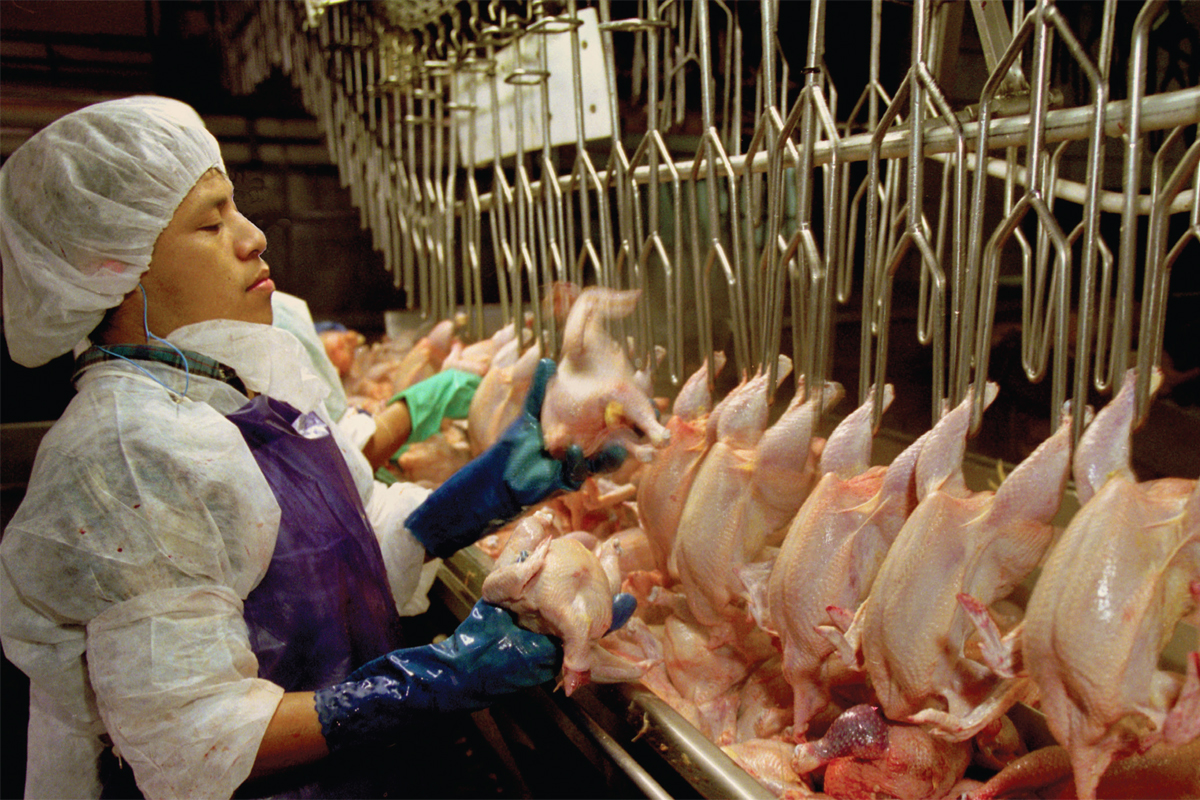
The new proposed rules, released in February, would allow poultry slaughtering facilities to kill 175 chickens per minute, up from the 140 currently allowed, an increase of roughly 25 percent. Hog slaughtering facilities, which are currently allowed to slaughter 1,106 pigs an hour, would have no limit at all. Some “high speed” hog-slaughtering facilities have already been allowed to kill at even higher speeds—about 1,300 animals an hour.
Along with a colleague, Patti Truant Anderson, a researcher and food systems expert at the Johns Hopkins Center for a Livable Future, decided to analyze the numbers.
The USDA projects
The USDA projects that the faster line speeds will lead to an additional 1.4 billion pounds of poultry within five to 10 years of the rule’s enactment. Truant Anderson calculated that this will lead to an additional 114 billion liters of water used each year—or the equivalent of 45,400 Olympic-sized swimming pools—and an additional 2 billion kilograms of heat-trapping carbon dioxide emissions, or roughly the emissions of 467,000 gasoline-powered vehicles driven over one year.
Read also: Meat consumption rises where incomes increase, so, world needs alternatives
Based on the agency’s projections for hogs—an additional 500 million pounds slaughtered—Truant Anderson calculated an additional 95.4 billion liters of water used a year, equivalent to about 38,000 Olympic-sized pools, and an additional 1.5 billion kilograms of carbon dioxide emitted, or about 350,000 gasoline-powered vehicles driven for one year. (The USDA did not project a time frame for the increase of 500 million pounds.)
Despite these potential impacts, the USDA has said that the Food Safety and Inspection Service (FSIS), which oversees slaughterhouses, is categorically excluded from requirements under the National Environmental Policy Act (NEPA).
The full story here: