

Egypt is moving towards capitalizing on its date palms wealth by abandoning outdated production methods based on misconceptions, such as the belief that these trees don’t require water or fertilizers. This has contributed to its weak export position, despite being the world’s largest date producer. Furthermore, there’s a shortage of skilled date palm growers, a highly specialized and demanding workforce, which may negatively impact company investment in the sector, according to Dr. Mohamed Amin, a researcher at the Central Laboratory for Palm Research, affiliated with the Agricultural Research Center.
Amin told Food & Climate, that, contrary to popular belief, date palms require significant amounts of water. The average daily water requirement for a 7-8-year-old tree is 400-500 liters, although they can tolerate drought.
Food & Climate conducted an interview with Dr. Mohamed Amin on the sidelines of the Egyptian-Dutch Agricultural Conference, which was recently held in Cairo. The following is the text of the interview:
Egypt is the largest producer of dates, yet other Arab countries, such as the UAE and Saudi Arabia, surpass us in exports. Why?
Yes, this is true, so we started focusing on several points to change this situation. The most important is distributing date palm varieties according to the regions that best suit their climate. This is one of the most important points that date palm farmers have overlooked before. “For example, Medjool dates might be grown in Lower Egypt even though they need a hot climate, while they are best grown in the south of the country.”
Date palms take a long time to bear fruit, and Egypt has a huge number of old palm trees. Does this mean they should be uprooted?
The old palm trees are of specific varieties: Zaghloul, Samani, and Hayani. We treat them correctly to obtain higher yields, but the shelf life of these dates is short, so they are not suitable for export.
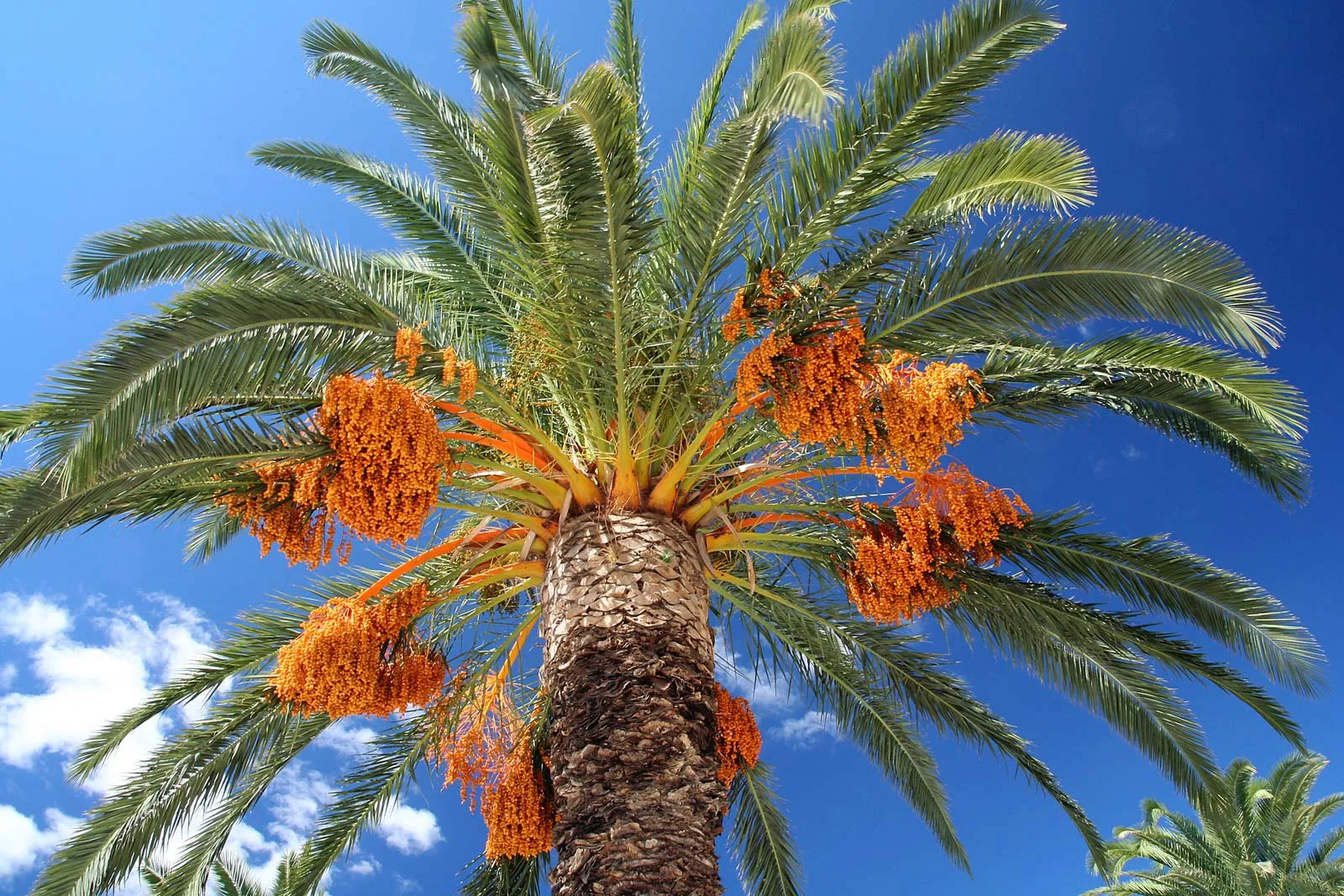
In Egyptian villages, they freeze dates for the following season. Why don’t we do the same for exporting local varieties?
This works with specific varieties, but freezing many others alters their appearance and taste. For example, Zaghloul dates can be frozen for two months, but after that, they become soft and mushy, making their taste unappealing to many. Furthermore, at this stage, the fruit’s tip begins to rot, rendering it unusable.
Does the cost factor of energy consumption play a role in freezing some varieties?
Yes, energy increases costs, and in Egypt, we need to reduce energy consumption. The lower the cost of the product, the more competitive we become in international markets.
Therefore, the government has focused on cultivating exportable varieties like Medjool, which ranks first globally in date exports due to its long shelf life.
Read also: At the Cairo International Date Festival, Egypt seeks to export by cultivating Saudi varieties
Egypt hopes to achieve a breakthrough in date production and exports through Medjool.
When did we start focusing on Medjool in Egypt, and what is its share of total production?
It started 5-6 years ago and has become a focus of investor attention. I don’t have figures on its current market share in Egypt, but in areas like the Bahariya Oasis, Medjool dates may reach more than 85% of newly planted date palms.
I believe that date palms don’t require large amounts of water, which is an advantage. Does Medjool date palm share this characteristic?
There’s a misconception about the resilience of date palms and their water requirements. To achieve maximum productivity, a date palm has specific water needs (a water ration). If planted in an area where these water requirements are not met, it will tolerate the drought, but it won’t produce the desired yield in terms of both quantity and quality.
What is a good yield for a Medjool date palm?
Approximately 80 to 120 kilograms for a Medjool variety that is 7-8 years old.
What is the average water requirement for a date palm tree?
From 400 to 500 liters per day, and this can vary depending on the soil type, from clay to sandy. However, the current trend is towards desert agriculture, meaning sandy soil, and water management in general affects date palm productivity.
This quantity is relatively large, contrary to popular belief, but it is less compared to vegetable crops, especially since the average number of date palm trees per acre is only 60.
You mentioned that climate change has been significantly affecting date palms recently. How so?
Yes, sometimes the temperature rises excessively during the flowering period, affecting pollination. We have also witnessed a phenomenon of high temperatures in other areas after fruit set, causing the fruit to fall off.
Climate change has caused the spread of fungal diseases in some plants. Has the same happened to date palms?
This occurs when temperatures rise along with humidity, and high planting density contributes to the spread of fungal diseases. Therefore, we always advise leaving ample space between trees. For a variety like Medjool, the distance between two date palm trees should not be less than 8 meters.
Climate fluctuations generally affect the physiology of date palms, which, like humans, are affected by temperature variations.
An important issue related to date palms that needs to be addressed is fertilization. Many people believe that date palms don’t need fertilization, but this is incorrect. Fertilization is essential for date palms to receive the necessary nutrients. The Research Center and the Date Palm Laboratory regularly conduct awareness workshops on this topic.
Is there anything else important you can add about date palms?
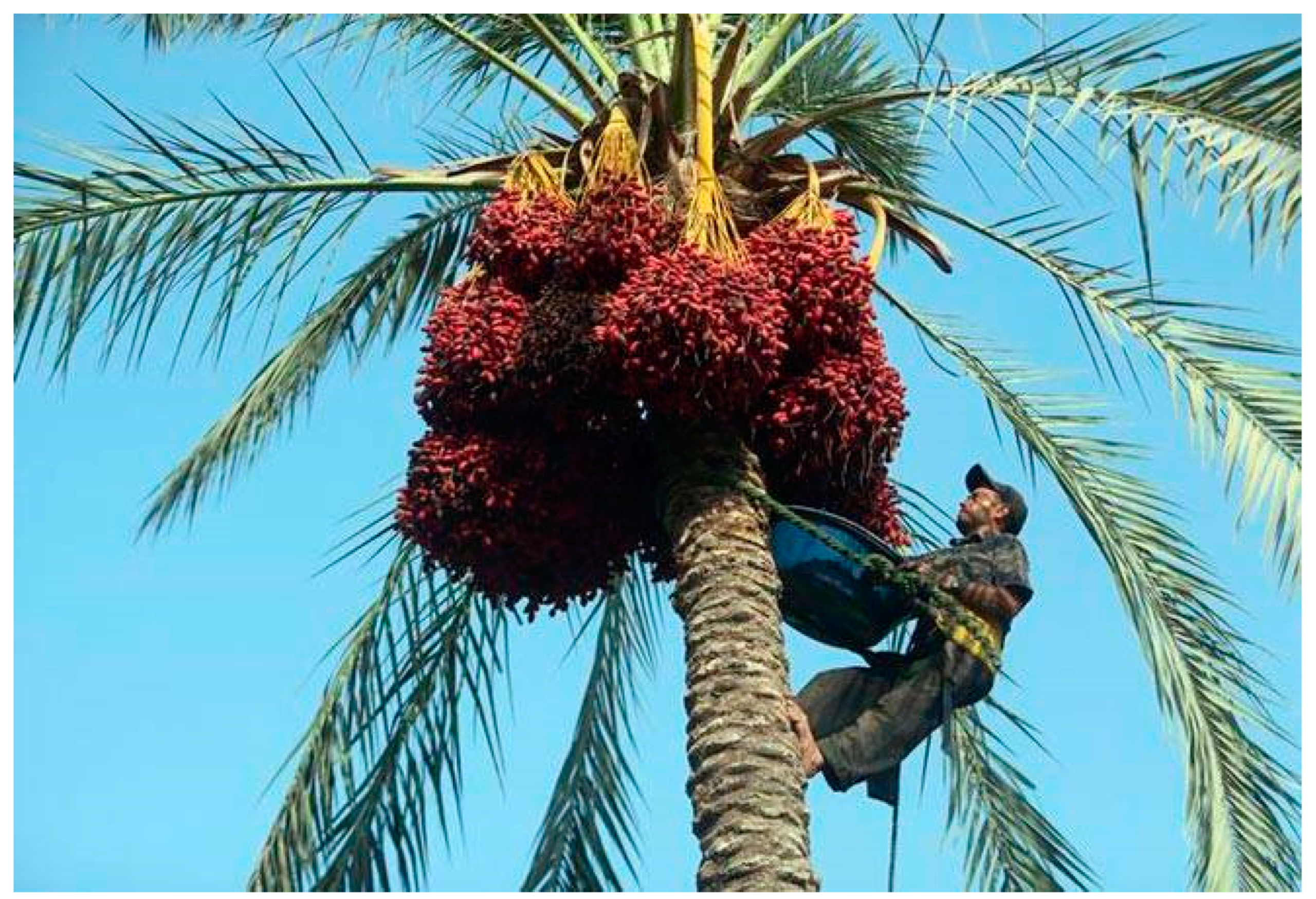
Training date palm workers is crucial. With the significant increase in date palm cultivation, we need skilled labor. The demanding nature of the job discourages people from taking it, and palm climbers receive high wages, yet there is a shortage of such workers.
Read also: Egyptian date industry, call for the use of ozone in production
The date palm climber performs several tasks, but the most important is fruit thinning. This allows the dates to grow to a suitable size for export to various markets. Thinning is done in several ways, including thinning the spathes, the bunches, or the dates themselves.
Other tasks of the date palm climber include pollination and bending.
Companies, especially large ones operating in this field, suffer from a shortage of date palm climbers. Therefore, some have begun hiring and training them to ensure their availability throughout the year.