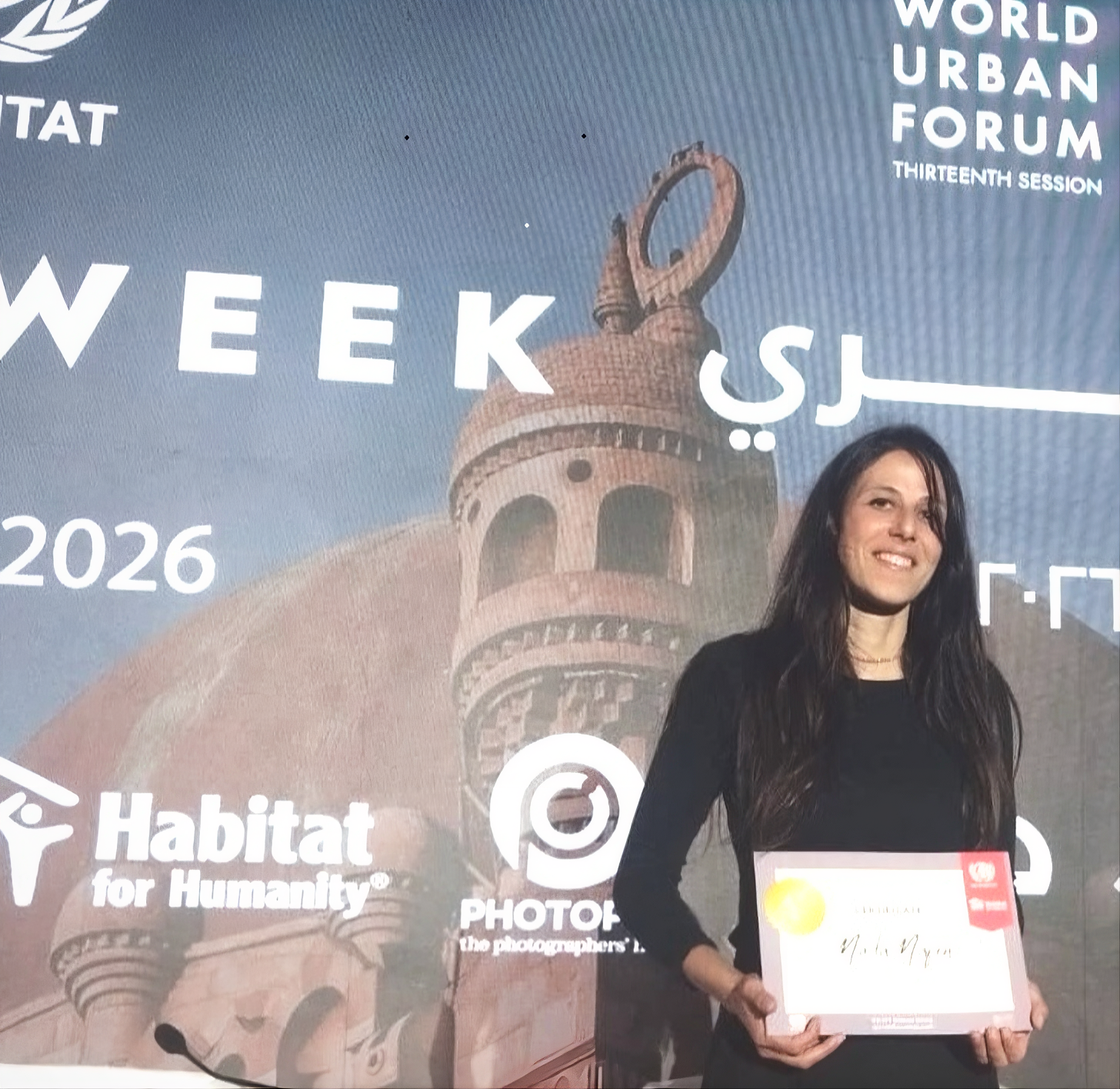
An Egyptian researcher has launched the (in) formal pattern language initiative, which aims to improve the quality of life in slum dwellers through simple and inexpensive means, such as redesigning balconies for better ventilation and rooftop farming to provide food and mitigate the heat on buildings.
Dr. Nada Nafea, Professor of Design and Architecture at the American University in Cairo and founder of the initiative, which won an award from the United Nations Human Settlements Programme (UN-Habitat) for urban development and housing several months ago, said that improving the quality of life for city residents does not necessarily require demolishing neighborhoods or implementing massive projects. A tangible impact can be achieved through simple and sustainable solutions that stem from the needs of the residents themselves.
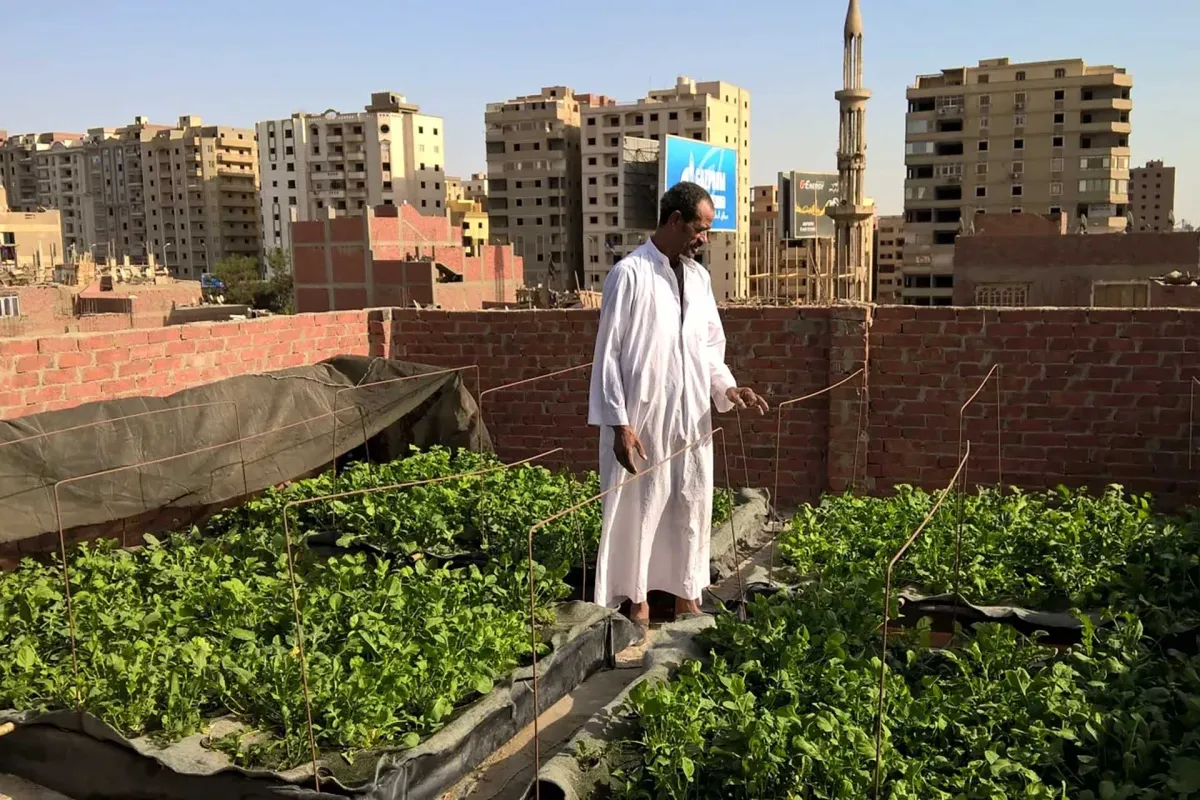
In an interview with “Food & Climate,” she added that, for example, utilizing rooftops for farming not only contributes to meeting some of the families’ food needs but also helps lower building temperatures, reduce reliance on air conditioning, and thus decrease energy consumption and carbon emissions.
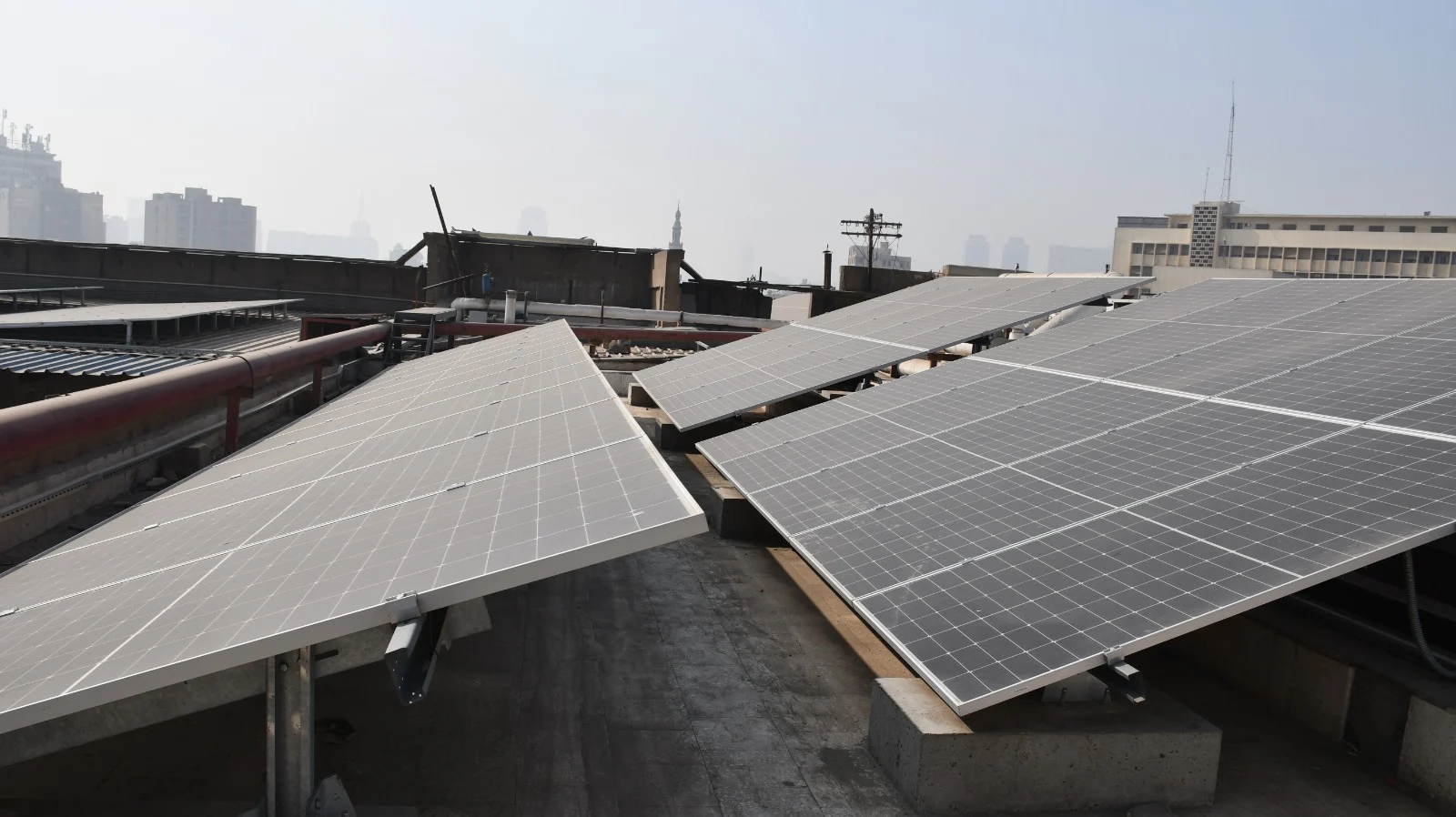
She pointed out that improving balcony design to increase natural ventilation, using solar energy, and recycling organic waste to produce food are also key initiatives. Composting or biogas, along with the use of energy-efficient building materials, all contribute to improving the quality of life for residents. Further details are explained in the following interview:
How did the initiative begin?
It started in 2014 as a research project within the American University, then evolved into a community initiative that seeks to make architecture a tool for improving people’s lives.
Read also: Pairing solar farms with growing Japanese yam saves clean energy and food
From the outset, we relied on involving residents of different areas, along with architecture students and specialists, to arrive at practical solutions to everyday problems.
What is the initiative based on?
We study recurring elements of daily life, such as balconies, rooftops, streets, and walkways. We then hold workshops with residents to identify problems and propose solutions, while transforming these ideas into implementable designs.
Our core philosophy is to develop what exists and improve its performance, not to change residents’ lifestyles or remove what they are accustomed to.
Does the initiative rely on rebuilding areas?
On the contrary, we don’t see demolition as the solution. Sometimes, a simple modification to a balcony design, utilizing a rooftop, or reorganizing a street space is enough to create a significant improvement in quality of life without high costs.
Read also: Eggplant in Sri Lanka, how the 0.25 acre yielded produce equivalent one acre?
How do residents participate in design?
Residents are key partners. At every stage, we first listen to their needs, then discuss solutions and brainstorm ideas before developing them architecturally.
Experience has shown that they have innovative ideas stemming from their daily experiences that deserve consideration.
Are these solutions suitable for all areas?
There is no one-size-fits-all approach. Each area has its own social, economic, and cultural circumstances. Therefore, we begin by studying the local community and then select the most appropriate solutions, taking into account ease of implementation and maintenance.
Where was the initiative implemented?
We started in the Ard El Lewa area, and then the studies extended to Zamalek, Heliopolis, and Downtown Cairo.
Despite the different nature of these areas, the methodology remained consistent, while the solutions varied according to the needs of each area.
What are the most prominent results and challenges?
Experience has shown that development is not linked to huge expenditures, and that simple solutions can be the most impactful when residents participate in their design. We conducted a limited rooftop farming project in collaboration with Save the Children, and we also prepared a guide containing 101 applicable urban solutions.
However, funding remains a significant challenge. The challenges are significant, so we seek to build partnerships with government entities, civil society organizations, and international institutions to implement these solutions on a larger scale and evaluate their results in the field.
Read also: UNIDO: Supporting Egyptian honey for exporting to Europe (Interview)
How are ideas transformed into viable projects?
The initiative doesn’t just propose theoretical ideas; it focuses on designing solutions that can be implemented using the resources available within each community. Therefore, each proposal is evaluated in terms of its cost, ease of implementation, and the residents’ ability to maintain and sustain it after implementation.
The goal is not to present complex architectural designs, but to arrive at practical and applicable solutions that ensure their lasting impact and improve the built environment in the long term.
More details: