
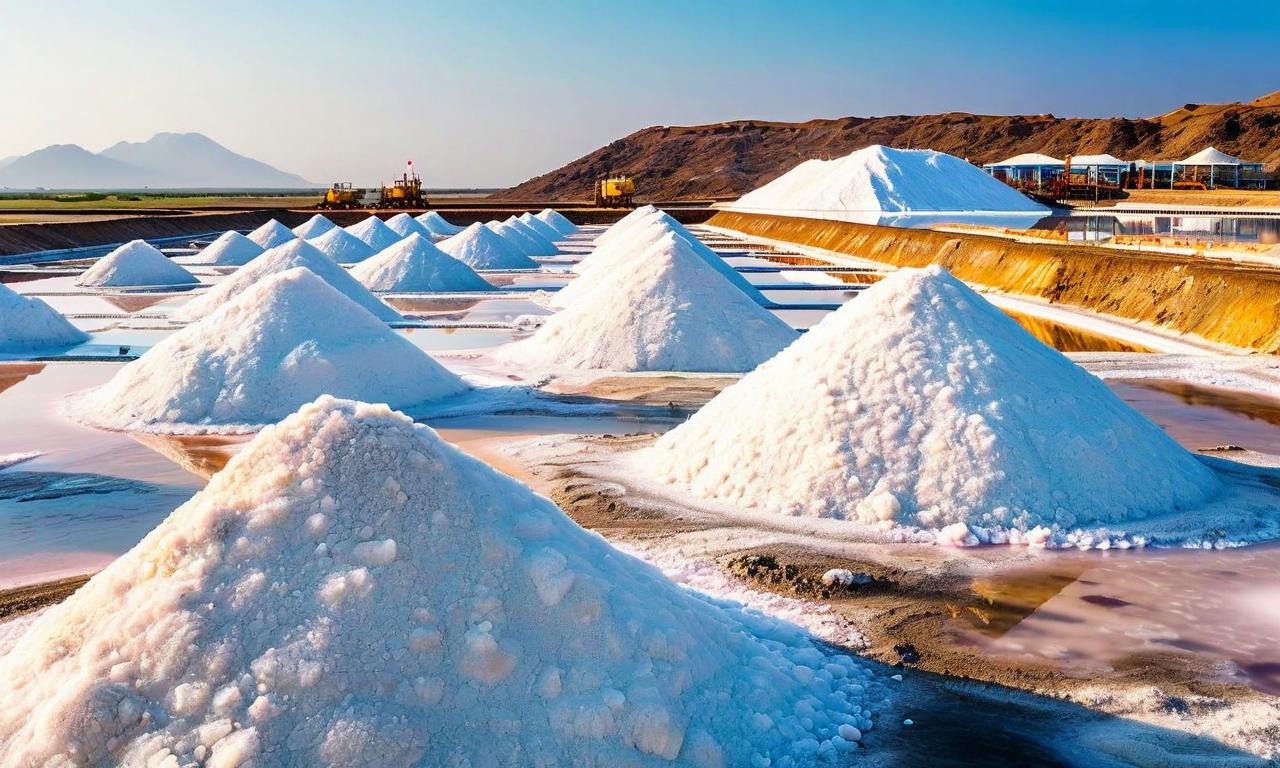
Salt production in Bangladesh has faced weather-related problems for many years, as drought and sunny weather turn into fog that lingers for longer periods, eventually turning into heavy rains that undo months of work.
Usually, salt production depends on dry weather, strong sunlight and high temperatures to crystallize salty water into salt.
Experts caution that changing weather patterns could undermine both production stability and economic resilience of salt farming communities without adaptation measures.
Nasir’s struggles in salt production in Bangladesh
Nasser Uddin, is a worker in the salt production in Bangladesh, a 55-year-old farmer, was scooping up and throwing out water with a hand-made pot from his field was flooded by a few hours of heavy overnight rain.
On his 0.5 hectares (1.2 acres) of salt plot located in southeastern Bangladesh, nearly 18 maunds of salt (each maund is equal to 40 kilograms, or 88 pounds) had been washed away just a day before harvesting.
“I was expecting to collect salt today [April 16]. But the rain has damaged all the salt,” said Nasir, a farmer from Moulabir Gona village of Kutubdia subdistrict in Cox’s Bazar district.
The farmer said the rainfall on April 15 happened when production is usually at its peak.
“We didn’t experience rainfall in March-April in the past. But over the last 8-10 years, rain has started occurring during this time, even in December and January, during winters,” said Nasir, who has been cultivating salt for around 28 years.
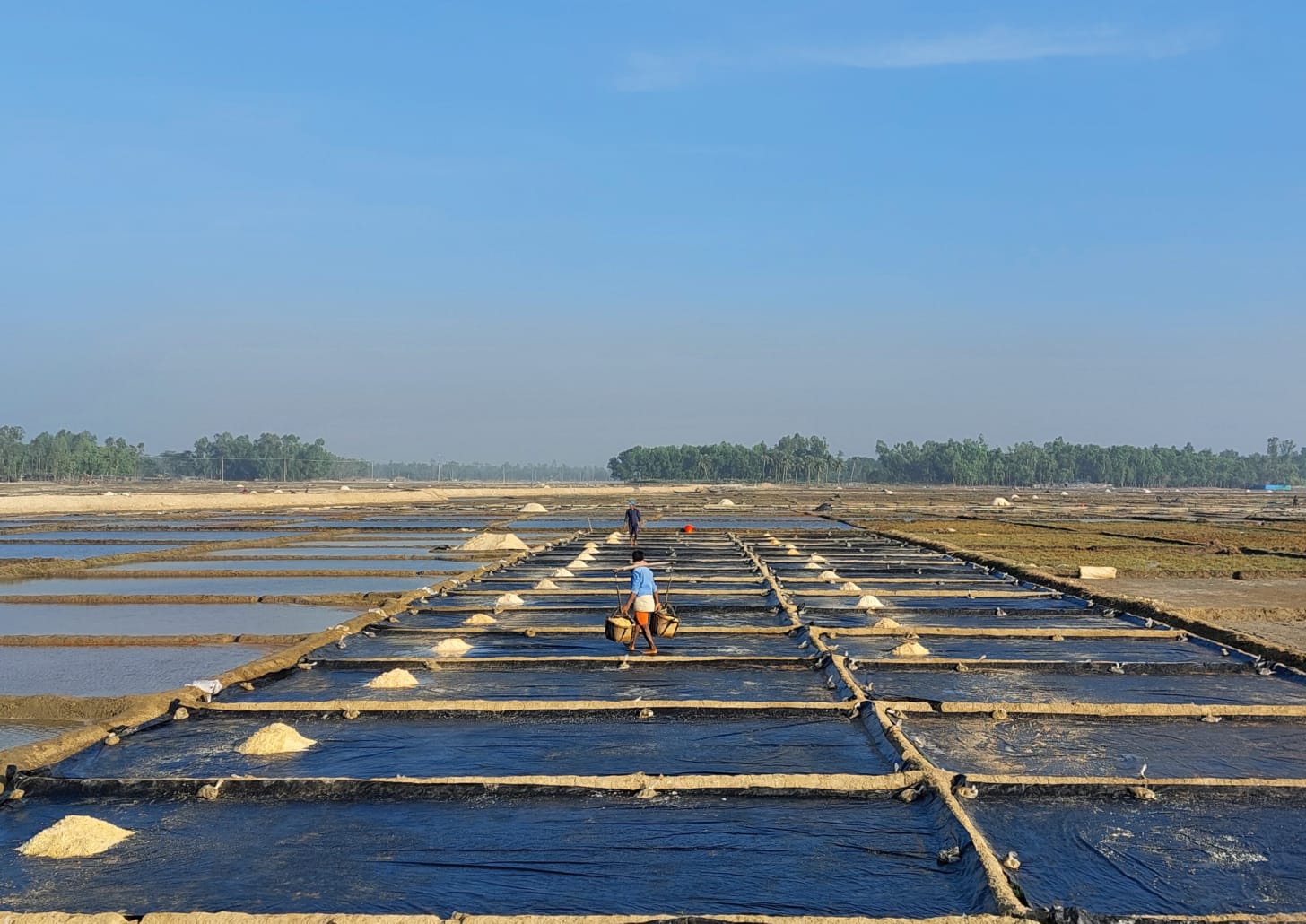
Like Nasir, thousands of salt farmers across the coastal belt are now facing similar losses from unseasonal rain, as erratic weather increasingly disrupts production.
Read also: Deforestation in Sumatra turns Indonesia’s tropical rains into a disaster
Salt farming is one of the largest seasonal livelihoods in the country. In the ongoing season, farming has taken place on more than 27,520 hectares (68,000 acres) of land across Cox’s Bazar’s Sadar, Kutubdia, Maheshkhali, Chakaria, Pekua, Eidgaon and Teknaf subdistricts and Chittagong’s Banskhali subdistrict in southeastern Bangladesh. More than 40,000 farmers are directly involved in the sector.
But over the last several years, unpredictable weather, such as unseasonal rain and increased cold waves, has disrupted salt production, forcing farmers to shift their ancestral livelihoods to survive.
Unpredictable weather in Bangladesh
A 2025 study found a long-term increase in both temperature and rainfall in the southeastern part of the country.
The study, based on more than 30 years of climate data from four weather stations in the region, said the weather pattern in the region is becoming increasingly erratic, with rising instability in seasonal rainfall and temperature trends.
Read also: Brazilian ambassador to Egypt: At COP30, a tool for financing rainforest protection (Exclusive)
Data on weather patterns showed that both rainfall and cold waves during the salt production season have increased. Data from the Center for People and Environ (CPE), a nonprofit research organization based in Dhaka, showed that rainfall days during the season increased from 16 in 2021 to 18 in 2022, 21 in 2023 and peaked at 25 in 2024 in salt farming areas. A similar change is seen in cold wave days, which rose from 7 in 2021 to 11 in 2022, surged to 18 in 2023 and then declined to 12 in 2024, reflecting an erratic pattern.
Salt production step-by-step process
Salt production follows a step-by-step process. Salt farming depends on dry weather, strong sunlight and heat.
- To start with, farmers make beds by leveling the land and covering the pans with a black polythene sheet.
- Then, seawater is channeled through a series of six to seven pans, gradually increasing in salinity at each stage.
- At the final pan, after seven to 10 days, salt crystals form as the water evaporates.
- The white salt is then collected and stored in designated pits.
Prolonged fog
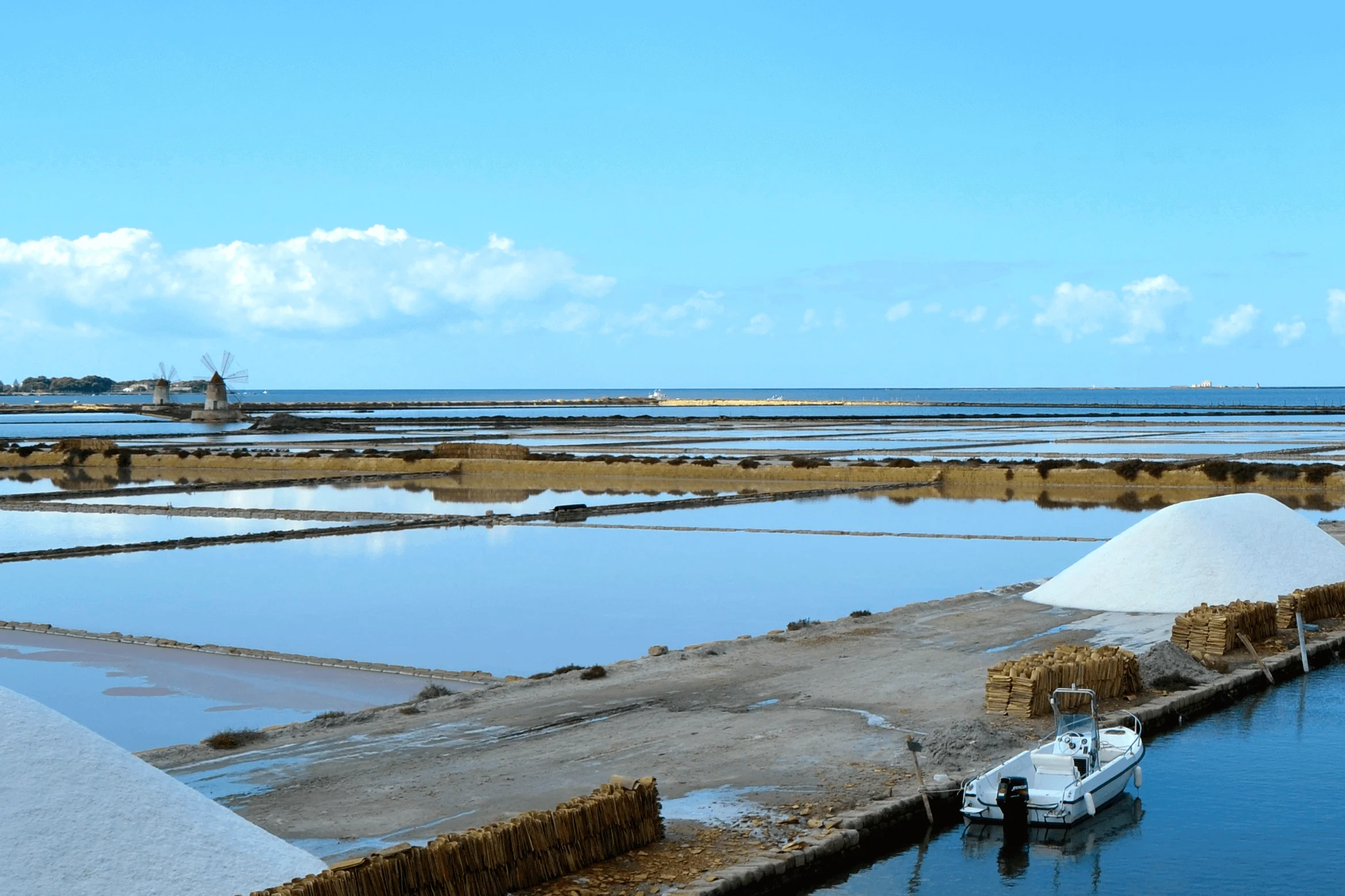
Now, at the start of the season, farmers face prolonged fog and cold waves. In November, December and January, thick fog often remains over the beds until late morning, blocking sunlight and slowing evaporation. The fog and cold waves have reduced production as the sunlight fails to dry the water properly.
In the late afternoon, a worker carries the harvested salt toward its destination as daylight fades over the salt beds. Image by Sifayet Ullah, taken from Pekua.
“Cold waves and fog reduce sunlight, keep temperatures low and increase humidity, which slows down evaporation and delays salt formation,” said Rajib Ahmed, a worker in the salt sector from Banskhali’s Chanua area.
Later, the threats shift to rain by April and May. When rainwater enters the beds, the salinity is lost. Farmers have to drain the field and start over. Each restart requires draining water, repairing boundaries, smoothing the surface, and refilling with seawater. The process can take three to five days. For one rain, a farmer loses nearly a week.
More details: