
Food & Climate
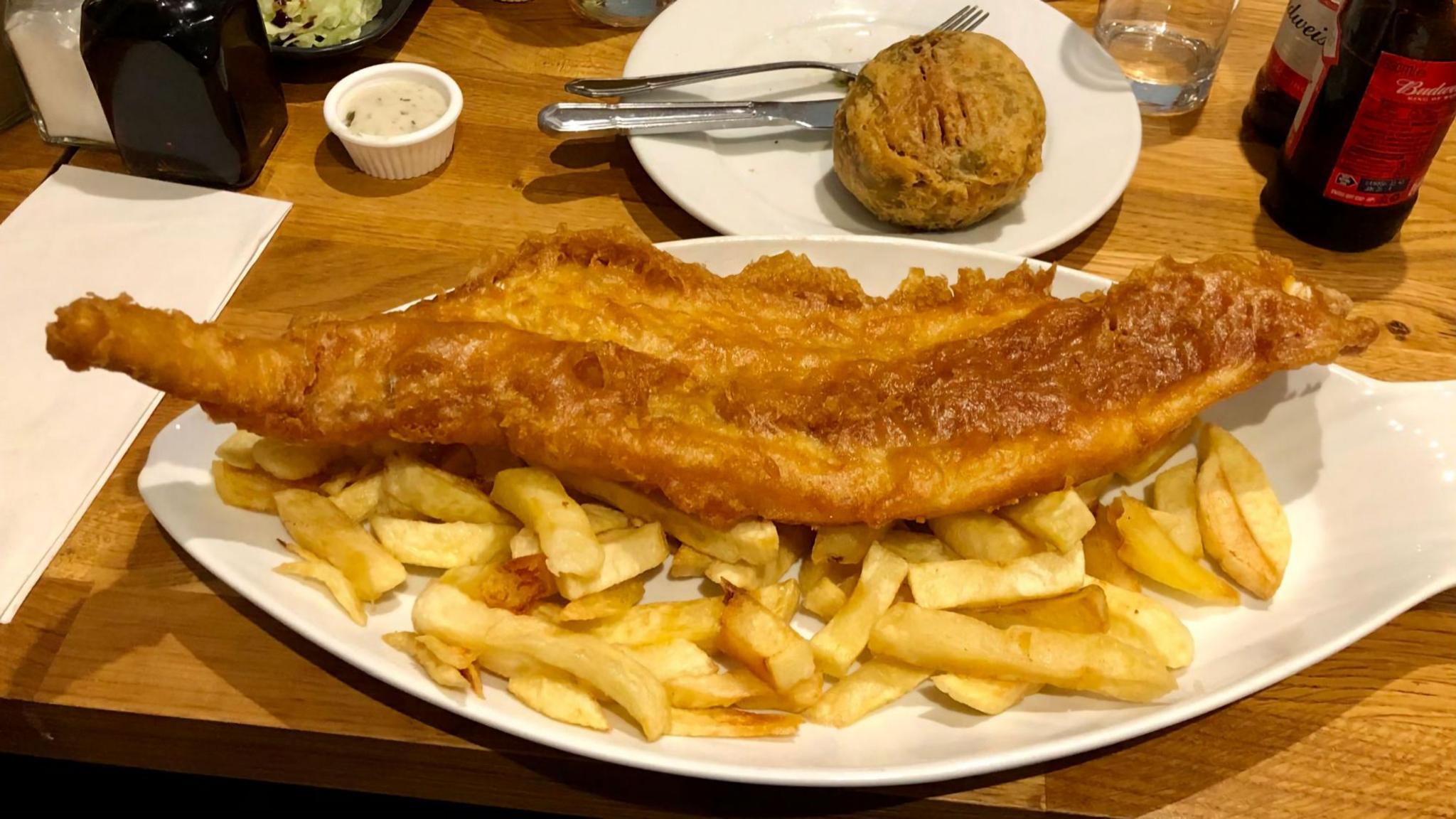
The war in Iran threatens UK’s most popular meal, fish and chips, as its preparation requires a large amount of fuel, which has seen a huge rise since America and Israel attacked Tehran last February.
An expert has revealed why the Iran war could send the price of fish and chips soaring.
The conflict has been ongoing for almost two weeks after the US and Israel struck Iran Saturday, February 28.
Counterattacks have been carried out on Israel and surrounding countries, and it has led to an all-out crisis in the Middle East, with flights cancelled and people stranded in cities like Dubai and Abu Dhabi, unable to get back to the UK, according to a report seen by Food & Climate.
Experts have shared warnings over increased prices following the outbreak of war. Things like bottled water and flour could increase in price, according to Wanis’ commercial director, George Phillips.
Fish and chip shops under serious strain
Until now, one thing will send the price of fish and chips soaring, says insolvency specialist Molly Monks of Parker Walsh, according to (Express).
Fish and chip shops have already been under serious strain, thanks to increased energy prices, higher national minimum wage and raised National Insurance. However, the war in the Middle East might be the final nail in the coffin for many, experts have warned.

The oil market, Monks explained, has become volatile since the outbreak of the war. This has an adverse effect on businesses, with increased costs related to energy consumption, higher fuel rates and transport.
Chippies, in particular, rely heavily on energy-consuming fryers to make their food. When energy prices shoot up, this is extremely bad news for these businesses. “Fish and chip shops typically operate on relatively tight margins, so even modest increases in fuel, oil or electricity costs can quickly start to bite,” she said.
“Frying food commercially requires constant heat. That means businesses are directly exposed when energy prices begin to rise.”
Additionally, chippies will feel the pressure with higher transport costs. Monks continued: “If fuel becomes more expensive, it costs more to move fish, potatoes and supplies across the country,” Monks said.
“It’s rarely just one bill increasing. Higher energy prices can also push up refrigeration, packaging and supplier costs.”
As independent businesses such as local chippies have less financial buffer room than bigger chains, they are often the first ones at risk of increased energy and oil prices. “If costs continue to climb, businesses may have to increase menu prices or reduce portions,” the expert added.
The story of the dish
Across the UK you will find venues serving fish and chips, from takeaway places by the sea to some of London’s best restaurants for lunch. Soft, flaky fish coated in crispy batter and served with golden chips has been a favourite among the British for centuries – but its origins lie with Spanish and Portuguese Jewish populations, according to (Studio Five Restaurants).
The story begins in the 15th century, when Jews began to be persecuted for their religion in Spain and Portugal. While some families fled, others pretended to convert to Christianity while secretly practicing Judaism. These families were forbidden by their faith to cook on the Sabbath, so they would fry fish – typically cod or haddock – in a thin batter on a Friday, which would stay fresh for their meal on Saturday. They called it ‘pescado frito’.
While historians remain uncertain of the origins of chips, it’s possible that Huguenots – French protestants – came to England in the 17th century bringing a penchant for fried potatoes with them.

Joseph Malin, an Ashkenazi Jew, is credited with combining fish and chips, opening the UK’s first fish and chip shop in 1860 in London’s East End. It was so successful that it remained in business until the 1970s. Near Manchester a similar stand opened by John Lees in the early 1860s.
Fish and chips took off at an incredible pace thereafter. By 1910, there were 25,000 fish and chip shops in the UK. Today, there are an estimated 10,500 chippies in the UK, collectively serving some 360 million meals of fish and chips every year.
Read full reports:
Here.
Related topics:
Asia fertiliser supplies threatened, war in Iran halts major exporters
February food price index rose amid expectations of further increases as the war in Iran continues