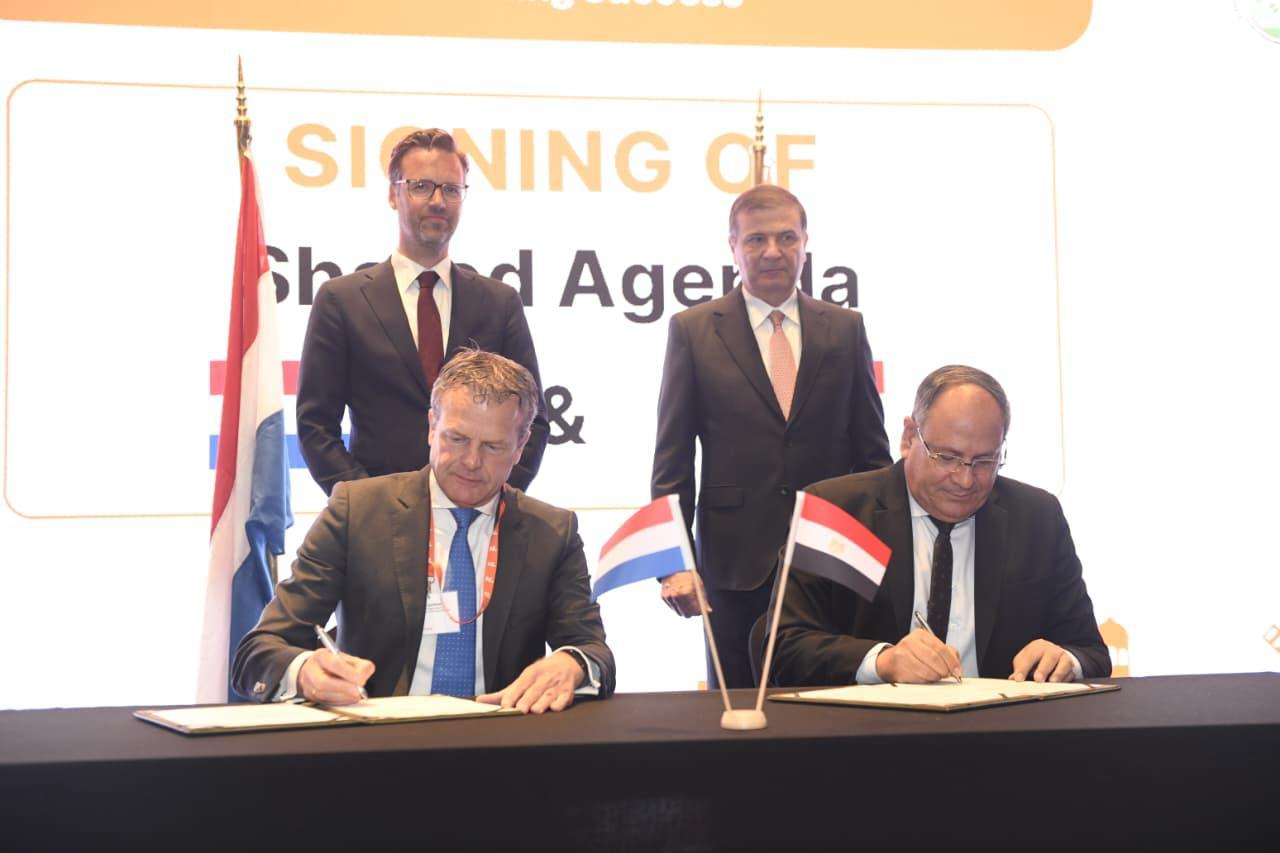
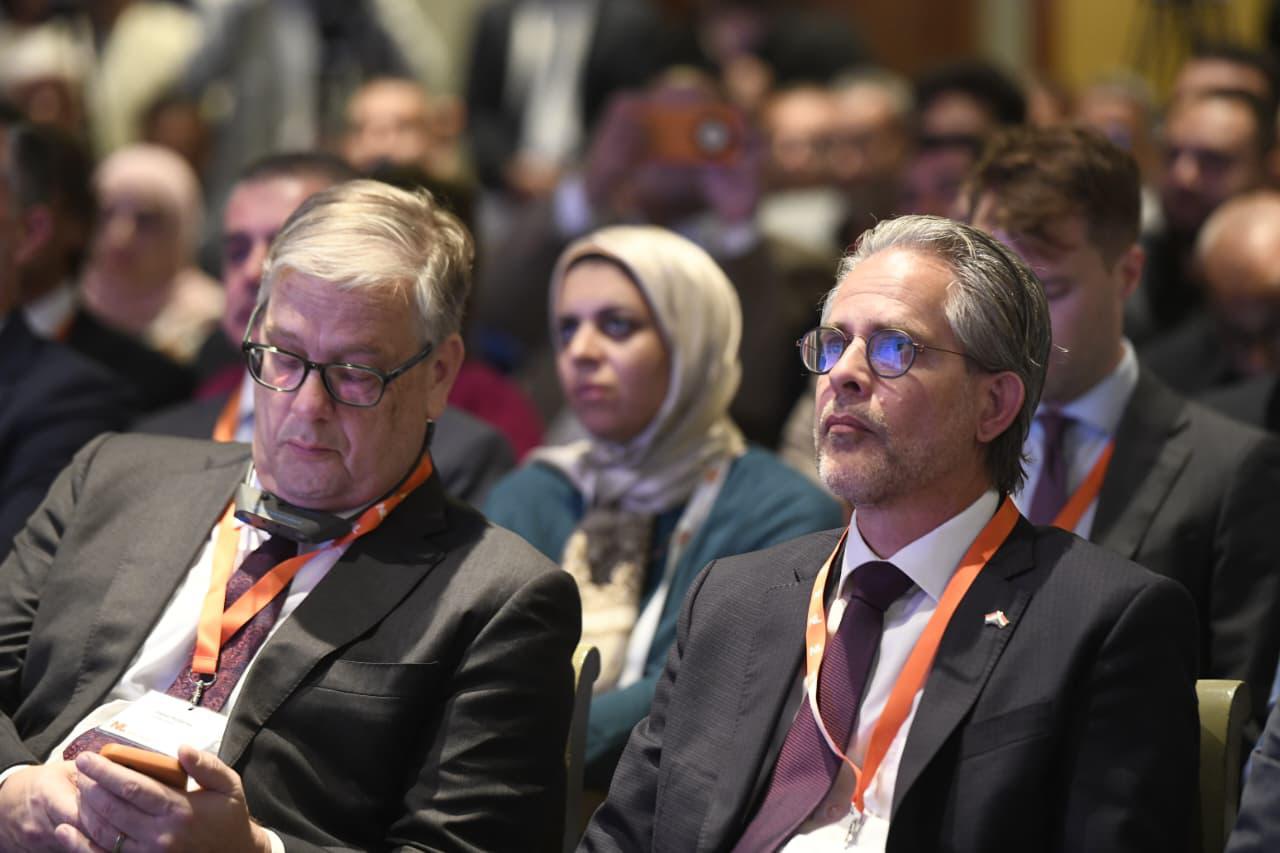
Egypt and the Netherlands face similar crises in food production, with high soil salinity and water scarcity. Officials and private sector companies from both countries are meeting in Cairo for two days to discuss solutions at the Egyptian-Dutch Agricultural Partnership Conference.
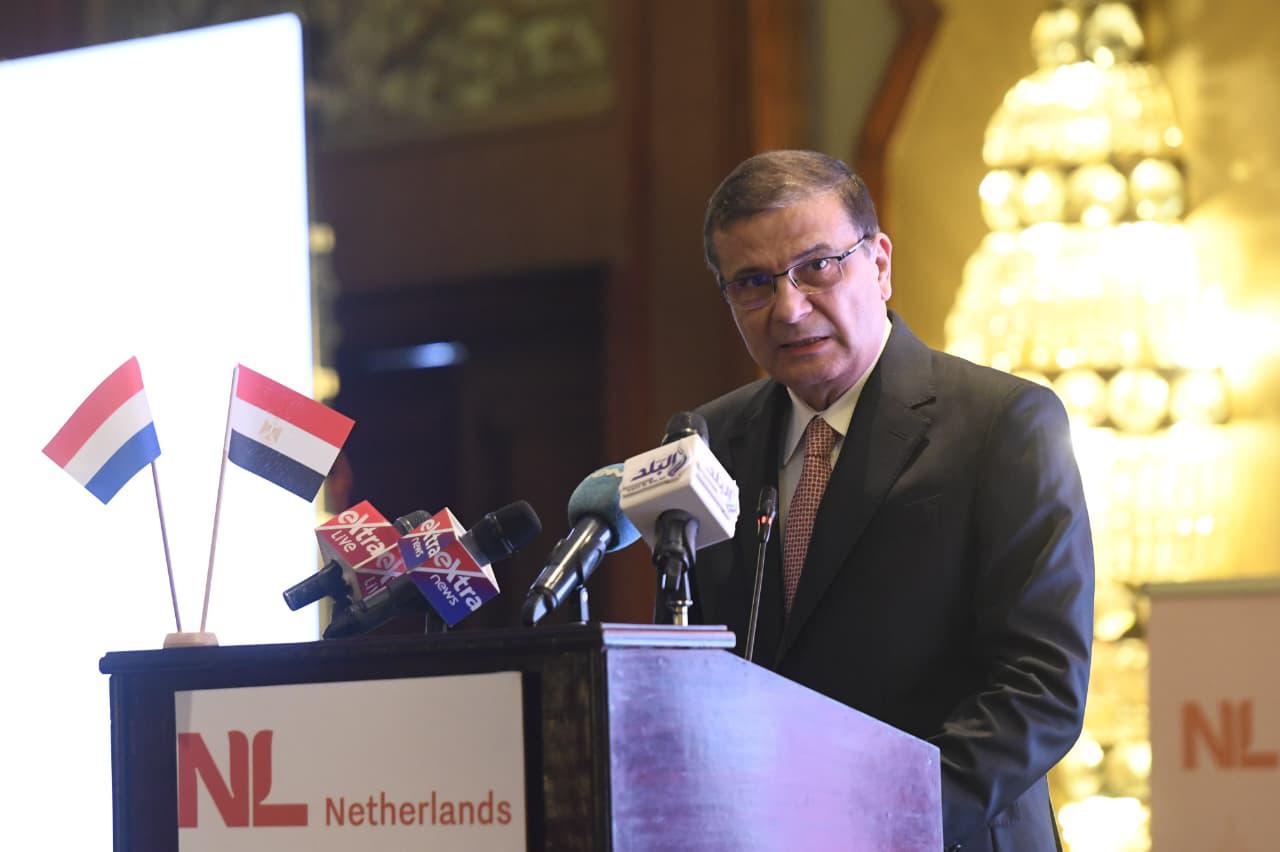
Egyptian Minister of Agriculture and Land Reclamation, Alaa Farouk, inaugurated the conference on Tuesday, May 5, 2026.
He stated that the agricultural partnership between Egypt and the Netherlands represents a practical model of integration based on knowledge transfer, capacity building, and stimulating private sector investment.
He noted that “agriculture has become a fundamental pillar for achieving food security, economic development, and adapting to climate change.”
He emphasized the depth of the strategic relations between the two countries in the agricultural field, pointing out that the conference’s theme, “Reaping the Fruits of Success,” reflects a shared belief in the importance of developing the agricultural sector and strengthening its role in achieving social stability.
He explained that the Netherlands possesses advanced global expertise in agricultural innovation, water management, greenhouse technology, seeds, value chains, and food processing, while Egypt has significant potential in human resources, geographic location, markets, and investment opportunities, which enhances the chances of integration between the two sides.
High soil salinity
During the Egyptian-Dutch Partnership Conference in the agricultural sector, Dutch Minister for International Trade and Development Cooperation, Sjoerd Sjoerdsma Dutus, stated that both countries suffer from similar crises, particularly high soil salinity and water scarcity, challenges stemming from climate change.
Read also: A Dutch official to Food &Climate: seed potatoes production reduces because weather extremes
Tycho Vermeulen, the Dutch agricultural advisor for Egypt and Jordan, had previously told Food & Climate: “In fact, the entire Netherlands is a delta, and the north of the country suffers from excessive salinity. Recently, salinity levels have also been observed rising in two southern provinces.”
Vermeulen added: “We are addressing this issue, working extensively and investing heavily in the agricultural sector and protecting food security. Our companies are more effective, resilient, and diversified.” Egypt is also experiencing rising soil salinity levels in the Nile Delta, particularly in coastal agricultural lands near Alexandria and in Kafr El-Sheikh Governorate. The government is implementing several programs to address this problem in cooperation with the European Union and international financial institutions such as the World Bank.
Read also: Wheat cultivation with saline water in Egypt, 8,000 parts per million
The Dutch minister continued, saying that the two countries are cooperating in combating the effects of climate change, “because there is a need to produce more food at lower costs, and we are proud that 22 of the largest Dutch companies operating here in Egypt are also participating in the conference.”
He added, “Egypt is a key partner for the Netherlands. To be more specific, any exports of agricultural products, such as vegetables, citrus fruits, and potatoes, to Western Europe pass through our country.”
Increase agricultural exports
Egyptian Agriculture Minister Alaa Farouk stated that his country aims to increase agricultural exports to $14 billion by 2026, a 25% increase compared to 2025, and then to $20 billion by 2030.
Farouk emphasized the importance of the conference, noting that its various sessions will address several priority issues, including developing the seed sector, sustainable water management, promoting smart agricultural extension services, expanding greenhouse farming, linking scientific research to practical application, developing food supply and processing chains, reducing waste, and increasing added value.
He added that the discussions will also cover soil and water salinity, biodiversity issues, developing sustainable food systems, encouraging agricultural investment, and opening new avenues for partnerships between financial institutions and the private sector.
Read also: Sahara and Sahel Observatory official: combating climate change in Africa faces funding challenges (Exclusive)
The minister stressed the importance of the research and scientific dimension in supporting this partnership, pointing out that the Agricultural Research Center is hosting a workshop in preparation for signing a memorandum of understanding with Wageningen University and Research Centre in the Netherlands.
This memorandum will develop a joint four-year action plan linking scientific research to the needs of agricultural development.
André van Lanneren, Director General of Wageningen University and Research Centre in the Netherlands, explained that Egypt also suffers from a shortage of arable land, while his country faces a problem with nitrogen and phosphate emissions.