
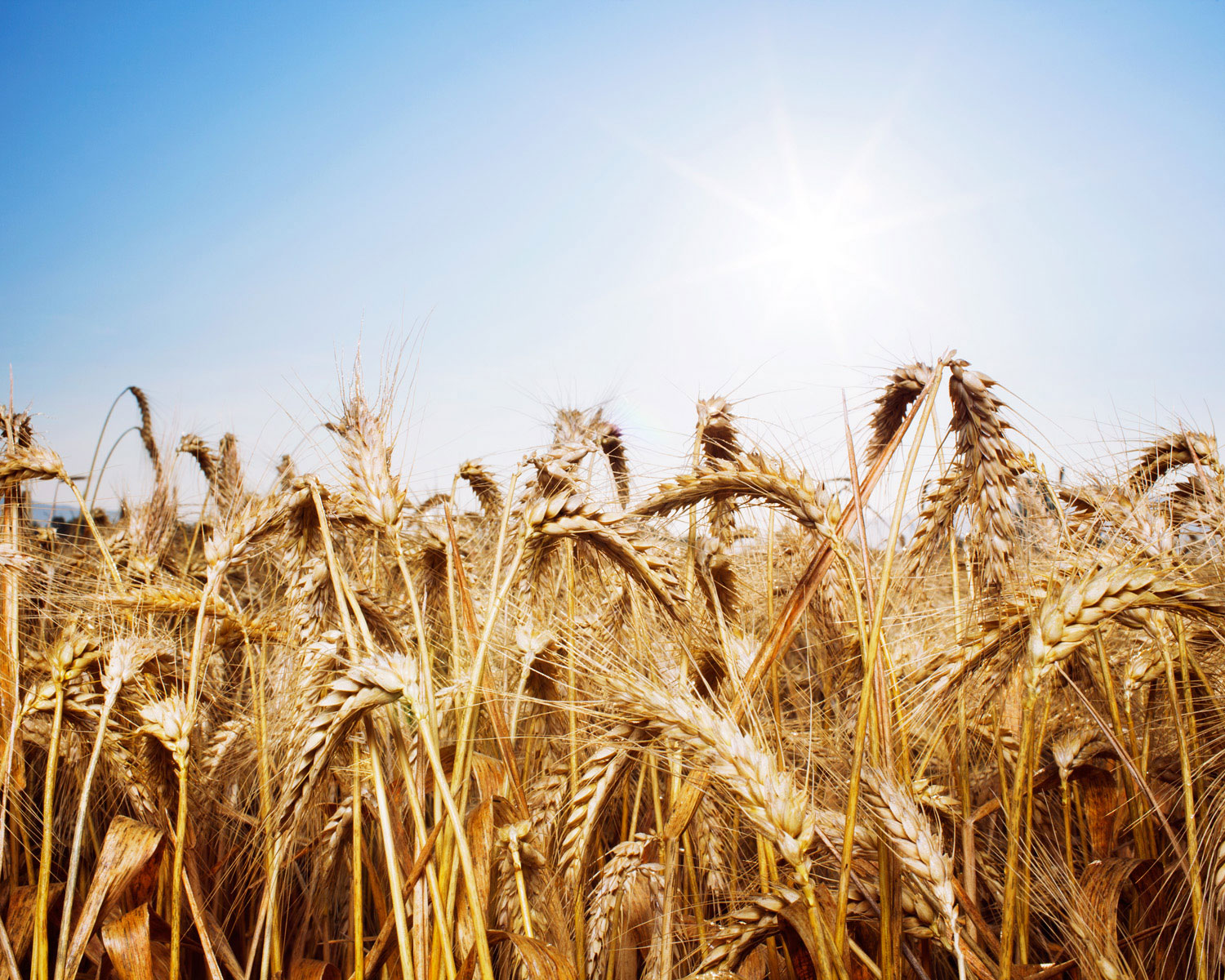
Wheat cultivation with saline water in Egypt has been successfully achieved using with a salinity level of 8,000 parts per million (ppm), three times the ideal average for cultivating and irrigating this strategic crop. This success is attributed to the use of nanotechnology, as announced by the Ministry of Agriculture and Land Reclamation.
In a statement received by Food & Climate on Tuesday, April 28, 2026, and a second statement published by the Cabinet on Facebook, the Desert Research Center announced a scientific breakthrough that increases wheat productivity in highly saline lands by using nanotechnology for bio-fertilization and organic enrichment.
The statement indicated that achieving high yields per feddan through irrigation with water containing up to 8,000 ppm of salinity “is a qualitative achievement for supporting food security in Egypt.”
Egypt is the world’s largest consumer of wheat, importing more than half of its needs, reaching over 13 million tons in 2025.
To reduce its wheat import bill, especially given rising global prices due to the war in Iran and its negative impact on fertilizer and energy supplies, the government raised the price of locally grown wheat, which has just begun its harvest season, by about $50 above the global price for a ton.
Alaa Farouk, Egypt’s Minister of Agriculture and Land Reclamation, expects the government to supply about 5 million tons of locally grown wheat, which it uses for subsidized bread.
Three years of experiments in growing wheat with saline water in Egypt
Dr. Hossam Shawky, head of the Desert Research Center, stated that the center has implemented a series of research programs and experimental fields over the past three years to find innovative solutions to national agricultural problems.
He added that one of the foremost of these problems is how to utilize saline lands, which have limited agricultural productivity in desert environments.
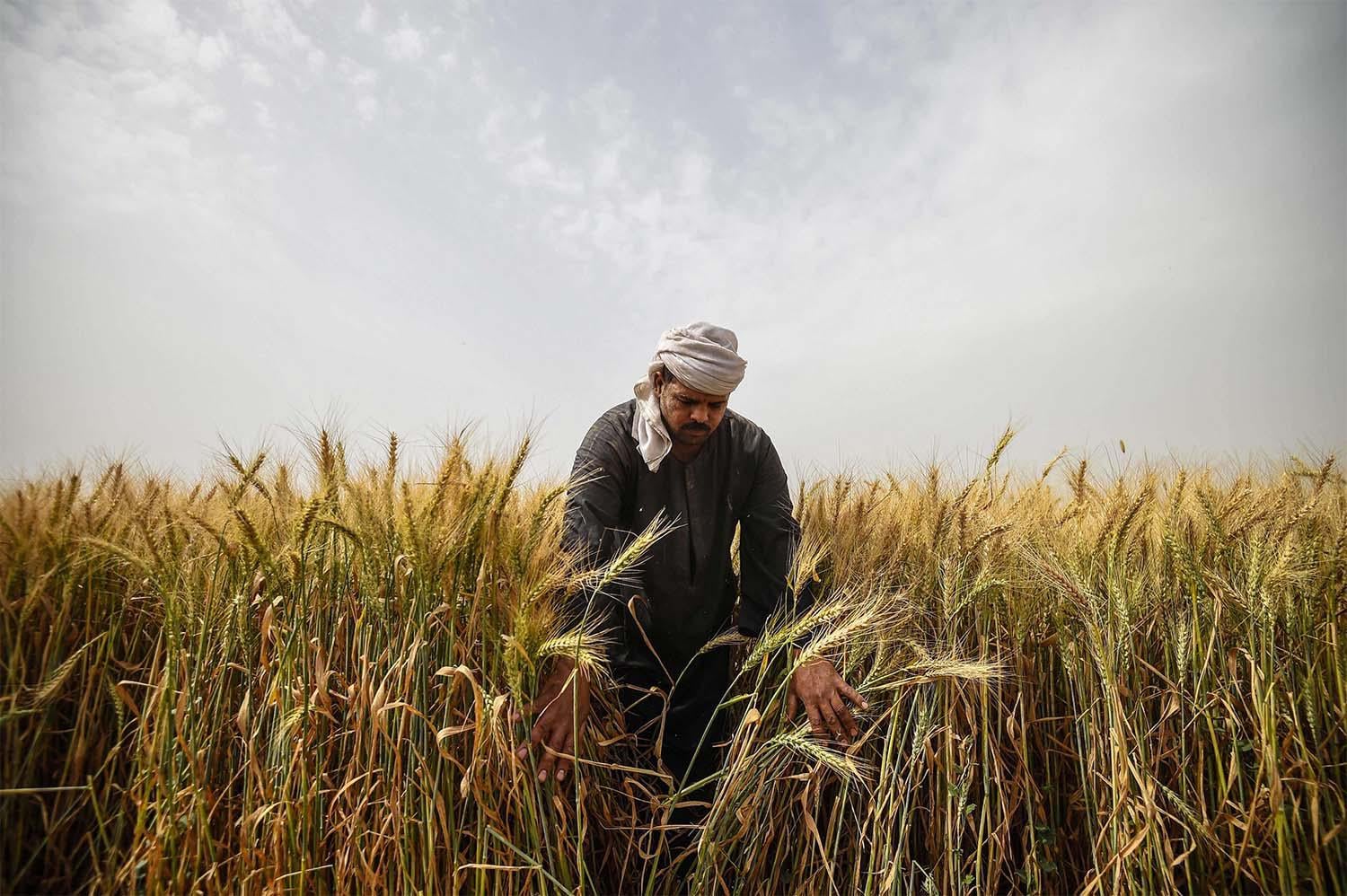
Wheat cultivation using saline water was implemented in two Egyptian governorates: New Valley and North Sinai, with extremely high salinity levels.

Read also: Salt-affected soils, 10 most affected countries, beans and rice are the biggest victims
The results confirmed the remarkable success of using nano-fertilizers and achieving outstanding productivity despite irrigation water salinity reaching 7,000 parts per million (ppm).
Shawky added that during the current year (2026), the method was implemented in the Almughra region, which suffers from even higher soil and irrigation water salinity, reaching 8,000 ppm.
Wheat was cultivated in this region on some lands belonging to the New Egyptian Countryside Development Company, which has long suffered from soil and water salinity problems, preventing strategic crops from achieving adequate yields.
Nano-fertilizers
Dr. Mohamed Ezzat Abdelhadi, Vice President of the Desert Research Center and supervisor of research programs at the center, explained that the development of nano-fertilizer compounds, produced in the Soil Fertility and Microbiology Department, opens new horizons for agriculture in desert lands affected by salt stress.
Dr. Amal Omar, head of the research program at the center, stated that three highly salt-tolerant wheat varieties were cultivated as a pilot project on 30 acres in the Almughra region, utilizing modern agricultural practices and integrating nano- and bio-fertilizers.
The results confirmed an unprecedented yield per acre in the region, estimated at approximately 15 ardebs (1 ardeb of wheat = 150 kg or 2.3 tons), despite the use of irrigation water with a salinity of up to 8,000 parts per million.
Read also: The ambassador in Cairo: Wheat farming in Algeria attracts Egyptian investments (Exclusive)
Bio-fertilizers represent an environmentally friendly alternative to traditional chemical fertilizers, as they rely on beneficial microorganisms that fix nutrients, improve soil properties, increase biological activity in the rhizosphere, and enhance the plant’s ability to withstand environmental stress, including salinity, which positively impacts growth and productivity.
Reducing Losses
Dr. Sherif Mahmoud, deputy head of the research program, stated that nano-fertilizers contribute to improving nutrient utilization efficiency, as they enhance the plant’s absorption capacity and reduce losses resulting from leaching or volatilization.
Read also: FAO: Water in Iraq threatens to lose half of wheat and barley crops
Nano-fertilizer formulations are designed to improve nutrient utilization efficiency by enabling targeted delivery and better absorption by plants.
This reduces the amount of fertilizer required, lowering input costs for farmers while maintaining or increasing crop yields.
At the same time, improved efficiency can reduce nutrient loss through leaching, volatilization, and runoff, thus contributing to environmental sustainability.
More details: