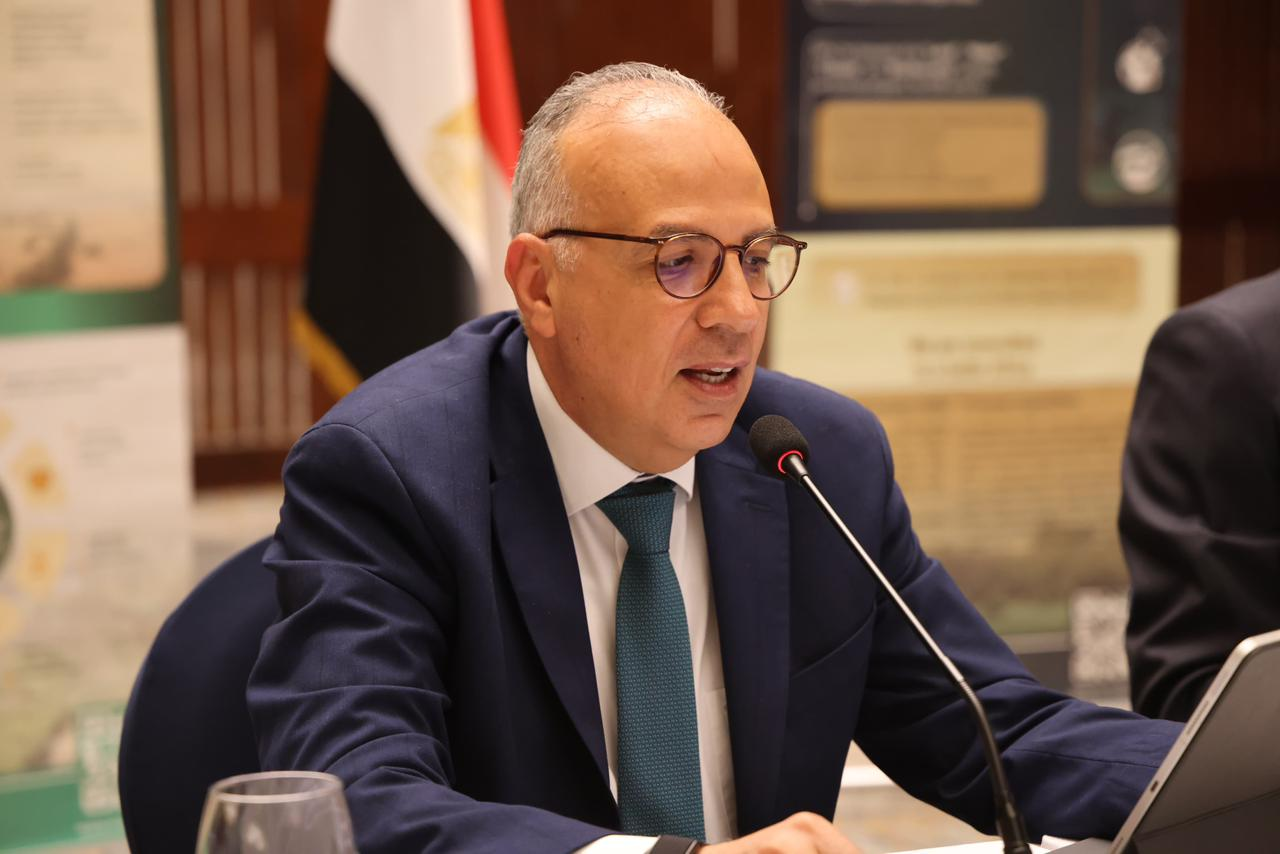
Egyptian Minister of Water Resources and Irrigation, Hani Sweilem, stated that his country will not permit the construction of any new dams on the rivers that supply it with water.
This statement came in response to a question from Food & Climate, regarding reports that Ethiopia is planning to build three new dams after the Grand Ethiopian Renaissance Dam (GERD) becomes operational.
Sweilem added, on the sidelines of the opening of the 33rd session of the Board of Directors of the Sahara and Sahel Observatory (OSS) in Cairo on Monday, April 27, 2026: “Egypt’s position is clear, regardless of any actions taken… Egypt’s water rights are protected.”
Reports have circulated in various African and Ethiopian media outlets, as well as on social media, about Addis Ababa beginning construction of three new dams on the Nile River.
One such site, Critical Threats, reported on April 9th: “Ethiopia has announced plans to build new dams on the Nile River, despite warnings from Egypt and US mediation efforts between the two countries. These new dams are likely to exacerbate tensions between Egypt and Ethiopia.”
Will Ethiopia build three new dams?
Reports of Ethiopia’s plans to build new dams on the Nile River have been circulating for months, and discussions about them have intensified recently.
Ethiopia inaugurated the GERD last September (2025), despite objections from both Cairo and Khartoum regarding the unilateral action taken in the dam’s construction, which they believe harms their interests.
At the time, Sweilem stated, “Egypt refuses to allow development in Africa to come at the expense of downstream countries,” in response to Ethiopian Prime Minister Abiy Ahmed who said: “To our downstream neighbors, the Grand Ethiopian Renaissance Dam is not a threat but a shared opportunity.”
Read also: Trump to mediate the Renaissance Dam crisis, what does he want in return?
Ahmed also invited Egypt and Sudan to the opening ceremony of the Renaissance Dam.
Egypt and Sudan entered into negotiations with Ethiopia to coordinate work on the GERD. After many months, Cairo withdrew from these negotiations, accusing Ethiopia of using them as a delaying tactic to complete the dam without any commitments to the downstream countries.
Collective response to environmental challenges and land degradation
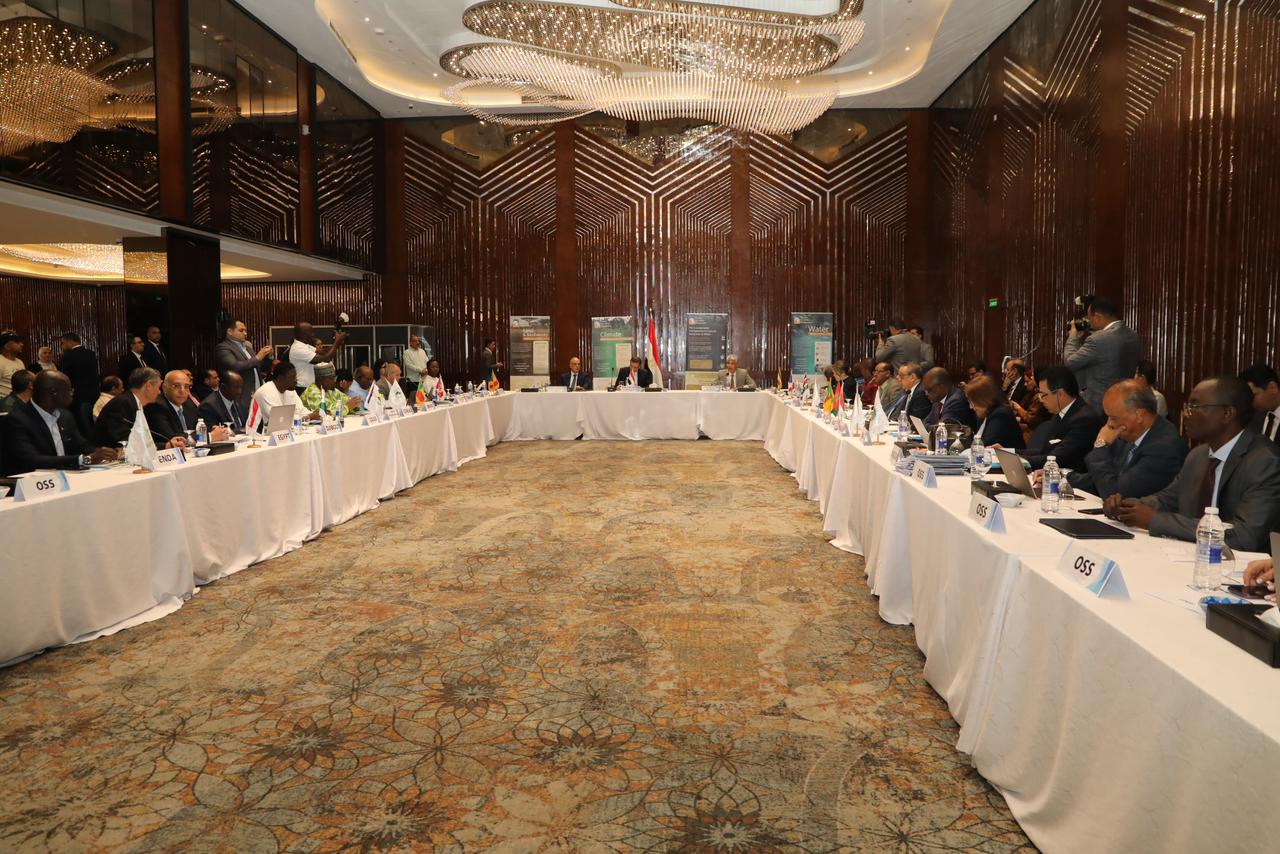
Egypt hosted the opening of the 33rd session of the Board of Directors of the Sahara and Sahel Observatory (SOAS) today, with high-level participation from ministers and representatives of member states and regional and international organizations.
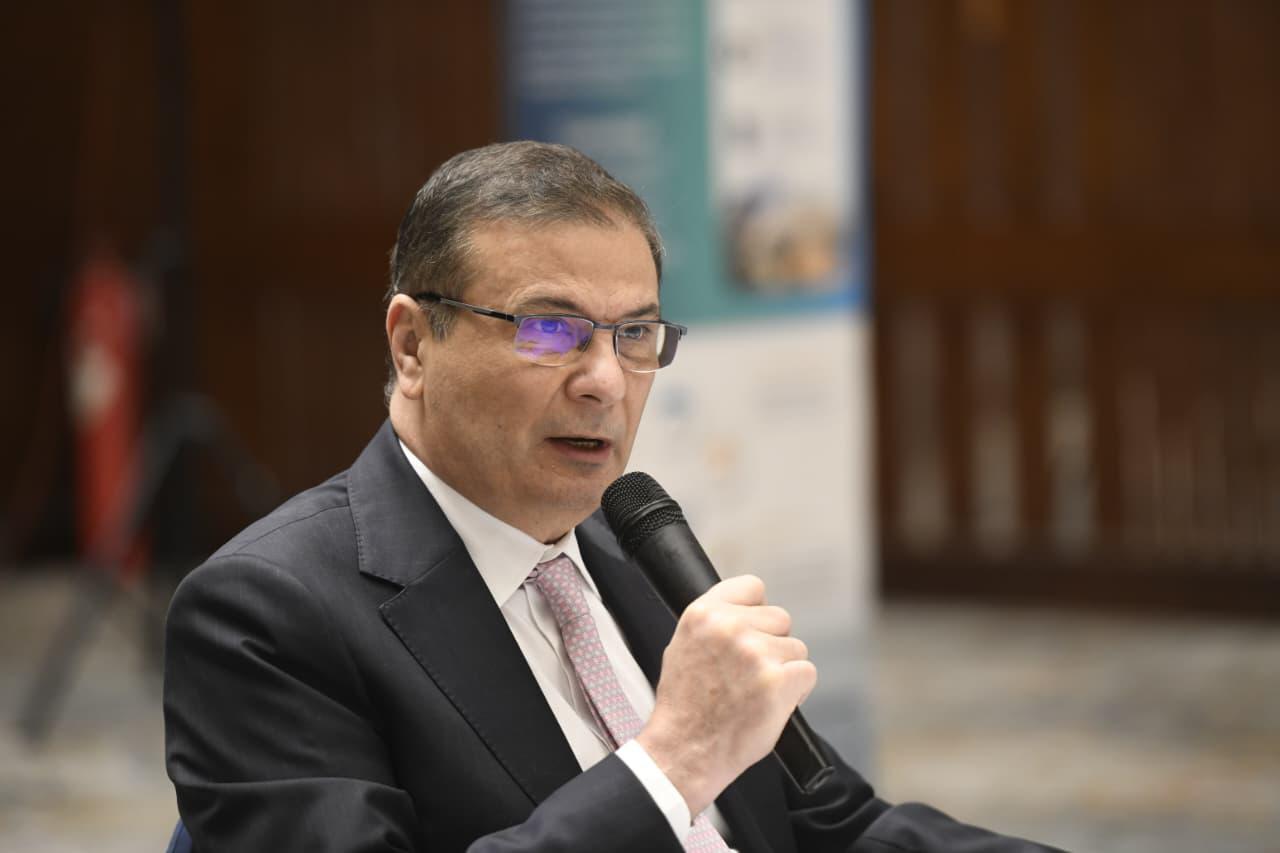
Alaa Farouk, Egypt’s Minister of Agriculture and Land Reclamation and Chairman of the (OSS) Board of Directors, stated that current environmental challenges, foremost among them climate change, land degradation, water scarcity, and biodiversity loss, require integrated collective responses.
This reinforces the pivotal role of the Observatory as a regional platform supporting the exchange of expertise, capacity building, and the development of sustainable solutions.
The Minister emphasized the importance of member states regularly paying their annual contributions, as this is a fundamental pillar for ensuring the Observatory’s continued operation and the expansion of its programs. He stressed the need to intensify efforts to mobilize resources from technical and financial partners to support future work plans.
Dr. Hossam Shawky, Head of the Desert Research Center and the Observatory’s National Coordinator in Egypt, added that the Center continues to support the Observatory’s objectives through its scientific research and applied projects aimed at achieving the sustainable use of natural resources and enhancing resilience to climate change.
Recommendations
The 33rd session of the Observatory resulted in a set of practical recommendations reflecting the priorities for the next phase. These include: adopting an ambitious action plan for the coming period; increasing funding allocated to climate and desertification projects; supporting digital transformation in the agricultural sector across the African continent; expanding the use of satellite applications and artificial intelligence; and launching joint regional projects in water, land, and agriculture.
Read also: The Director of African CEO Forum: current fertilizer crisis a wake-up call for African producers (Exclusive)
The recommendations also included improving the efficiency of early warning systems; strengthening the role of women and youth in green development; supporting food security in the most affected countries; and increasing integration among African research institutions.
It is worth noting that the opening session was attended by a number of ministers and officials, in addition to the two Egyptian ministers, such as: Habib El-Obeid, Minister of Environment of the Republic of Tunisia; Sam Cheptoris, Minister of Water and Environment of the Republic of Uganda; and Bakheit Hassan, Minister of Environment, Fisheries, and Sustainable Development of the Republic of Chad, along with Nabil Ben Khatra, Executive Secretary of the Observatory.
What is the OSS?
It is an international organization with an African focus, founded in 1992 and headquartered in Tunis since 2000. Its primary work is to establish and support partnerships to address challenges related to the joint management of water resources, as well as to implement international agreements on land degradation, biodiversity, and climate change in Africa.
According to its website, the Observatory comprises 28 African countries, in addition to 7 non-African countries such as Germany and France, and 13 entities representing Africa, the United Nations, and non-governmental organizations.
More details: