
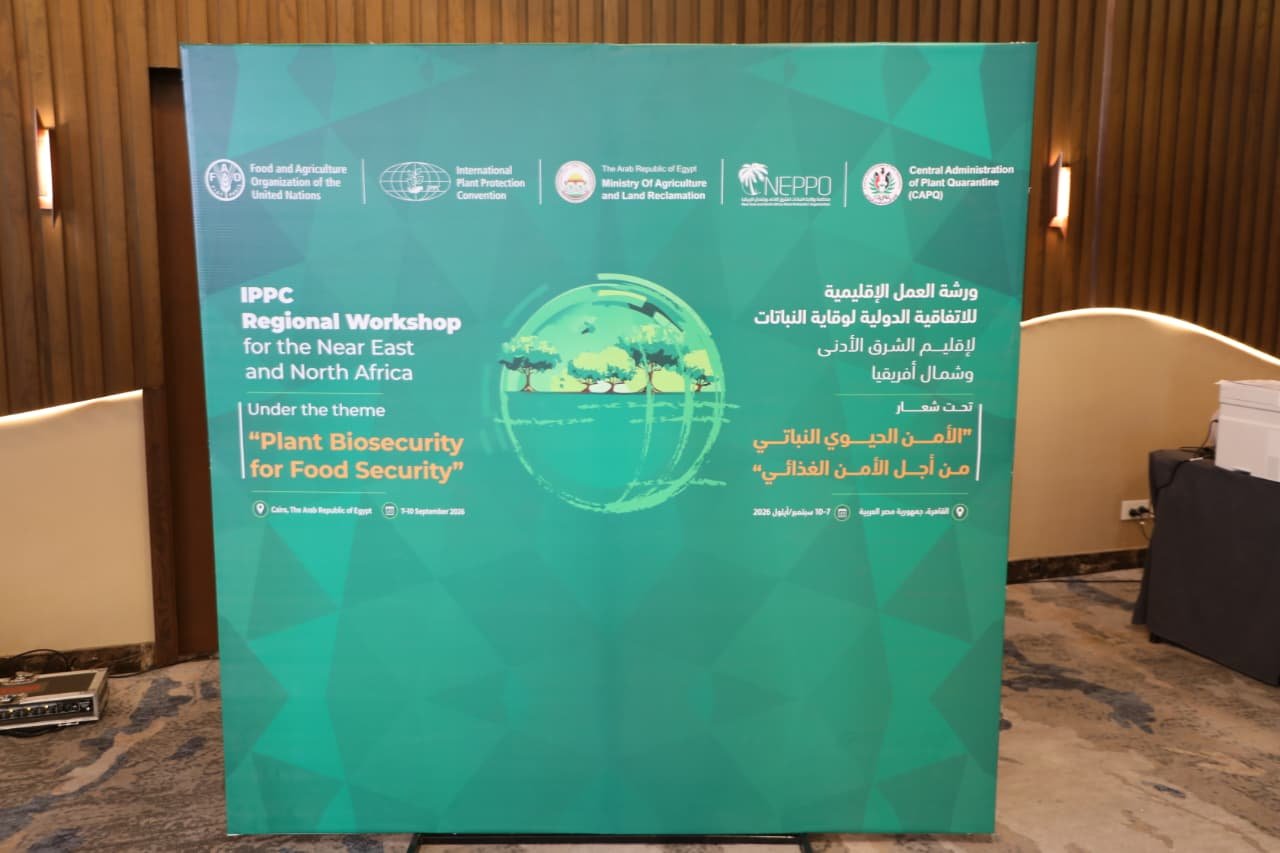
The Food and Agriculture Organization of the United Nations and the Near East and North Africa countries have called for stronger and more coordinated plant health systems to prevent the spread of transboundary pests, protect agricultural production and livelihoods, and support safe and sustainable agricultural trade.
The call was made during the 2026 FAO-IPPC Regional Workshop for the Near East and North Africa, being held in Cairo from 7 to 10 September under the theme “Plant Biosecurity for Food Security.” The event was jointly organized by the Food and Agriculture Organization of the United Nations (FAO), the International Plant Protection Convention (IPPC) Secretariat, the Near East Plant Protection Organization (NEPPO), and Egypt’s Ministry of Agriculture and Land Reclamation.
The four-day regional meeting brought together representatives of national plant protection organizations, plant health experts and regional partners to exchange experiences, discuss emerging plant health challenges, review draft international standards for phytosanitary measures and strengthen regional coordination.
Egypt highlights its commitment to plant health
In his opening address, H.E. Alaa Farouk, Minister of Agriculture and Land Reclamation of Egypt, welcomed participants and reaffirmed the importance of cooperation on plant health and food security.
“Plant health is an essential pillar of food security and sustainable agricultural development”.
From responding to pests to preventing them
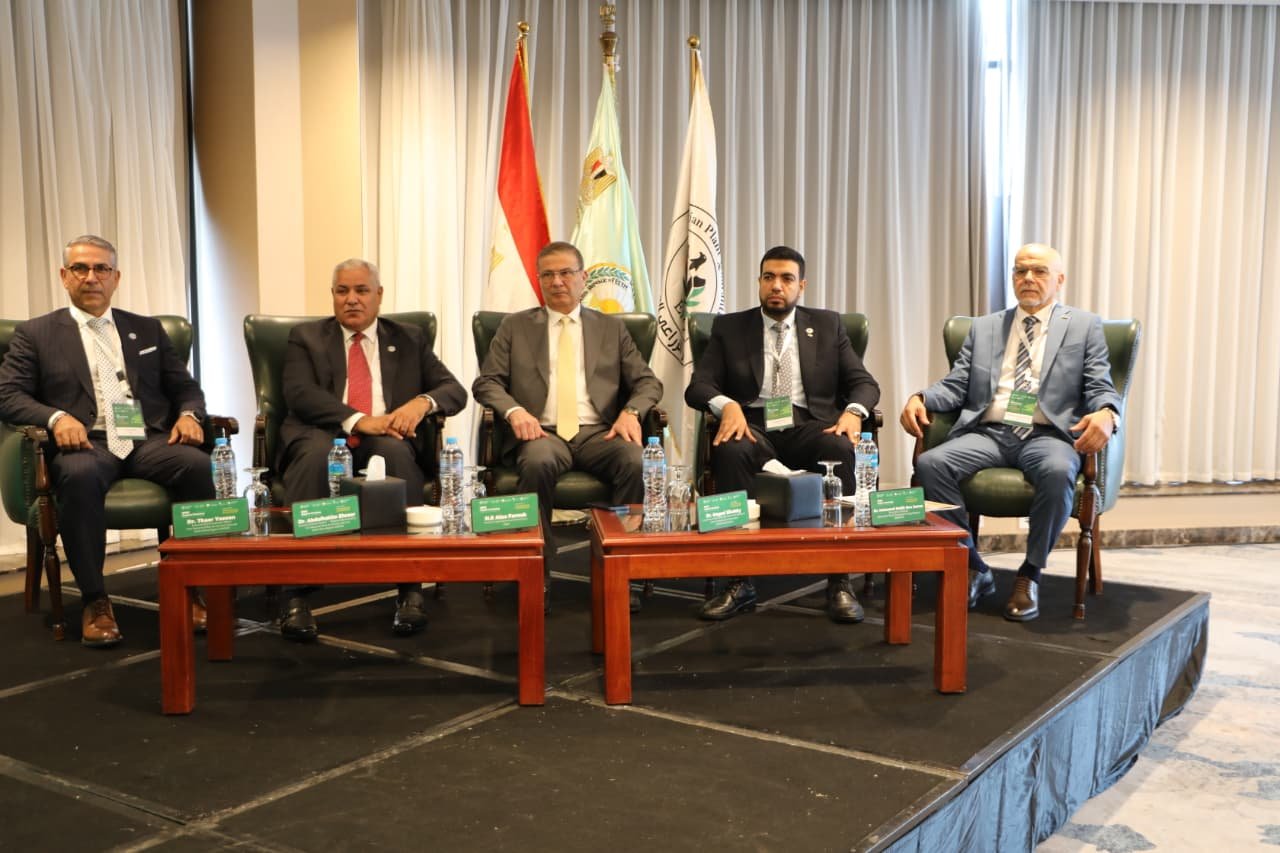
In his opening remarks, Dr AbdulHakim Elwaer, FAO Assistant Director-General and Regional Representative for the Near East and North Africa, stressed that plant health must be viewed as a strategic priority for food security, economic stability and resilient livelihoods.
Read also: Crops’ nutritional quality reduces if CO2 and temperatures increase, lose minerals (research)
The region is facing increasingly complex risks as climate change alters pest distribution, while expanding trade and the movement of people and goods increase the potential for pests to cross borders. Water scarcity and protracted crises are placing additional pressure on agricultural and food systems.
Dr Elwaer emphasized the need for a clear shift from responding to pests after they emerge towards prevention and preparedness, supported by stronger surveillance and early warning, rapid diagnostics, pest risk analysis, emergency preparedness and response, national capacities and digital solutions for information sharing and decision-making.
“Protecting plant health is not simply a technical issue; it is a direct investment in food security, economic stability, sustainable livelihoods and the resilience of our communities,” Dr Elwaer said.
Coordinate regional positions on draft international standards and emerging plant health issues
Representing the IPPC, Dr Maged El-Kahky, Agriculture Officer at FAO Headquarters in Rome and IPPC Representative, highlighted the Convention’s central role as the international framework for plant health and the prevention of the introduction and spread of plant pests.
The IPPC brings countries together to develop and implement international standards for phytosanitary measures, strengthen capacity development and information exchange, and facilitate safe agricultural trade, including through initiatives such as the electronic phytosanitary certification system, or ePhyto.
Dr El-Kahky noted that regional IPPC workshops provide an important space for contracting parties to exchange experiences, coordinate regional positions on draft international standards and emerging plant health issues, and strengthen the region’s voice in global plant health governance.
For his part, the Executive Director of NEPPO, Mohamed Habib Ben Jemaa, affirmed that combating transboundary pests requires national, regional and international collaborative work, as NEPPO believes in collaborative work, and many joint activities have been implemented. He stressed that NEPPO is a major regional asset for developing plant health capabilities in the countries of the region, and is open to joint and constructive cooperation to address transboundary pests and develop safe trade.
Participants underscored that the effectiveness of international standards depends on their practical implementation at national and regional levels. Strong plant health systems can help countries protect crops and natural resources while maintaining access to agricultural markets and strengthening confidence among trading partners.
Turning regional commitments into action
The workshop’s discussions are aligned with the FAO Near East and North Africa Plant Health Strategy 2025–2035, which promotes a more integrated regional approach to prevention and preparedness, capacity development and cooperation in addressing transboundary plant health risks.
Read also: Domiatec Agri-Group: We select the highest yield and pest-resistant seeds (Exclusive)
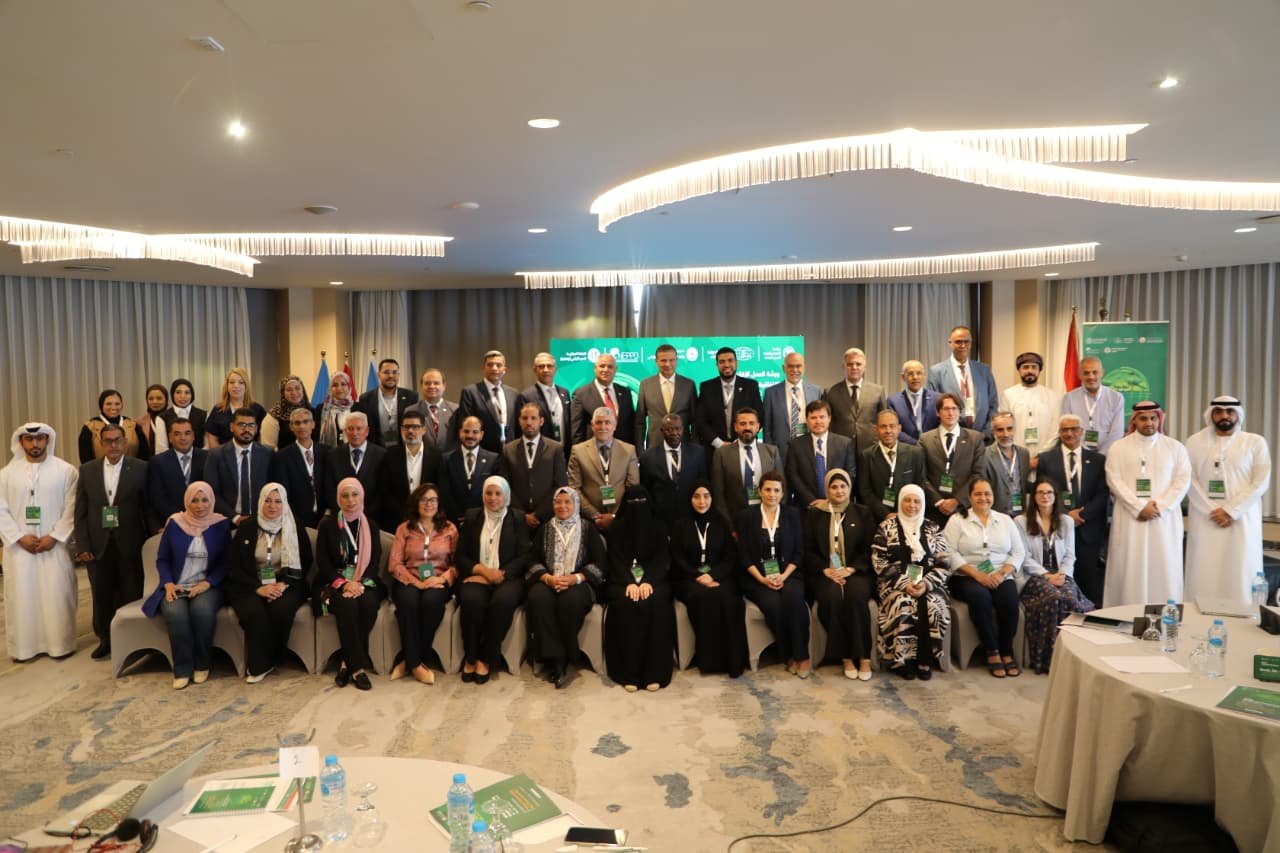
Participants emphasized that the success of regional efforts should ultimately be measured by tangible improvements in countries’ ability to detect threats early, respond rapidly and effectively, protect agricultural production and livelihoods, and facilitate safe agricultural trade.
“Through our collective commitment and strengthened cooperation among countries of the region, we can build national plant health systems that are more efficient, proactive and capable of prevention, early detection and rapid response under the One Health approach, which combines public health, animal, plant and environmental health.” Dr Elwaer said.
FAO, the IPPC Secretariat, NEPPO and regional partners will continue working with countries to translate the workshop’s discussions into practical action and stronger cooperation, including through South-South and triangular cooperation.