
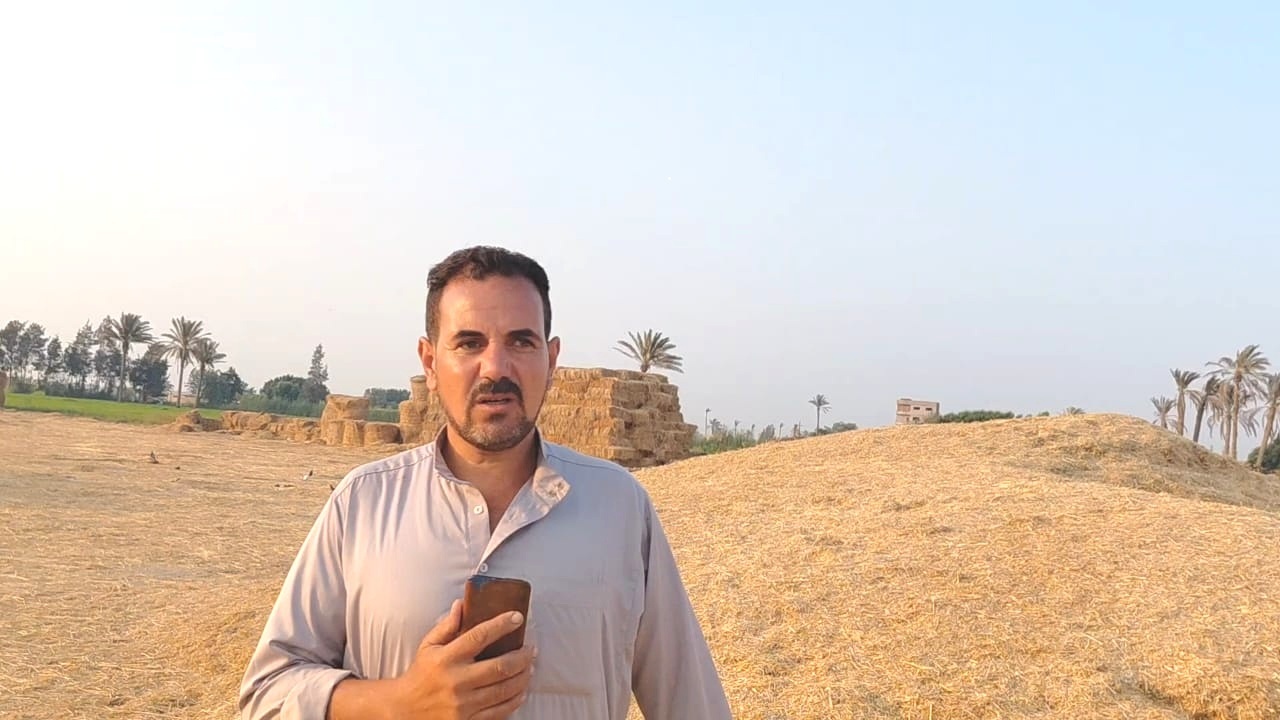
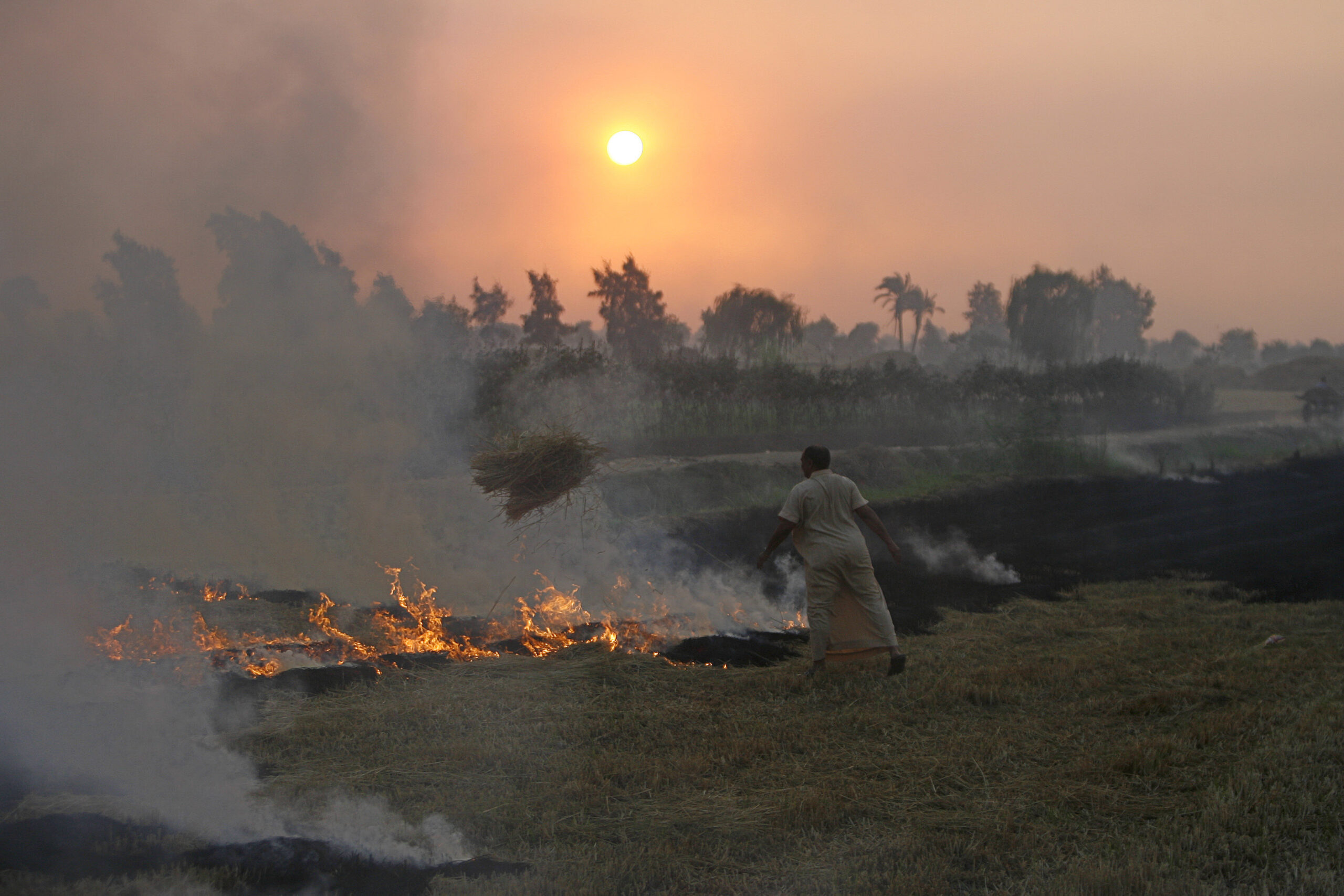
Rice straw in Egypt is no longer just agricultural waste that farmers dispose of by burning, leading to air pollution in Egypt during the harvest season, in what was known for many years as the “black cloud.” Instead, it has transformed in recent years into an economic resource that provides farmers with additional income and an alternative source of low-cost animal feed.
This transformation took many years, making rice straw a success story demonstrating the potential to utilize all agricultural waste. However, despite the environmental and economic gains achieved by the rice straw collection and recycling system, those working in this sector face a problem that threatens their work incentives: transportation and traffic violations due to the high loads, according to Mohamed Ahmed Mohamed, a rice straw collector in Belbeis, Sharqia Governorate.
Mohamed Ahmed spoke with “Food & Climate” at his workplace on the Cairo-Ismailia agricultural road about the importance of this activity in supporting farmers and livestock breeders, the extent of its economic benefits, the main obstacles facing those working in it, and its potential impact on feed prices, and consequently, meat and dairy prices, in the following interview:
Could you explain the nature of your work in collecting rice straw?
I work in rice straw collection in Belbeis, Sharqia Governorate. This activity aims to utilize rice straw, which used to be burned, causing the black cloud phenomenon for many years.
Read also: Rice straw, Nepalese farmers’ method for conserving soil water
Today, thanks to the efforts of those working in this field, this phenomenon has largely disappeared in the last 10-15 years. The straw is recycled and turned into hay used in animal feed.
When does the rice straw collection season begin?
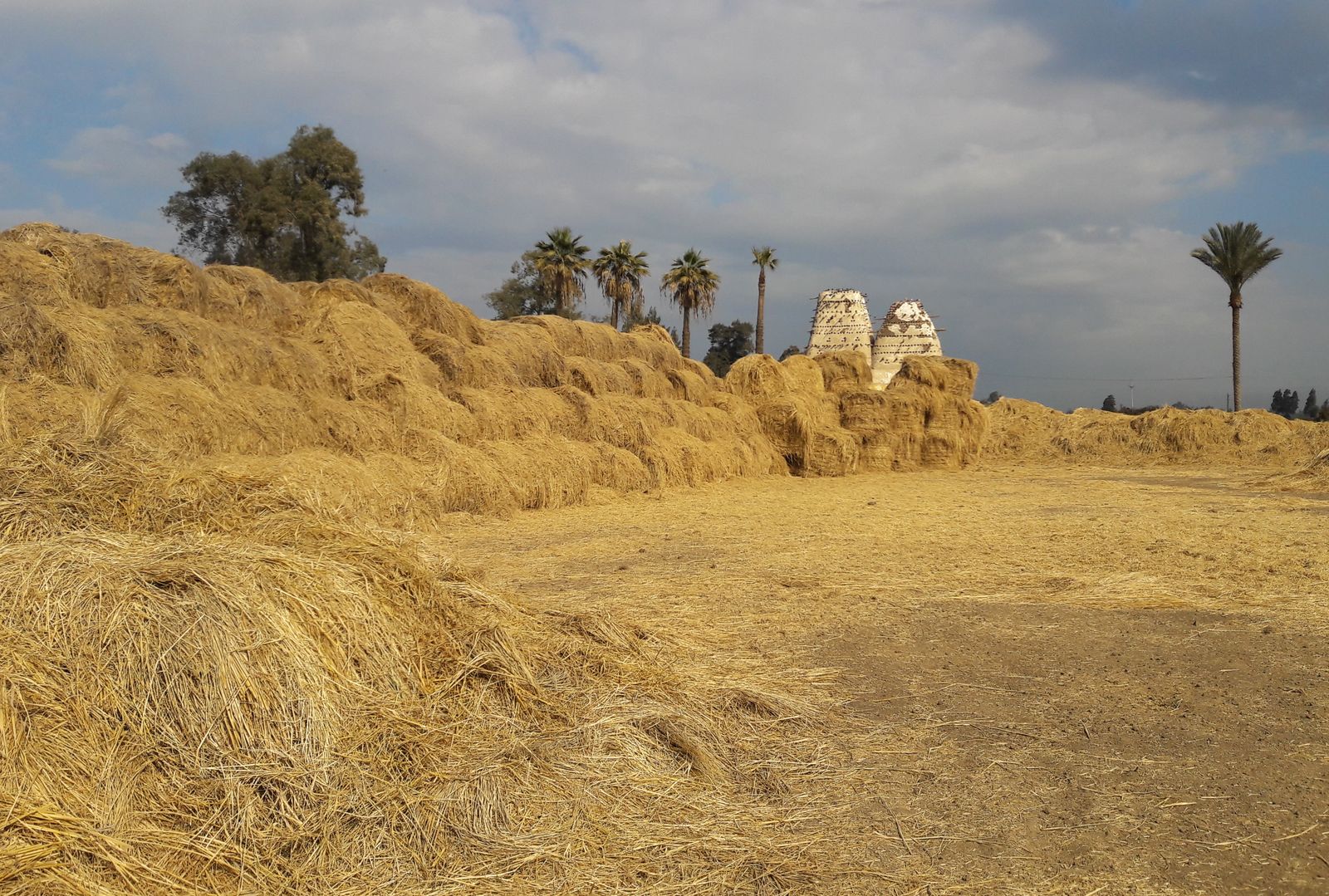
The season begins during October, November, and December each year. The straw is collected after the rice harvest using specialized equipment, then baled, transported, and stored before being processed into hay suitable for use as animal feed.
Read also: Agricultural residues in Egypt amount to 45 million tons
Did you receive any government support?
The Ministry of Environment used to provide support to those working in this sector, but this support has now stopped, and the activity relies entirely on the workers’ own efforts.
What are the most significant challenges you currently face?
The main problem lies in transporting rice straw. Transport vehicles are frequently stopped and issued traffic tickets for alleged “protruding” or “high” loads, even though straw is a lightweight material and requires appropriate loads for transport to be economically viable.
How do transport restrictions affect the prices of final products?
The fare for a single truck remains fixed whether it transports 1.5 tons or 4 tons. Therefore, reducing the load significantly increases transportation costs, which ultimately impacts feed prices and, consequently, the prices of meat and dairy products, which are ultimately borne by the consumer.
Do you adhere to the regulations regarding load heights?
Absolutely. We comply with the permitted heights. The minimum height for the bridges is approximately 4.5 meters. We also take into account the routes of power lines during transport to ensure public safety.
How much do farmers benefit from this activity?
The farmer is the beneficiary of this system. Previously, they resorted to burning rice straw and were subject to environmental fines that could reach 15,000 Egyptian pounds. Now, they receive income from selling it. Last season, the price of rice straw per feddan ranged between 3,000 and 4,000 Egyptian pounds.
How is the straw priced after collection?
Prices are subject to market supply and demand. Some years are profitable, while others only cover costs or recover capital. Therefore, the nature of the activity is seasonal and affected by market conditions.
Read also: Rice cultivation in (ASEAN) uses (Alternate-Wetting-Drying) technology
What are the stages of the process after purchasing the straw from the farmers?
The activity is entirely dependent on equipment and labor. Farmers sell the straw after harvesting, machinery then balses it, and workers transport and store it before it is processed into hay for livestock feed. The most significant challenges are the high costs of equipment, fuel, and labor.
How has rice straw contributed to providing alternative animal feed?
Rice straw has successfully provided a suitable and economical alternative to animal feed. The price of a ton of white hay (wheat straw) could reach approximately 10,000 Egyptian pounds without it. The average price of rice straw ranges between 1,300 and 1,400 Egyptian pounds only. This has led many livestock breeders to rely on it, and some have even completely abandoned the use of wheat straw.