
The government is striving to develop Saudi Arabia’s fisheries to enhance food security. The Kingdom is also making efforts to support the sustainability of its marine resources as part of the goals of Vision 2030.
This is being done through a range of initiatives and projects that support food security and improve the efficiency of natural resource utilization, according to Omar Ageely, Deputy Director General of Fisheries at the Ministry of Environment, Water and Agriculture.
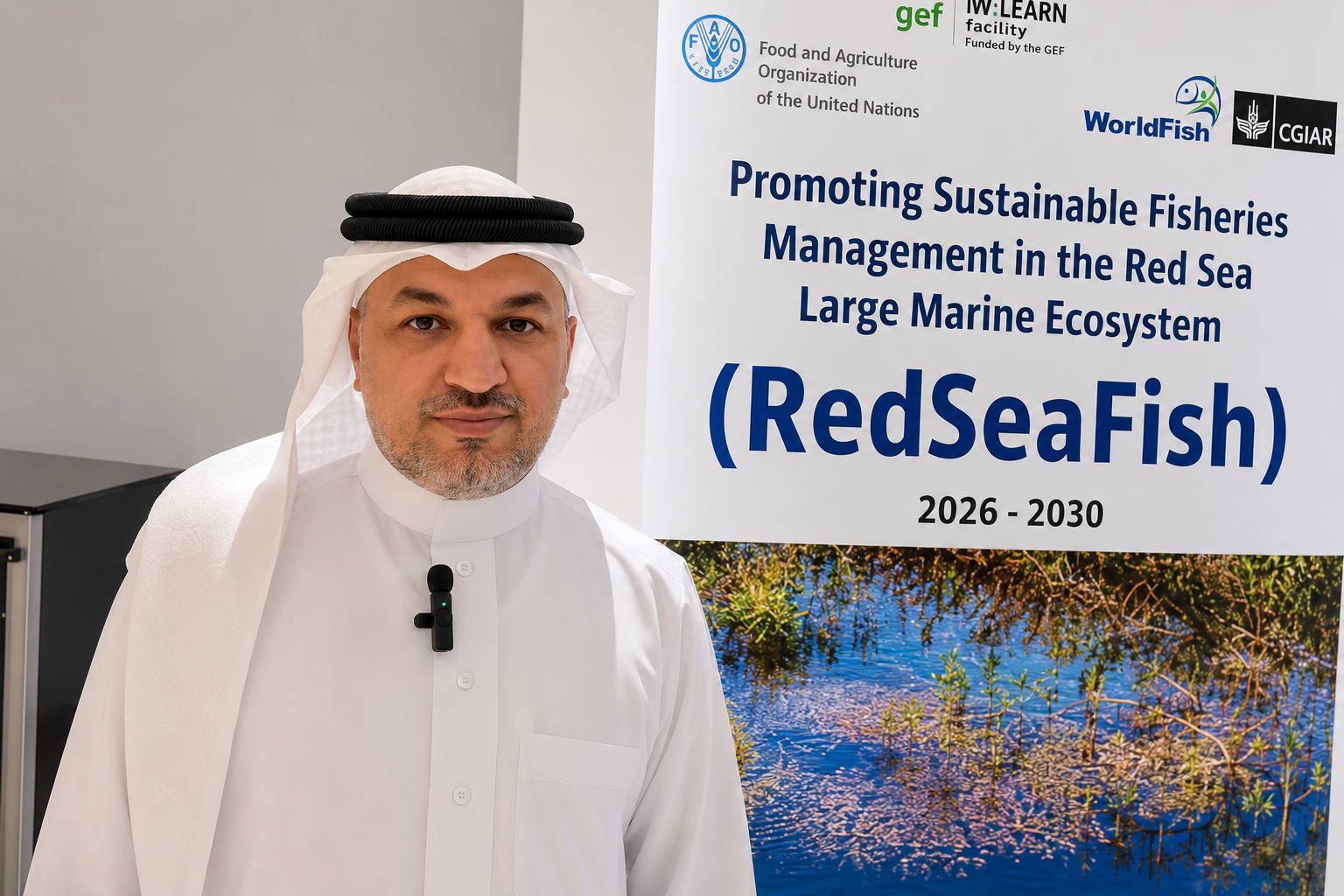
Ageely participated, representing his country, in a workshop to launch the Food and Agriculture Organization (FAO) Red Sea Fisheries Sustainability Project, along with seven other participating countries. The workshop was held in Egypt last week.
Ageely told “Food & Climate” that the Red Sea Sustainability Project is one of the regional initiatives that brings together countries bordering the Red Sea under the umbrella of scientific cooperation and the exchange of expertise and data.
He explained that work on the project began in 2022 in cooperation with the FAO and participating countries, noting that relevant authorities are currently working to complete the implementation phases and joint coordination.
Ageely added further details about fisheries development and plans to develop fish resources in Saudi Arabia, and the development of this sector, in the following interview:
Tell us about the Red Sea Sustainability Project and its main objectives?
The Red Sea Sustainability Project is being implemented with the participation of member states bordering the Red Sea, under the auspices of the FAO, and with representation from WorldFish.
It aims to ensure the sustainability of Red Sea resources for future generations by promoting scientific research, exchanging expertise among member states, and sharing data and information related to the management and sustainability of marine resources.
Read also: WTO Agreement on Fisheries Subsidies enters into force after approval by 4 member states
Work on the project began in 2022 in cooperation with the FAO and participating countries, and we are currently working to complete the implementation phases and joint coordination.
We look forward to this meeting producing outcomes that align with the project’s objectives and contribute to achieving the environmental and economic sustainability of the Red Sea.
What is the size of marine fisheries production in the Kingdom of Saudi Arabia?
The Kingdom’s marine fisheries production reached approximately 84,000 tons of fish in 2024, and we continue to work on increasing this production in line with the goals of Vision 2030. This is being achieved through the development of Saudi Arabia’s fisheries sector and enhancing its contribution to food security.
What are the most prominent development initiatives supporting the growth of the fisheries sector in Saudi Arabia?
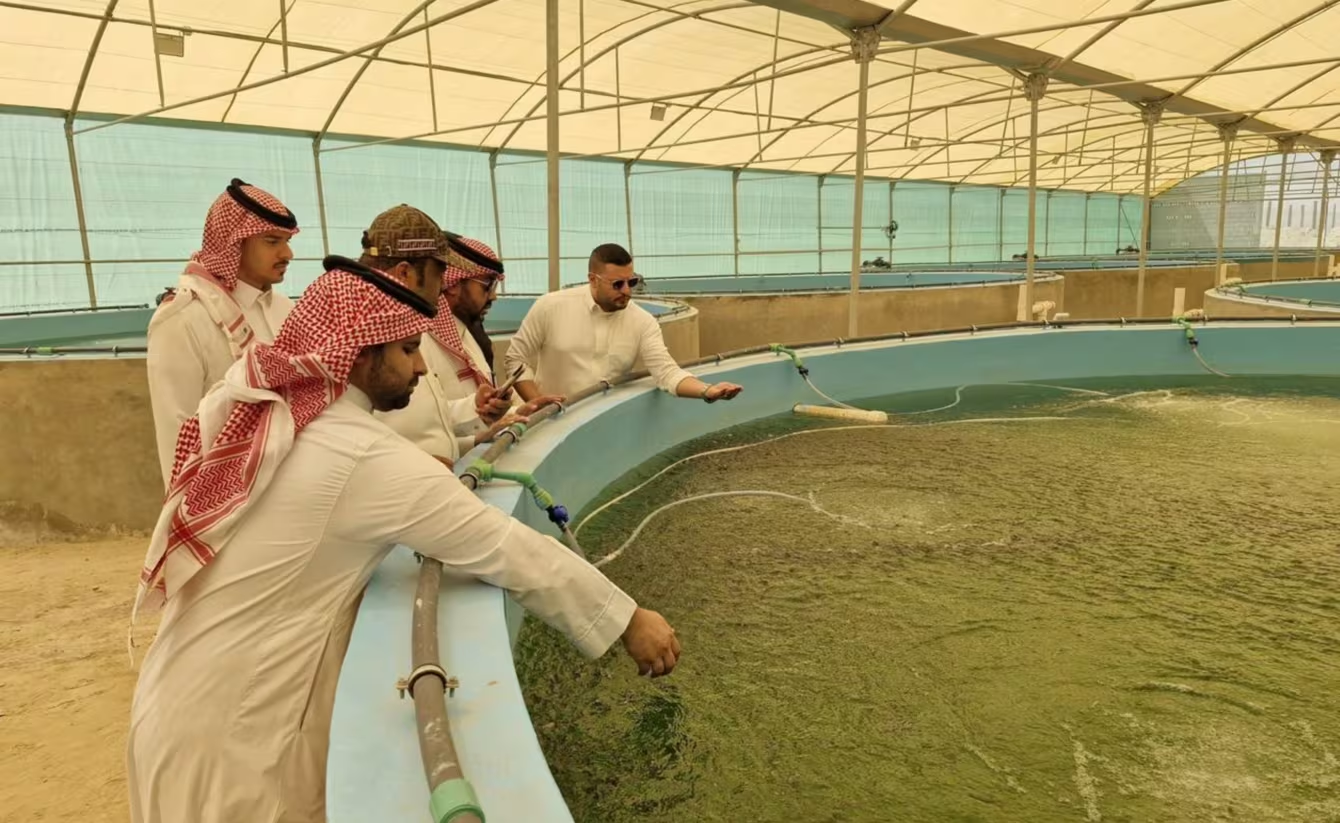
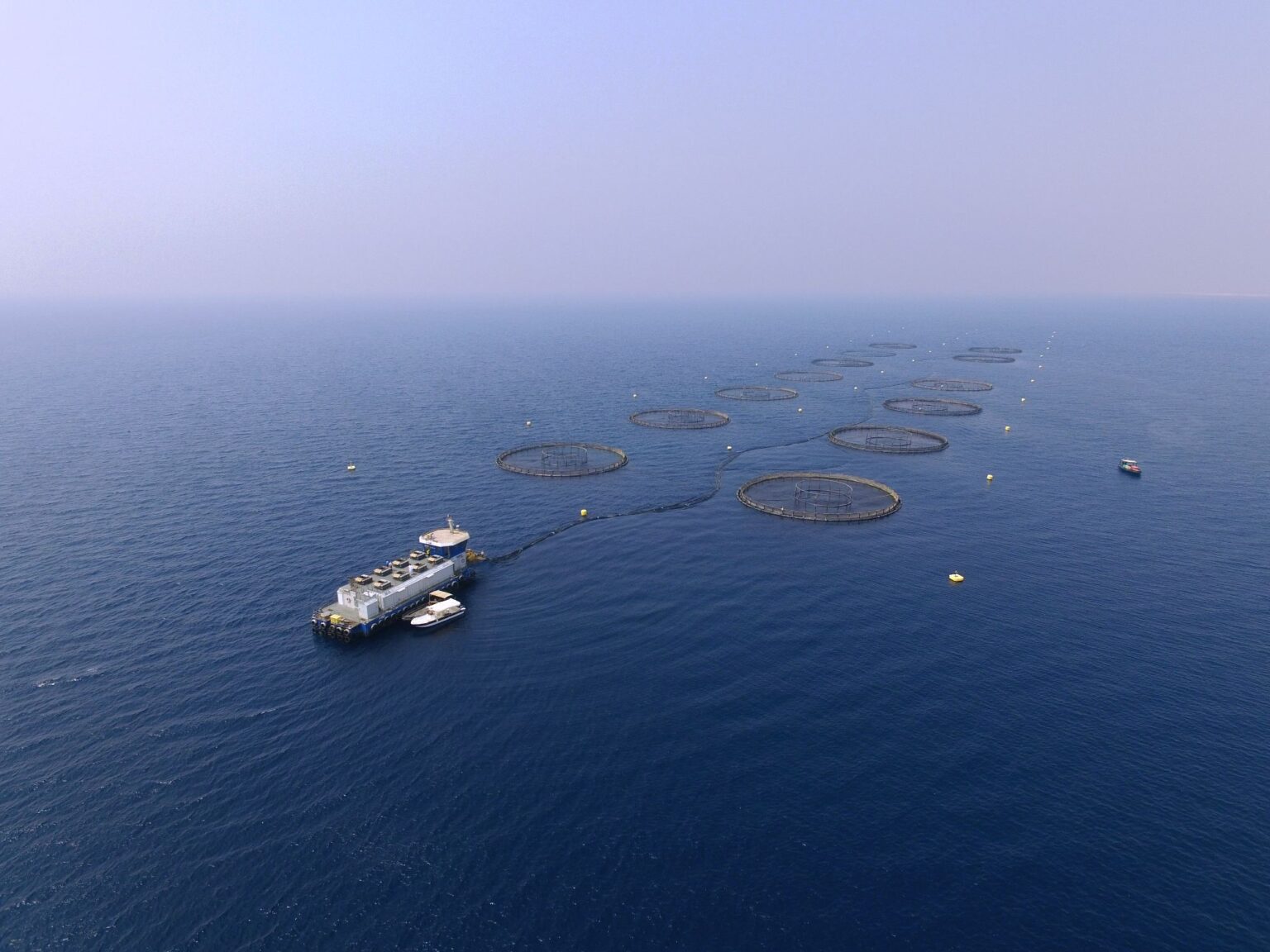
There are several development initiatives we are implementing in the Saudi fisheries sector, with aquaculture being a leading component, as it is one of the key pillars supporting the sector.
Read also: The fish die-offs in Lake Manzala farms in Egypt, Is it related to rising temperatures?
Through these initiatives, we aim to increase local production of fish products and achieve higher levels of self-sufficiency, in addition to meeting the growing demand for fish and seafood products, thus supporting the Kingdom’s food security system.
What is the role of women in the fisheries and aquaculture sector in the Kingdom?
The Kingdom places great importance on empowering women in the fisheries and aquaculture sector. However, this empowerment is not limited to fishing operations alone, but includes many other areas where women can contribute significantly. We have worked to empower women in marketing, fish product development, and related processing industries, such as fish canning.
Read also: Tuna fishing in Mozambique becomes possible
We have offered specialized training programs and courses to enhance women’s skills and leverage their capabilities in various fisheries-related activities, in addition to providing specialized programs and training specifically for women.
Through the Red Sea Sustainability Project and other initiatives, we strive to promote participation and empowerment opportunities for all those working in the sector, both men and women, contributing to its development and the achievement of its goals.