
Food & Climate
8.6% (1 301 ha) of cropland in Gaza is still accessible, but only 1.5 % (232 ha) is accessible and not damaged, the data of UN today show the size of famine in the Strip.
The damaged area was assessed as of 28 July 2025 by the Food and Agriculture Organization of the United Nations (FAO) and the United Nations Satellite Centre (UNOSAT), based on the cropland dataset for 2023.
The area accessible was determined by excluding the so-called no-go areas in place and the areas subject to evacuation orders since 18 March 2025 (the United Nations Office for the Coordination of Humanitarian Affairs [OCHA], July 2025), according to a statement that “Food & Climate” platform received.
Another 12.4% of cropland in Gaza (1 858 ha) is not damaged but is currently not accessible.
86.1 percent (12 962 ha) of the total cropland in Gaza is damaged.
Cropland in Rafah, North Gaza and nearly all cropland in the Gaza governorate are not accessible.
Cropland in Gaza and the full-scale famine
Quote from FAO Director-General QU Dongyu on the situation in the Gaza Strip:
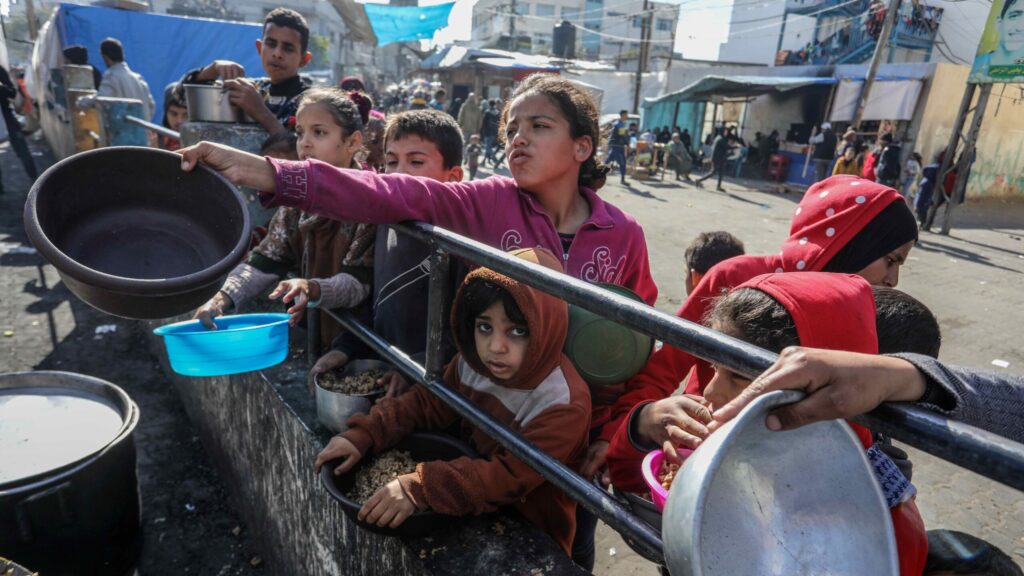
“Gaza is now on the brink of a full-scale famine. People are starving not because food is unavailable, but because access is blocked, local agrifood systems have collapsed, and families can no longer sustain even the most basic livelihoods.”
“We urgently need safe and sustained humanitarian access and immediate support to restore local food production and livelihoods – this is the only way to prevent further loss of life. The right to food is a basic human right.”
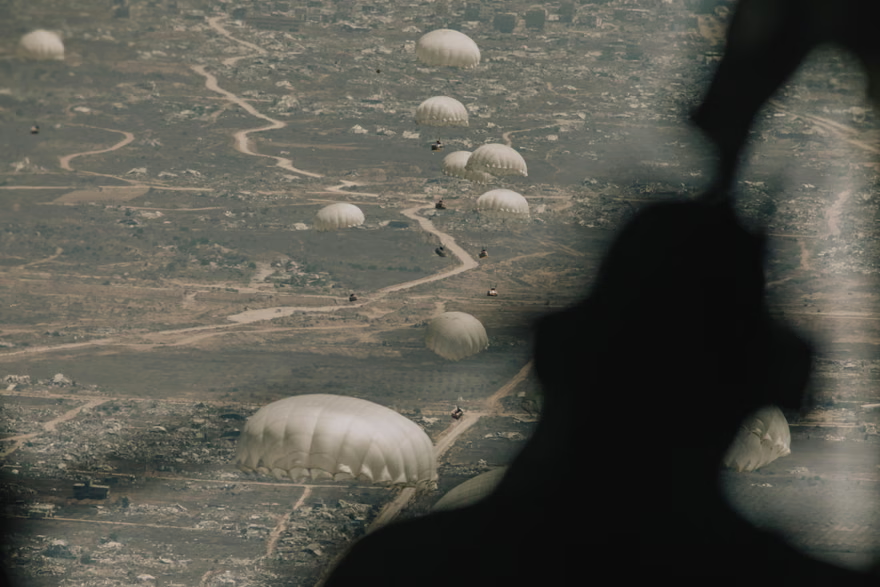
The Guardian was granted permission on Tuesday to travel onboard a Jordanian military aircraft providing aid. Israel announced last week that it had resumed coordinated humanitarian airdrops over Gaza, following mounting international pressure over severe shortages of food and medical supplies, which has reached such a crisis point that a famine is now unfolding there.
The flight offered not only a chance to witness three tonnes of aid – far from sufficient – dropped over the famine-stricken strip but also a rare opportunity to observe, albeit from above, a territory that has been largely sealed off from the international media since 7 October and the subsequent offensive launched by Israel. Following the Hamas-led attacks that day, Israel barred foreign journalists from entering Gaza – an unprecedented move in the history of modern conflict, marking one of the rare moments that reporters have been denied access to an active war zone.
Wasteland of crumbling concrete and dust
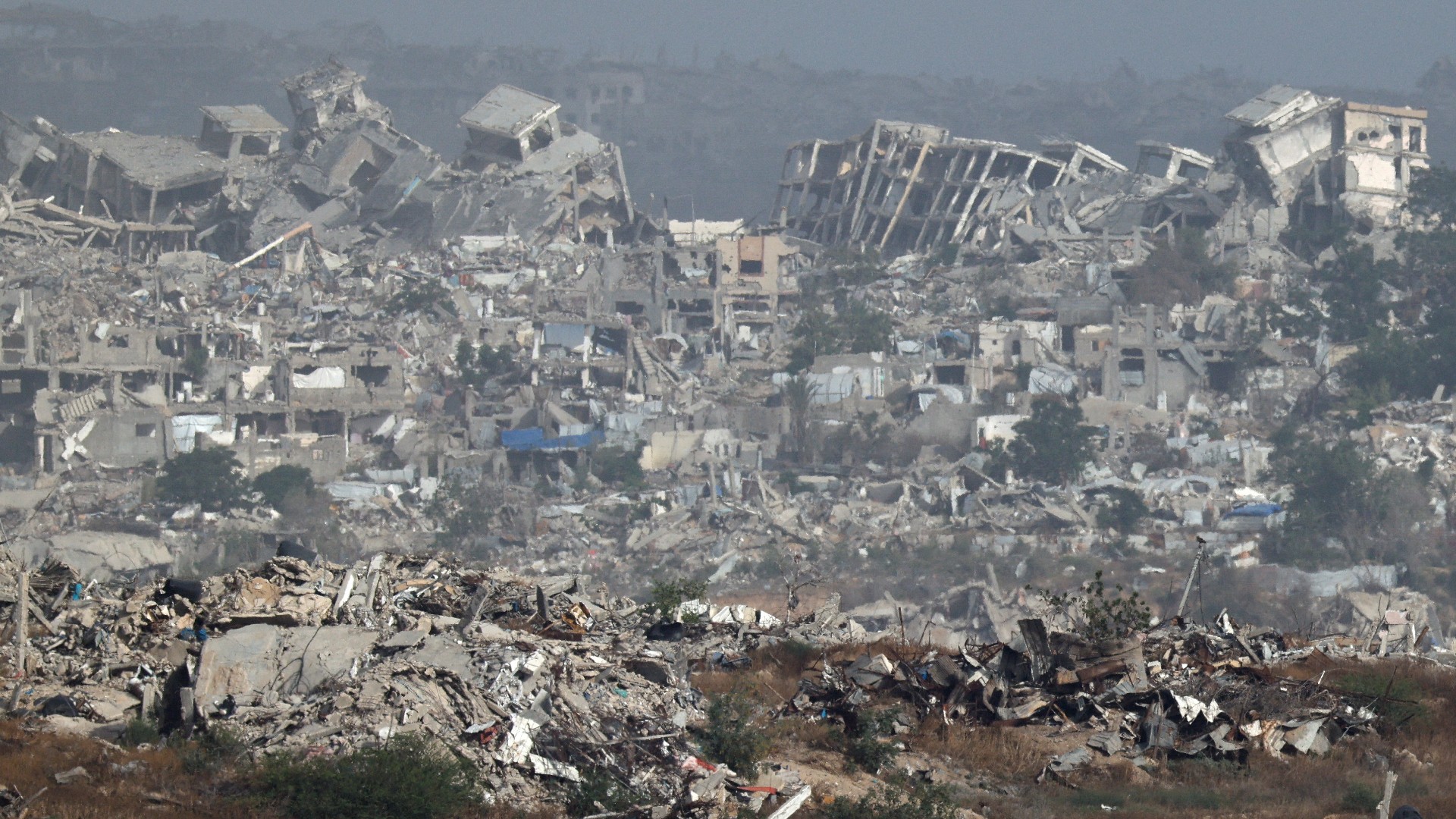
About an hour and a half after takeoff, the plane flies over the ruins of northern Gaza and Gaza City, now a wasteland of crumbling concrete and dust.
Buildings are reduced to rubble, roadways pitted with craters, entire neighborhoods flattened. From this distance it is nearly impossible to see Gaza’s inhabitants. Only through a nearly-400mm camera lens is it possible to make out a small group of people standing among the ruins of a shattered landscape – the only sign of life in a place that appears otherwise uninhabitable.
While airdrops can create the perception that something is being done, they are, by common consensus, costly, inefficient and do not get anywhere near to the amount of aid that could be delivered by lorries. In the first 21 months of war, 104 days of airdrops supplied the equivalent of just four days of food for Gaza, Israeli data shows.
They can also be deadly; at least 12 people drowned last year trying to recover food that landed in the sea, and at least five were killed when pallets fell on them.
Farther south, the plane passes over Deir al-Balah, in central Gaza. There, in the Baraka area below, on 22 May, 11-year-old Yaqeen Hammad, known as Gaza’s youngest social media influencer, was killed after a series of heavy Israeli airstrikes hit her house while she watered flowers in a tiny patch of greenery eked out of a displacement camp.
A couple of kilometres further, the aircraft flies near Khan Younis, besieged for months by Israeli forces amid fierce fighting in and around its hospitals. Somewhere in the northern suburbs are the remains of the home of Dr Alaa al-Najjar, a Palestinian paediatrician who worked at al-Tahrir hospital, part of the Nasser medical complex. Her house was bombed in May while she was on shift. Her husband and nine of her 10 children were killed in the attack.