
Fruit and vegetable production grew at a faster pace than cereal production over the 14-year period between 2010 and 2024, and horticulture now accounts for nearly a quarter of the value of global agricultural output, equivalent to $1.4 trillion, according to Qu Dongyu, Director-General of the Food and Agriculture Organization (FAO).
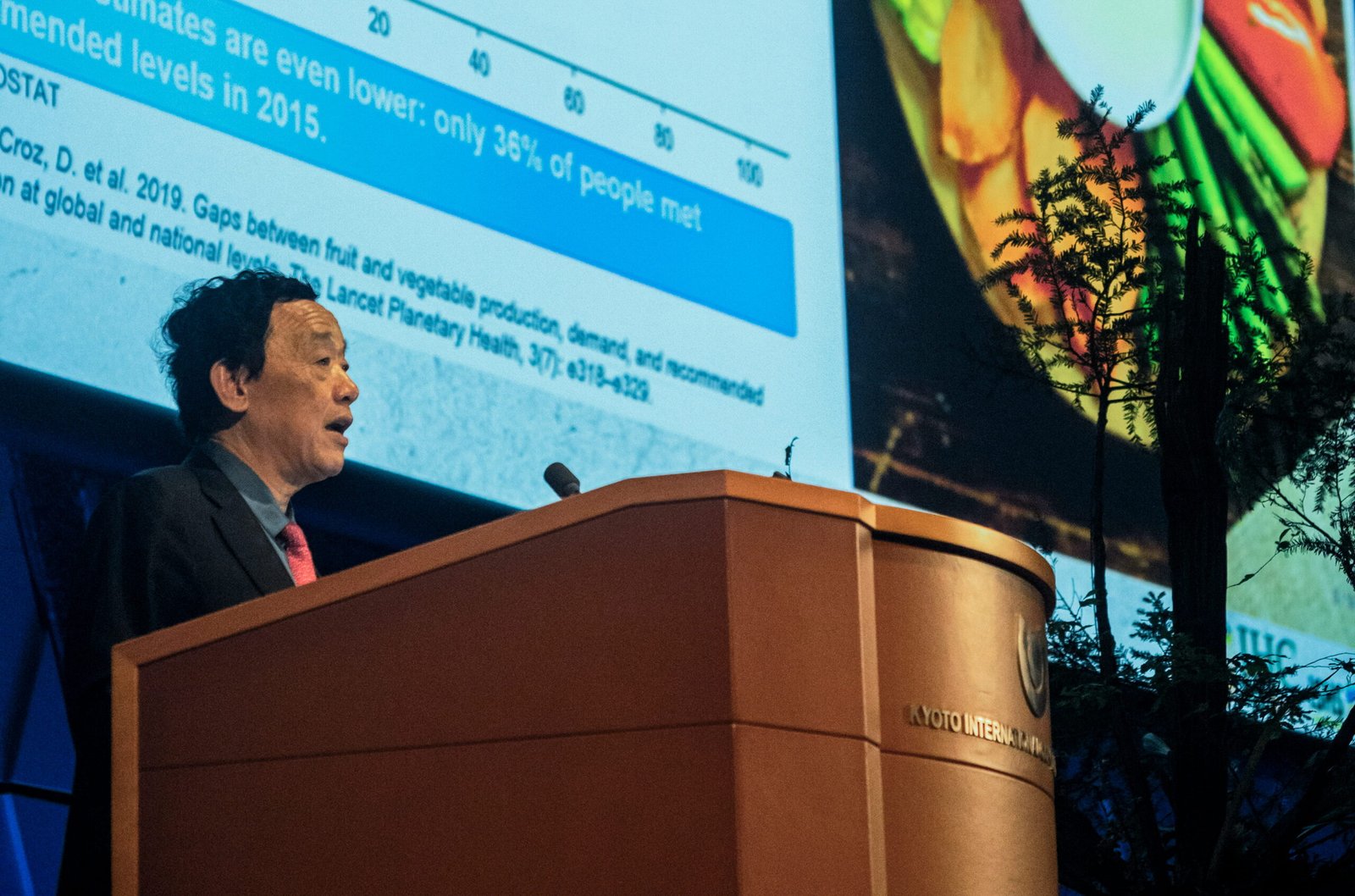
Speaking at the International Horticultural Conference 2026 in Kyoto on Monday, August 24, 2026, he said, according to a statement received by Food & Climate, that fruit and vegetable exports increased by about 2.6% annually during this period, reaching 175 million tons worth $240 billion by 2024.
He added that despite this economic success, it has not been reflected in healthier dietary patterns.
Challenges in fruit and vegetable production
The FAO Director-General identified productivity, availability, and affordability as interconnected challenges to unlocking the full nutritional potential of horticulture and fruit and vegetable production.
Crop growth has been less than 1% annually, lagging behind cereals, amidst a lack of investment. In scientific research, genetics, and infrastructure, the issue of productivity is highlighted.
Read also: UK fruits and vegetables arriving weeks earlier than usual due to warm May
Regarding availability, the latest FAO analysis shows that fruit and vegetable production in only half of the countries in 2023 will be sufficient to meet the FAO/WHO target of 400 grams per person per day.
Average consumption is much lower, estimated at around 80 grams of fruit and 190 grams of vegetables per person per day globally.
In terms of affordability, agricultural product prices increased between 2016 and 2025 in 89% of countries for fruit and 93% for vegetables, with average annual increases of around 4.2% and 4.7%, respectively.
Future gaps
Current trends indicate significant gaps in the future. By 2050, projections suggest that less than a third of sub-Saharan African countries will have sufficient fruit and vegetable supplies to meet the FAO/WHO recommendation.
With increasingly limited land and water resources and intensifying climate change pressures, Climate change, with its rising temperatures, water scarcity, extreme weather events, pests, and diseases, has prompted Qu Dongyu to call for investment in improved seeds and planting materials, better soil health, efficient irrigation, mechanization, digital technologies, agricultural extension services, post-harvest systems, and stronger linkages between producers and markets.
“Future growth must increasingly come from producing more with less,” he said.
The importance of artificial intelligence
Qu Dongyu emphasized that progress requires a fundamental transformation, not just expansion, with farmers at the heart of the process.
“No innovation, policy, or investment will succeed without their knowledge, trust, and participation,” he added. “Farmers must value the efforts of scientists and researchers.”
He noted that artificial intelligence, genome editing, and digital tools accelerate hybridization processes and reduce post-harvest losses, citing the work of the FAO/IAEA Joint Centre for Nuclear Technologies in Food and Agriculture in the field of mutational hybridization, which has contributed to the development of more than 3,450 certified crop varieties for over 70 species. Plant-based, including many fruits and vegetables.
Read also: Some fruit farmers in India are reluctant to insure their crops against weather
He called for innovations to be accessible, affordable, and viable, especially for small-scale producers who contribute a significant portion of global horticultural production.
Farms of 20 hectares or less contribute more than half of global fruit and vegetable production, rising to over 80% in Asia and sub-Saharan Africa.
He also urged governments to support the sector through research, seed systems, infrastructure, trade policies, and markets that reward quality and nutritional value.
Traditional knowledge
Qu Dongyu emphasized that the future must also be based on traditional knowledge passed down through generations, highlighting the FAO’s efforts in this area. Nearly half of the 104 systems recognized by the FAO as Globally Important Agricultural Heritage Systems involve horticulture, ranging from jujube orchards in China’s Jia County to date palms and olive trees in Egypt’s Siwa Oasis.
More details: