

Food & Climate
A recent research shows that more extreme weather and shifting growing seasons are putting pressure on school meal programs, which serve nearly half a billion children worldwide.
Jennifer Burney, a professor of Earth system science and of environmental social sciences in the Stanford Doerr School of Sustainability, studies these changes and how they affect children’s health and well-being.
School meals do far more than fill stomachs. “School meals are a really interesting way of doing two things at once—setting a strong foundation for healthy individuals and societies, and building a climate-friendly and climate-resilient food system,” Burney said.
Her work shows that while climate change is already diminishing crop yields and driving up food prices, it also reveals opportunities to strengthen school meal programs in ways that benefit both people and the planet on the very small budgets most programs must to, according to a report seen by Food & Climate.
Key facts drawn from the research about school meal
Climate change and food are deeply connected. Climate change is already undermining agriculture as shifting rainfall patterns, extreme temperatures, and longer dry spells cut yields of many food crops. “We are producing less than we would have been able to produce absent climate change,” Burney said.
At the same time, the global food system is a major contributor to climate change through emissions associated with clearing land, fertilizing crops, raising livestock, transporting and packaging food items, and other steps along the way from field to fork. Overall, roughly one-third of annual greenhouse gas emissions from human activity are linked to food. Land-use changes such as conversion of forests and grasslands to cropland or pasture account for well over half of those emissions.

“We are in a bad feedback loop,” Burney said. Climate change makes staple grains, fruits, and root vegetables harder to grow in many farming regions, she said, and people often respond by expanding cropland or intensifying production in ways that generate even more emissions, exacerbating both food insecurity and environmental risk.
School meal programs provide essential nutrition for children and drive economic growth. Children are especially vulnerable to hunger and malnutrition.
“Kids can suffer from malnutrition over short time periods, and the negative impacts can persist for a lifetime,” Burney said. Because children lack economic and political agency, she said, they depend entirely on adults and institutions to protect their access to nutritious food.
The enormous scale of school meal programs makes them expensive, Burney said, but the return is significant. In the United States alone, the federal government invests about $18 billion annually to run school meal programs, generating an estimated $40 billion or more per year in human health and economic benefits.
Families receiving federal child nutrition programs incur fewer costs related to health care, and children have better educational and longer-term economic outcomes that follow from improved nutrition, according to “phys.org”.
Going to bed hungry every night
During the United Nations Climate Change Conference in Belém, Brazil (COP30), Stanford University, with support from The Rockefeller Foundation, released this research that projects school meal programs could reach 8 million more children for the same cost with regeneratively grown staple foods (like rice, wheat, maize, and soy).
The analysis draws on data from the Global Survey of School Meal Programs, country food basket data from the FAO, and regional weather and agricultural production data.
Climate Resilient School Meals is the first systematic empirical study to assess climate risks to school feeding programs globally. In addition to demonstrating how regeneratively grown staples farmed in ways that restore soil health also improve lives and livelihoods, the report provides recommendations for countries to build greater resilience into food systems through school meal programs, while identifying the “hidden costs” of failing to act.
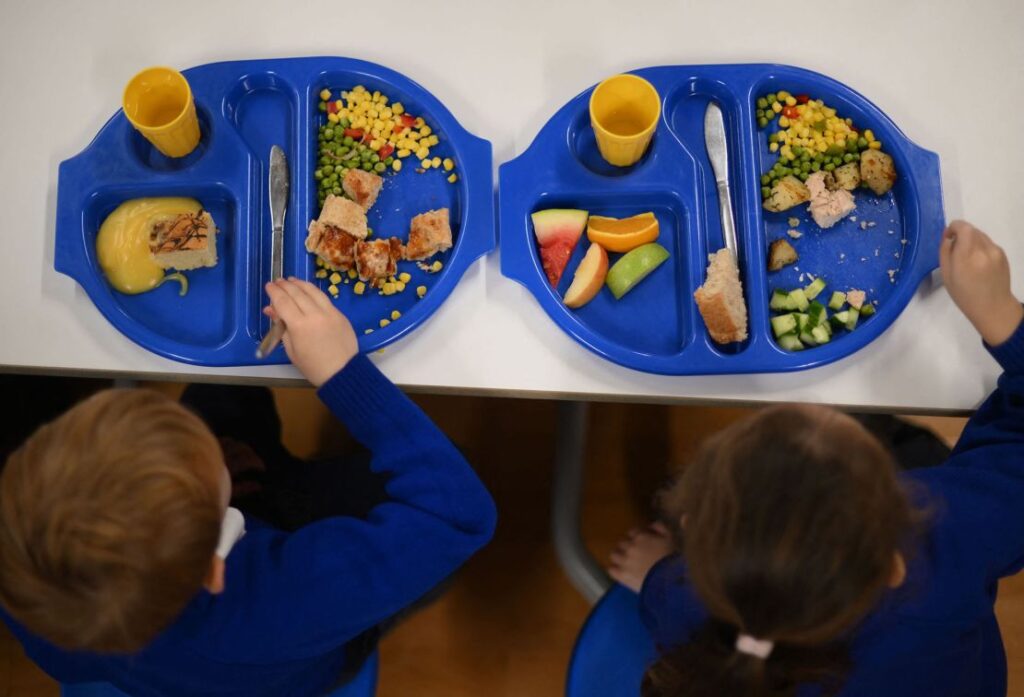
The World Food Programme (WFP) estimates that over 2.6 billion people globally cannot afford a healthy diet, and 153 million children and young people go to bed hungry every night.
The potential to feed nearly 8 million more children is a reminder that regenerative school meals are an extraordinary opportunity to help vulnerable people in a world beset by climate change, said Elizabeth Yee, Executive Vice President of The Rockefeller Foundation.
Today, school feeding programs are one of the world’s largest child-focused safety nets, according to the World Food Program’s State of School Feeding, they reach more than 466 million children globally, and roughly 10% of the world’s children access government provided meals. In addition, for every dollar invested in a school meal program, up to $35 is unlocked because of the additive returns across multiple sectors, including returns to education, health, human capital, social protection, and agriculture outcomes.
Research from the Lancet Commission shows that sustainable school meals could lead up to $70 billion in climate-related savings and $200 billion in diet-related healthcare savings.
Related topics:
Brazil’s fresh school meals protect children from fast food companies
School food way to learn healthy eating
More details: