Food & Climate
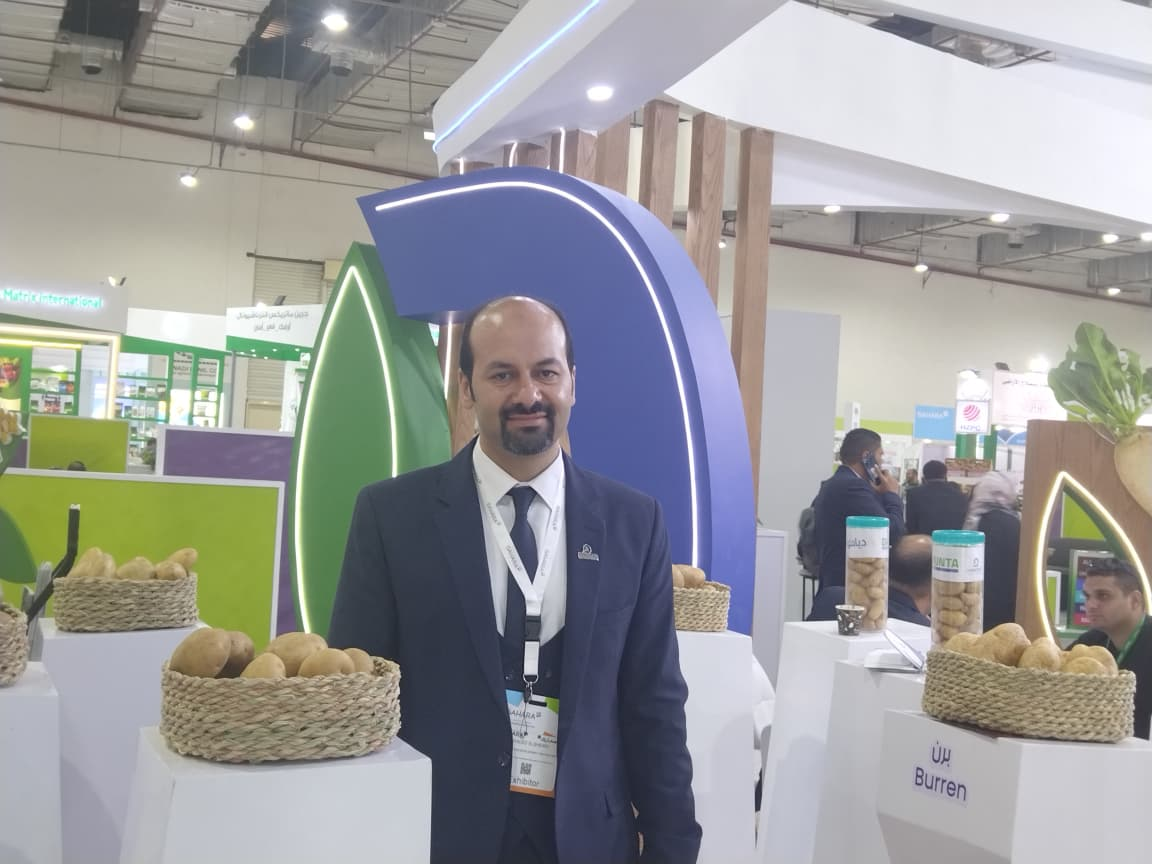
The research departments of seed production and trading companies are becoming increasingly important for selecting the best seeds in terms of productivity and pest resistance, especially in light of climate change. So far, they have been successful in this, meaning there is no need for so-called gene editing at present, according to Eng. Khaled Abdel Raouf, head of research at the Egyptian company Domiatec Agri-Group.
The company imports and trades potato and sugar beet seeds, as well as strawberry seedlings. It also owns another fertilizer trading company, and exports citrus fruits and barhi dates from its farm in Wadi El Natroun.
Food & Climate conducted a telephone interview with Abdel Raouf, whose work at Domiatec Agri-Group focuses on potato seeds, following a previous interview at the Sahara Exhibition, which was held in Cairo several months ago. The following is the transcript of the interview.
Does your company, Domiatec Agri-Group, produce potato seeds?
The company imports seeds and sells them in the local market. It also produces seeds for the market, but the potatoes are primarily imported from the Netherlands, France, Scotland, Denmark—almost all EU countries.
What import criteria lead you to choose a specific variety?
Before importing seeds, we conduct trials by cultivating them at our research station. We test them in sandy and clay soils, as well as in the desert, and we test them in both summer and winter growing seasons.
“We aim to ensure compliance with all criteria and gather all the necessary information about the variety, its performance, disease resistance, and expected yield before releasing it to the market.”
Any varieties we import for processing are also tested in our quality control laboratory to determine their specifications and performance in making chips or other potato products. These tests are conducted for three years, or six growing seasons.
The next step is to establish a demonstration plot for farmers and traders in Egypt.
What is the most important reason a company might choose to adopt or reject a potato variety?
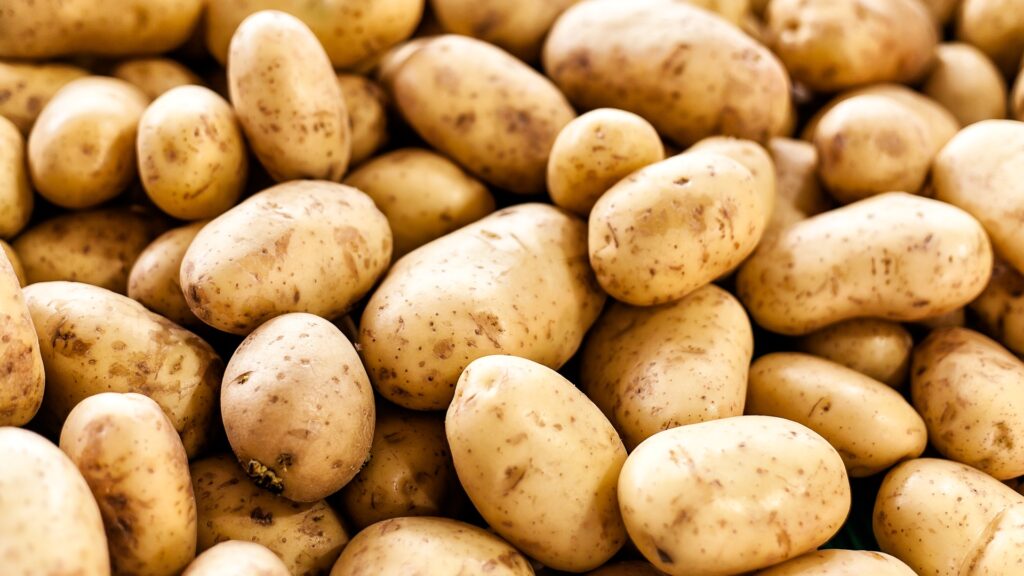
There’s usually a list of things that must be tested in potato varieties. The first is the yield, which should be at least 15 tons per acre, as anything less can cause losses for the farmer. “If it reaches 20 tons, that’s even better.” Additionally, the potatoes should be large and uniform in size (there shouldn’t be a significant difference in size).
Another important criterion is high disease resistance for all varieties, as well as the performance of potatoes intended for processing, such as the Lady Rosetta variety. This variety should have a high dry matter content and a low sugar content to prevent burning during frying.
Varieties intended for export should also have an attractive skin.
Climate change has increased the presence of pests. Have you noticed this, and has it affected your work to the point that you’ve discontinued certain varieties?
I can’t discontinue a variety that’s in demand in the local market, but I advise farmers in such cases to spray specific pesticides to combat these pests. As a company, I also try to conduct research with overseas suppliers to breed new varieties that are resistant to new pests.
We have a new variety called “Sound” that resists late blight, a fungus that affects plants due to humidity.
Recently, new strains of this fungus have emerged due to climate change, and they are more virulent than previous strains. We are working with partners to develop varieties that resist these new strains.
Have these strains increased due to the heat?
Many weather factors contribute, not just heat, such as humidity and winter conditions, especially morning fog, which promotes fungal spread.
What about biological control to reduce pesticide use?
I believe some Egyptian companies have started working in this area, and I think research is being conducted in agricultural colleges and institutes. We are sometimes presented with such products.
There are small companies working in biological control, but this activity is not widespread in Egypt, and the same applies to organic farming.
In Egypt, we propagate plants using tubers because we want to maintain the same plant characteristics. However, planting from seed means each plant is different, with varying yields and characteristics. What I mean by selecting the best varieties from the planted seeds is that there might be 10,000 seeds, and you’ll find they differ. Tests are conducted to select the best types. Breeding new varieties used to take about 15 years of experimentation to arrive at a new variety, but with technological advancements, which have enabled us to track the genetic map that tells us the characteristics of each variety, and selection is made based on that, this period has been reduced to 6-8 years.
In Egypt, at the popular level, there are only two types of potatoes that consumers know about: those for frying and those for cooking. Are these the only ones in Egypt?
There are other types in the world. Potatoes are an important crop with diverse uses, but in Egypt, there are really only these two types: fresh potatoes, which are for cooking, and those for processing (or frying).
Is gene editing available in Egypt?
No, and these seeds are only available in their American origin, and we don’t import from the United States.
But this activity is starting to spread globally?
From what I understand, it’s only practiced in the United States; it’s not widespread in Europe.
Is gene editing a scary proposition?
Research shows there are proponents and opponents, but personally, I believe that as long as we have a natural way to develop disease- and pest-resistant varieties, we don’t need gene editing.
Could climate change force us to adopt gene editing?
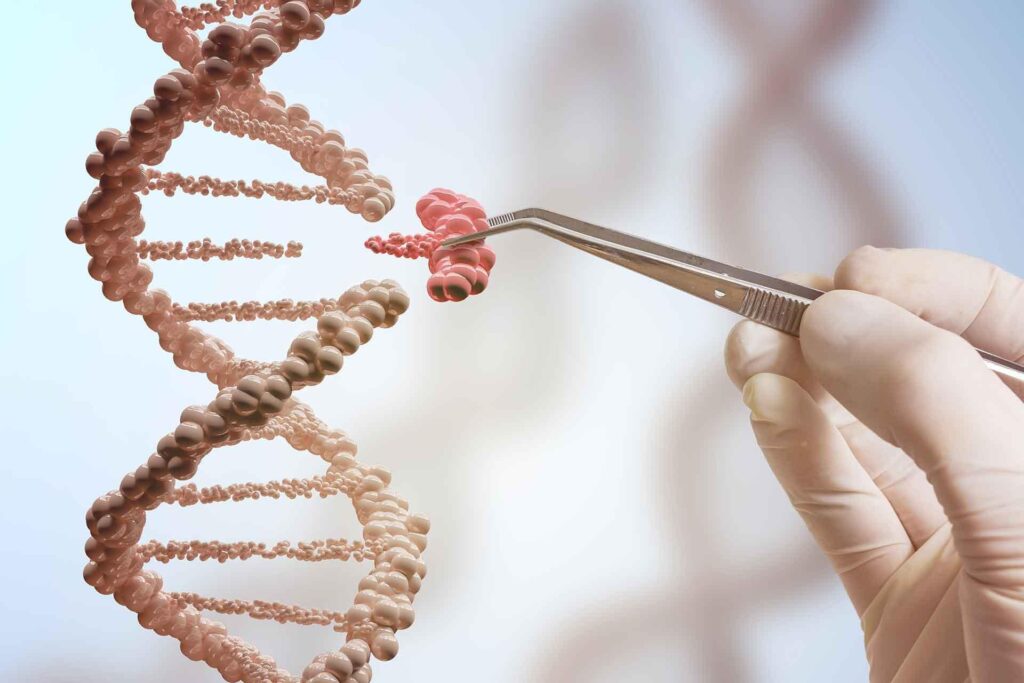
It’s possible because it helps reduce the time required to produce new varieties, but manipulating genes isn’t a desirable approach.
What if the number of hungry people increases due to climate change, as expected?
I think it will be possible to adopt this method, but it will be limited to certain countries; not all countries are capable of doing so.