
Food & Climate
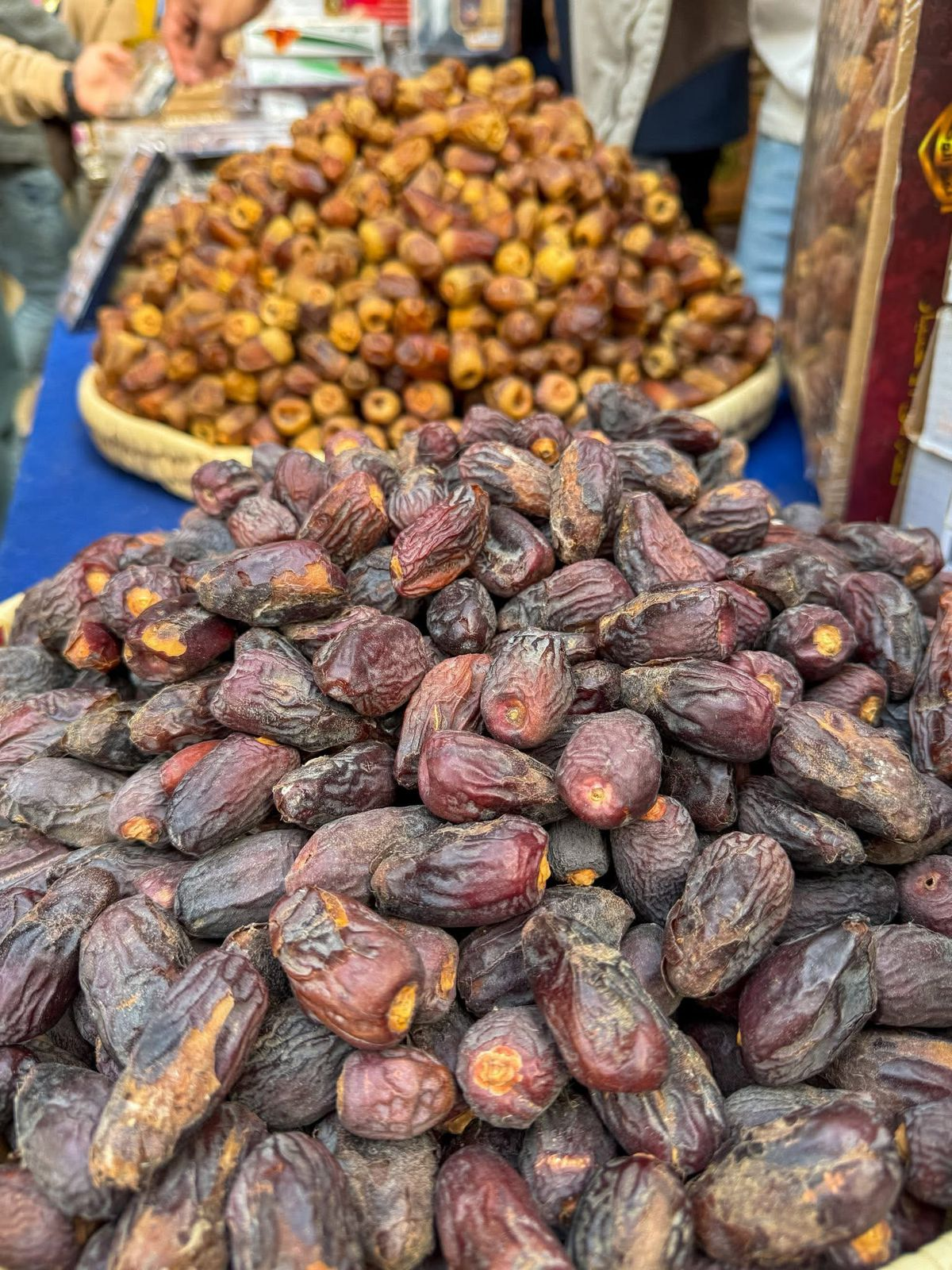
Egyptian dates are aiming to penetrate global markets by cultivating several Saudi varieties and manufacturing new date-based products. This vision was revealed by several company representatives to “Food & Climate,” and by the Minister of Agriculture and Land Reclamation, Alaa Farouk, at the opening of the sixth edition of the Cairo International Date Festival on Sunday, February 8, 2026.
The Cairo International Date Festival is usually held before Ramadan, a month that sees increased consumption of dates, as they are eaten by those fasting before breaking their fast after a long period of fasting from dawn until sunset.
The festival, held at the Agricultural Museum in the Dokki district, features more than 60 exhibitors from various governorates, in addition to some participants from Arab countries, representing producers of dates and various natural products.
Farouk stated that Egypt has succeeded in becoming the world’s leading date producer and is moving forward with its expansion plans by cultivating high-value varieties and enhancing its manufacturing and export capabilities.
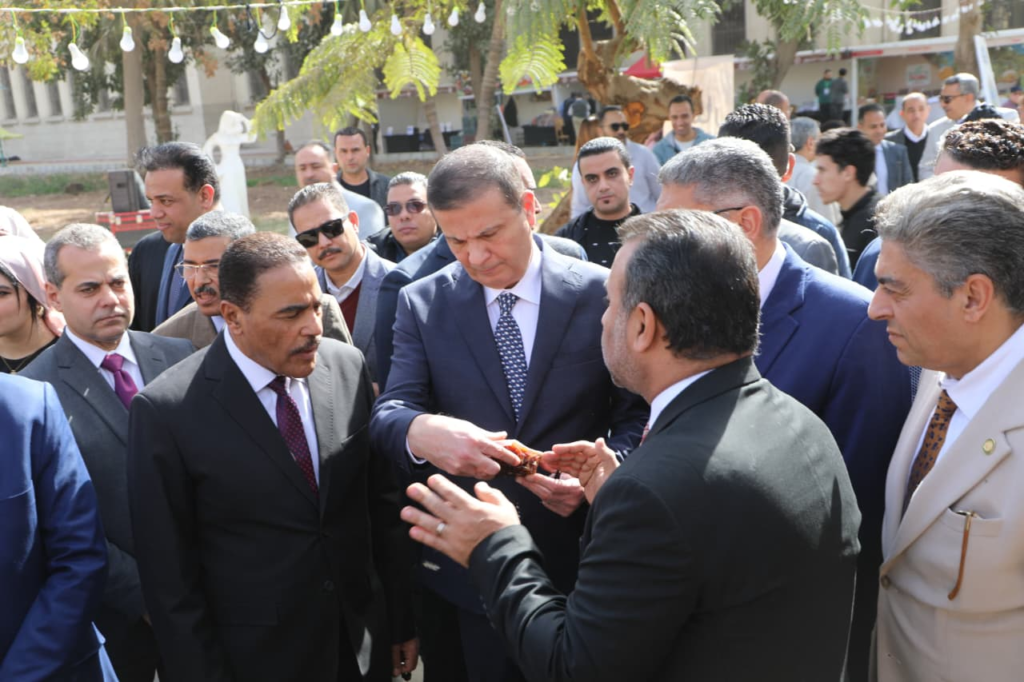
A tour of the Cairo International Date Festival
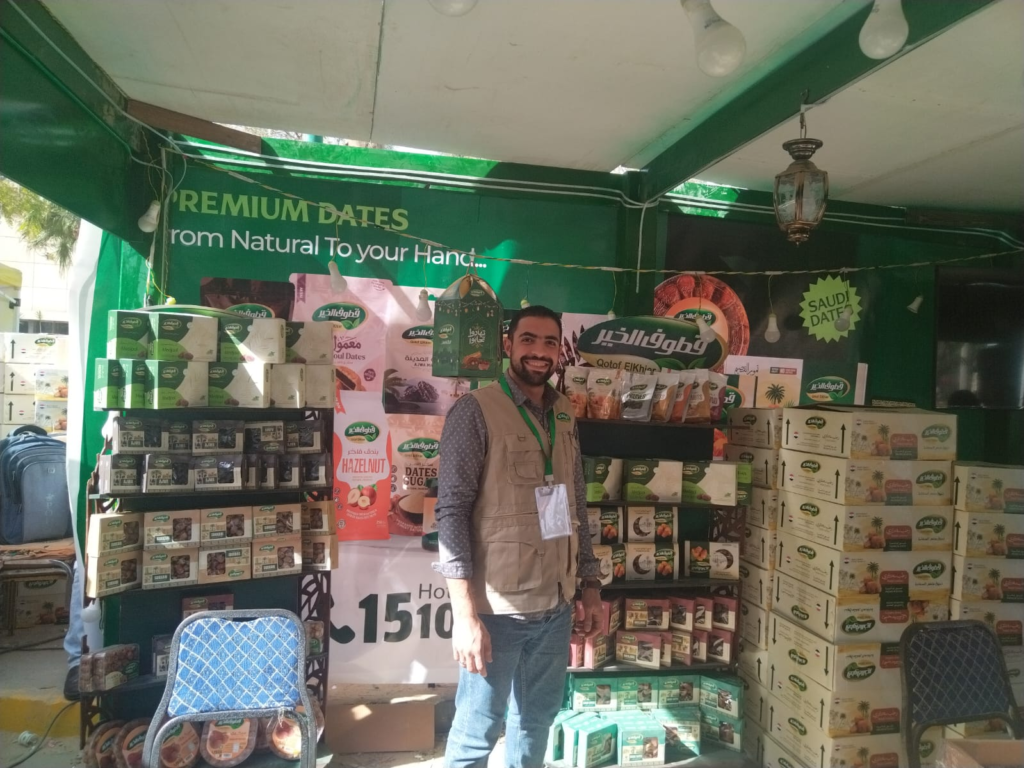
Food & Climate platform toured the Cairo International Date Festival and spoke with several company representatives, including Mohamed Reda, Customer Service Manager at Qutouf Al-Khair. Reda explained that his company deals with three varieties grown in Egypt, most notably Medjool, New Valley, and Aswan dates.
They also work with 13 Saudi varieties, such as Ajwa, Madinah, Rutab, Sagai, Khodari, Mabroum, Safawi, Roshidi, Nabtat Ali, and Saudi Medjool.
He added that the company is developing new date-based products, such as Maamoul and spreads, as well as date paste (used in pastries). He said, “We are working to cultivate some Saudi varieties, such as Sagai and Ajwa dates from Medina. Although they are not of the same quality due to the different climates in which the palm trees grow, Egypt is striving to cultivate these types to reduce its reliance on imports.”
His colleague, Manar, added that the company relies more heavily on imported Saudi dates due to the higher demand, even though their price is more than double that of the Egyptian product.
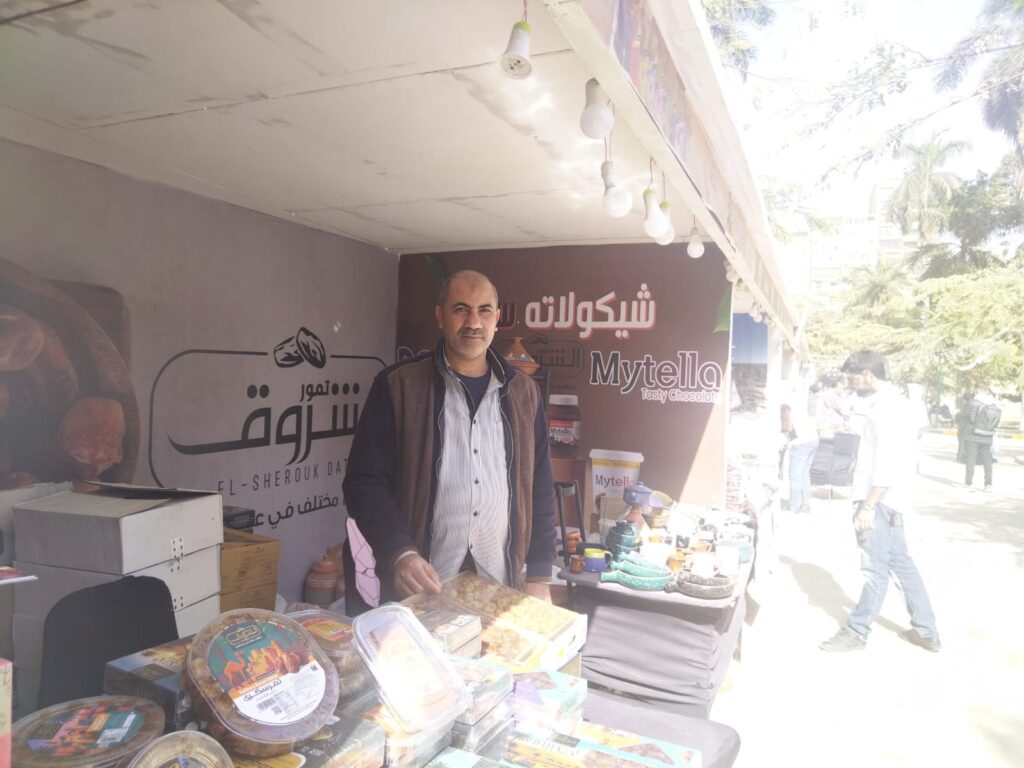
Yasser Elsayed, Purchasing Manager at Al-Shorouk Date Packing Company, said that his company deals in both Egyptian and Saudi dates, focusing on producing chocolate-covered dates (dark and white), as well as pistachio and lotus-covered dates, and a new coconut-covered variety.
The company has two date-packing factories in Fayoum Governorate, and these products are distinguished by being natural and free of added preservatives. Climate change has recently had a negative impact on crops, according to Elsayed.
He elaborated, saying, “The quality of dates in the oases or the New Valley is affected. Excessive heat causes dates to ripen prematurely, or humidity extends the ripening period, which ultimately impacts the processing, as it depends on high-quality dates.”
The company relies more heavily on Egyptian production due to higher demand and lower prices compared to Saudi products, which are subject to import costs and higher production quality.
There are also Saudi varieties not grown in Egypt, but in recent years, the cultivation of Saudi Medjool dates has begun, and they are being exported, Elsayed explained.
He noted that they are grown in the Bahariya, Farafra, and Minya, and that Egypt is currently working on the best types of dates and offshoots.
He added that Egyptian factories are currently developing, and there are sorting, washing, and drying lines belonging to the private sector, with the aim of penetrating export markets.
Date processing does not consume as much energy as other products, as most varieties do not require freezing, only refrigeration. Saudi dates, however, are among the products that require wet freezing, Elsayed added.
Egypt accounts for 19% of global date production.
During the opening of the Cairo International Date Festival, Minister of Agriculture and Land Reclamation Alaa Farouk stated that Egypt ranks first globally in date production, accounting for 19% of the world’s output. This translates to an annual production of two million tons, cultivated from over 24 million palm trees. He added that there are plans to expand the cultivation of high-value export varieties.
He explained that Egypt has more than 200 date processing and packaging facilities.
Farouk added that the United Arab Emirates contributed in previous years to the rehabilitation of the date processing plant in Siwa Oasis at a cost of approximately 14 million Egyptian pounds, the renovation of the date processing complex in Kharga, New Valley Governorate, at a cost of approximately 17 million Egyptian pounds, and the establishment of a date cooling complex in Bahariya Oasis with a capacity of 4,000 tons, which has contributed to increased production efficiency.
He continued that the expansion of specialized date processing complexes is currently underway in several areas, such as Sadat City, Borg El Arab, 10th of Ramadan City, and 6th of October City.
Farouk called on the ministry’s research centers, agricultural colleges, and the National Research Center to innovate further to develop disease-resistant varieties and adopt smart farming technologies to address the challenges facing the sector, whether in climate change or the spread of pests.