
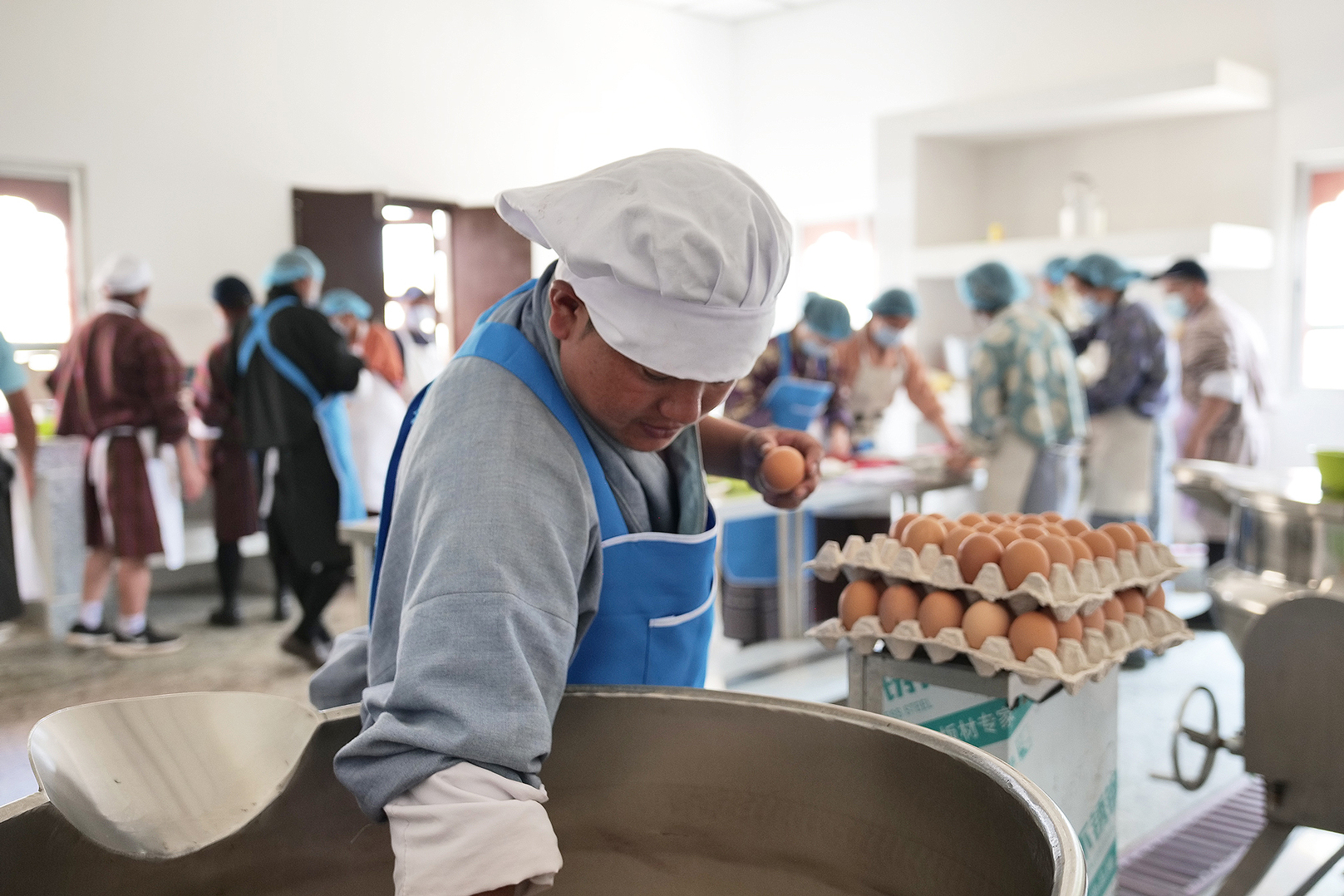
Bhutanese authorities have linked poultry farms to school feeding programs, resulting in improved nutrition for students. The initiative provides eggs for 32,000 students and ensures a stable market for small-scale rural producers.
Bhutan, a small, landlocked kingdom of just 38,120 square kilometers (14,720 square miles) nestled on the southern slopes of the eastern Himalayas, has a population of less than one million, according to UN data seen by Food & Climate.
The initiative, which connects poultry farms to school feeding programs, was launched with support from the Food and Agriculture Organization of the United Nations (FAO). It focuses on smallholdings, linking them directly to school feeding programs to combat child malnutrition while simultaneously creating a stable market for rural producers.
This two-year pilot program, known as the “One Egg for Every Child” initiative, is currently providing eggs to approximately 32,000 students in 343 schools across the country.
Linking poultry farms to school feeding in Bhutan creates more attentive students
In Bhutan, one in five children under the age of five suffers from stunting, about 9% of children are underweight, and more than a third of adolescent girls are anemic. Eggs are among the most nutrient-dense foods available, rich in protein, healthy fats, vitamins, and minerals essential for brain development, physical growth, and immune function in children.
Therefore, the initiative linking poultry farms to school feeding in Bhutan has had a positive impact on student health.
Read also: School meal under climate change and disrupted growing seasons’ pressure
Students reported improved health and increased energy levels at school, while teachers noted that students appeared more attentive in class since the program began, according to a FAO report. Most of Bhutan is mountainous, with forests covering 70% of its land. More than 60% of the population lives in rural areas, and many villages remain isolated. Poverty rates are high in villages with limited roads and access to markets.
Challenges affecting agricultural production include natural disasters, declining productivity, human-wildlife conflict, inadequate irrigation, a shortage of agricultural labor, and limited post-harvest management, according to IFAD.
Climate change is expected to severely impact agricultural productivity in the coming years due to changes in water availability, soil fertility, and the spread of pests and diseases.
Markets and food
The FAO is explaining how the initiative linking poultry farms to school feeding programs in Bhutan has impacted small-scale poultry farmers and student nutrition.
Tenzin, a poultry farmer who started in 2018, saw egg prices plummet when COVID-19 hit, leaving his coop with piles of unsold eggs. Then, in 2023, a feed-poisoning outbreak among his chickens resulted in the death of 2,700 hens and losses estimated at 3.6 million Ngultrum (US$43,000).
He received a government stimulus loan primarily to rebuild and expand. The egg market gradually recovered, and when the “One Egg a Child” initiative began, it introduced something more difficult to control: a reliable buyer.
“The egg market was already unpredictable,” he said. “This initiative gave us an opportunity. Now we know that schools need us.”
Read also: The butcher, minister who will bring meat back to German schools
For school cooks preparing meals for dozens of children at once, boiled eggs have always been the logical solution—simple, quick, and reliable. But children are wary when the menu is the same, and they’ve started refusing it. The program responded by training more than 280 cooks in 20 regions, providing them with new recipes and stricter food safety practices.
The difference is evident in the frying pan. Cooks who once worked almost exclusively with boiling water now sauté garlic and onions, and cook eggs and potatoes using honchi—Bhutan’s wild spinach—to prepare kungdu honchi, scrambled eggs sprinkled with chili.
Other cooks prepare an egg dish called egg baa, whole hard-boiled eggs slow-cooked in a richly spiced mixture of tomatoes, ginger, and garlic, served with golden fried potato wedges and finished with green peppers and coriander.
The government also increased In addition to the increased meal allowances, there has been a concerted effort to strengthen the connection between poultry farms and school feeding programs. This initiative aims to enhance the nutritional value of meals provided to students while simultaneously supporting local agricultural economies. By integrating poultry farms into the supply chain for school meals, the government seeks to ensure a consistent and sustainable source of protein for children, contributing to their overall health and development. This approach underscores the commitment to fostering both education and local food systems. from 3100 to 5001 Ngultrum per child (US$38), reflecting the program’s expanded reach.
US$1 = 92.79 Bhutanese Ngultrum.
More details: