
Food & Climate
War with Iran has halted Thai rice exports to the Middle East, exacerbating the plight of farmers in the Asian nation.
This situation could have repercussions for the national economy, further burdening farmers already struggling with low domestic prices.
Thai rice exports to the Middle East have ceased as the war intensifies, disrupting shipments to the country’s largest market for the crop. This adds to the pressure on farmers facing rising costs and declining international demand.
In an interview seen by Food & Climate, Chookiat Ophaswongse, honorary president of the Thai Rice Exporters Association, said that two ships carrying approximately 80,000 tons of rice destined for Iraq were stranded in Bangkok port last week, with buyers instructing the unloading of the containers and the return of the grain to warehouses.
“Things are completely at a standstill,” Ophaswongse added, indicating that the halt in shipments to the Middle East could last for months. “There are no new purchases either because nobody knows what will happen.”
Thai rice faces fierce competition
Iranian war threatens to halt Thai rice exports, exacerbating the plight of farmers already struggling with low domestic prices and a strong currency (baht) that weakens their competitiveness in foreign markets.
The pressure on rice farmers could extend to the entire Thai economy, given that agriculture accounts for nearly a quarter of Thailand’s workforce, according to the South China Morning Post.
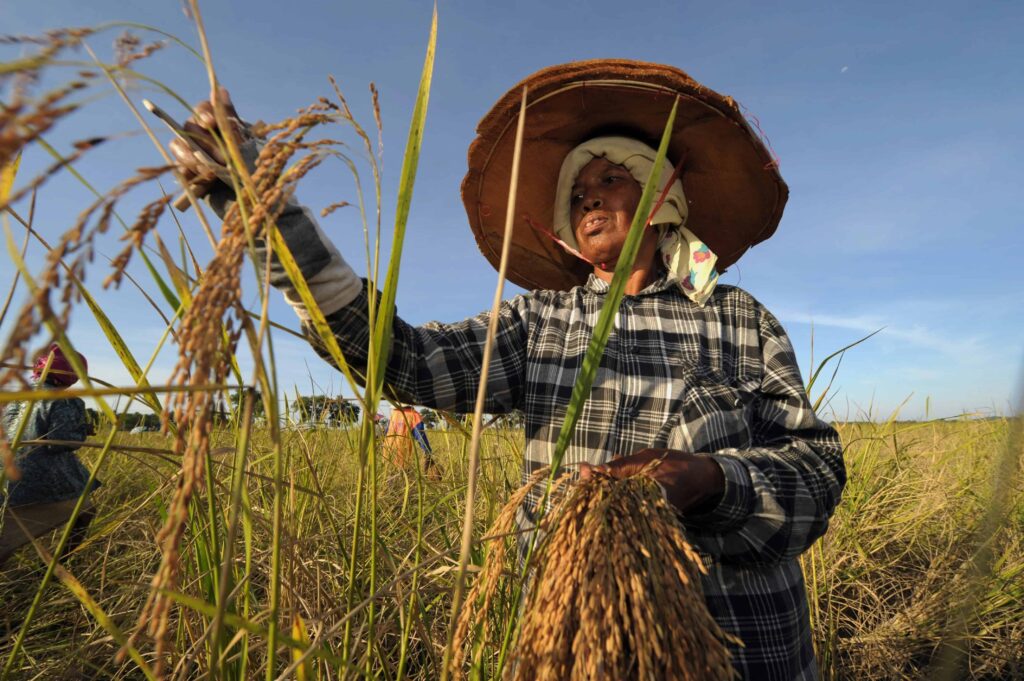
Thai rice exports were projected to decline by 11% this year (2026), reaching 7 million tons, their lowest level in five years.
The outlook has worsened because Iraq – the largest importer of Thai rice – requires its shipments to pass through the Strait of Hormuz, where a Thai cargo ship was targeted by Iranian missiles last week.
Iranian drones have also set fire to oil tankers as part of a broader campaign targeting shipping in the Middle East.
Thai rice shipping companies are facing hefty surcharges due to the risks of war, as well as increased shipping costs resulting from higher fuel prices, said Chookiat Ophaswongse, honorary president of the Thai Rice Exporters Association
These additional costs will squeeze exporters’ profit margins at a time when the global price of Thai rice is rising due to the strength of the baht against the US dollar (US$1 = 32.33 baht), while expectations of ample global supplies are leading to lower demand.
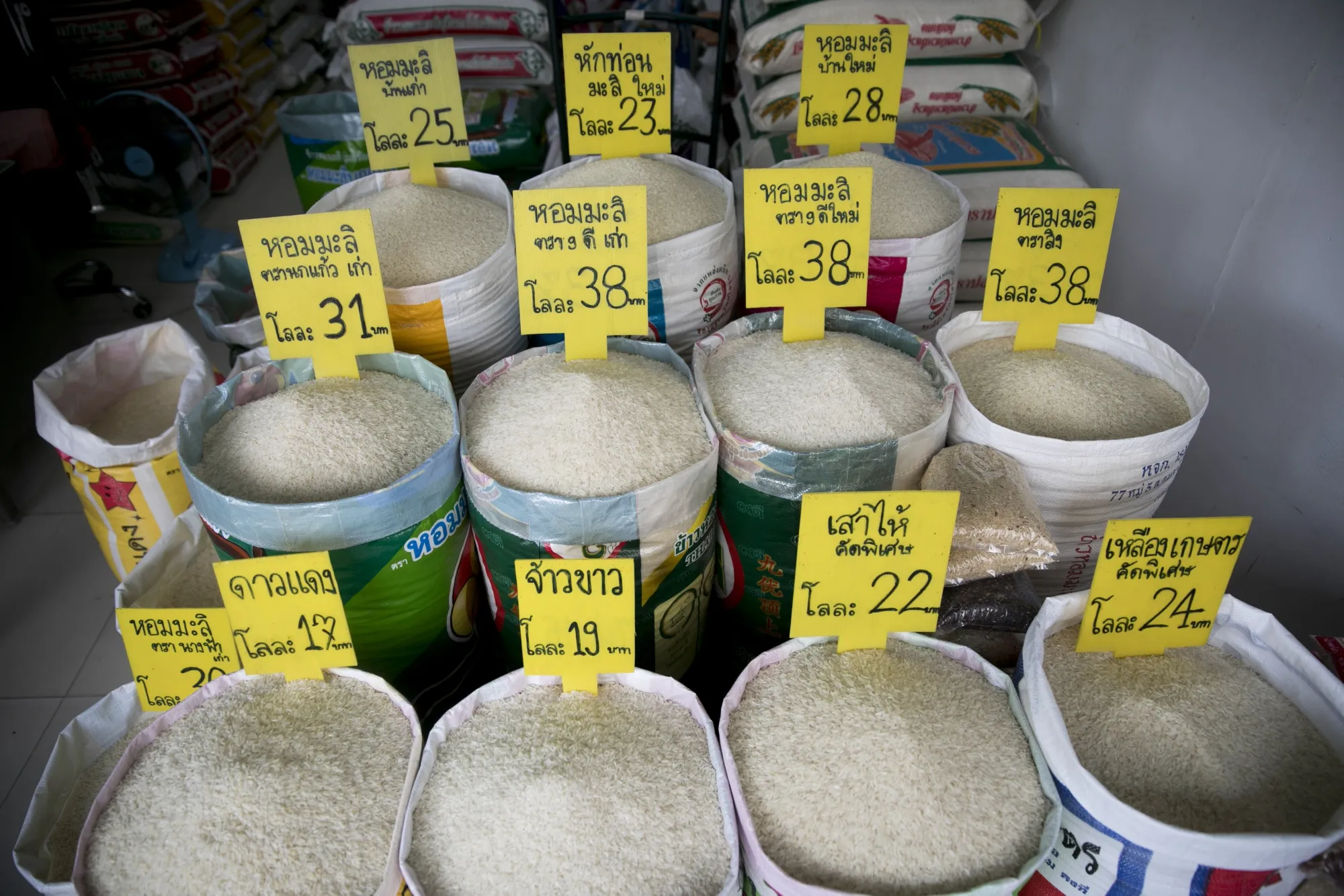
The price of a ton of Thai white rice was 5% higher than competing varieties on Friday, March 13, 2026, reaching $392, compared to $356-$360 for similar varieties from Vietnam and $350-$354 from India, according to data from the Exporters Association.
“Some might think that demand for rice increases during wartime, and that’s theoretically true, but practically speaking, it can’t be supplied,” said Ophaswongse.
Farmers’ struggles in the local market
Thai farmers are finding little relief in the local market, where prices are low due to a bumper rice harvest and a surge in global supplies.
The price of a standard ton of unhusked rice, with 15% moisture content, was around 6,800 baht (US$210) in the northeast, the country’s main rice-growing region, in January, nearly half the price of 11,000 baht a year earlier, according to data from the Ministry of Agriculture.
Farmers’ concerns have led some to line up at petrol stations with trucks loaded with empty containers to ensure they can run agricultural machinery, such as combine harvesters, as the harvest season begins. However, they were turned away in an attempt to curb price gouging.
Kriengsak Tapananon, an adviser to the Thai Agriculturist Association, said that many farmers, burdened by high household debt and low productivity, may be forced to reduce their planted area, postpone loan repayments, or borrow even more to stay in the market.
Rice farmers are also struggling to secure vital supplies of fuel and fertilizer, most of which are imported from the Middle East, ahead of the planting season, which begins in a few weeks.
“If fuel and fertilizer prices rise, the situation for farmers will worsen”, Tapananon added.
Fertilizer traders in the country reported that current stocks are sufficient for two to three months at current prices, but the uncertainty surrounding the war has increased concerns about future supplies and costs.
“When sales decline or production costs rise, it is the farmers who bear the brunt,” Tapananon added.
US$1 = 32.33 Thai baht
More details:
Related topics:
Indonesian palm oil, how Iran war reshaping Industry and Agriculture
War in Iran forces meat shipments to reroute from Arabian Gulf to China