
Food & Climate
Pistachio in Iran faces serious and multifaceted threats, most notably water scarcity and climate change, in addition to contamination by aflatoxins. This has prompted assistance from the Food and Agriculture Organization (FAO).
Aflatoxins are toxic substances produced by certain fungi and can form when pistachios are exposed to high humidity, pest damage, or improper handling.
Once detected, they can lead to the rejection of entire crops in export markets, undermining farmers’ incomes and threatening the competitiveness of one of the country’s most important crops.
Until recently, pistachios produced in Tehran were the leading exporters to global markets, until they were surpassed by the United States.
FAO experts visited specialized laboratories to assess the sampling procedures and analytical methods used to detect aflatoxin contamination of pistachios in Iran. Technicians, researchers, and technical institutions were briefed on the results of these assessments and internationally recognized standards, which strengthened quality control throughout the pistachio value chain, according to a report received by the Food & Climate.
Impact of FAO’ support to pistachio in Iran
After implementing new techniques learned by pistachio farmers in Iran, including farmer Maryam, through training courses, orchards became more predictable, tree health stabilized, and yields gradually improved.
Maryam said, “Many problems became easier to solve once we understood their causes.” She added, “Pistachios are more than just a crop; “It is our heritage, our family income, and our future.”
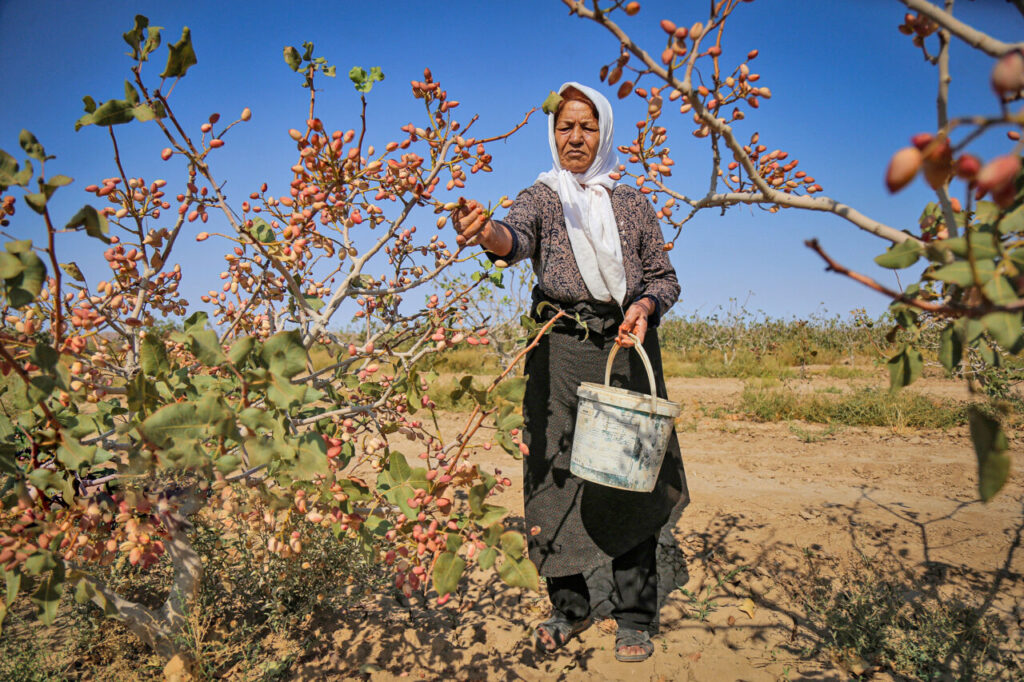
At the national level, the organization’s pistachio program has strengthened the technical capacities of over 700 farmers, processors, traders, extension officers, and laboratory experts in Iran’s main pistachio-producing provinces.
This has supported improved productivity, aflatoxin control, and enhanced resilience in a sector that covers more than 445,000 hectares and accounts for over 21% of the country’s orchards.
“In recent years, we have faced many challenges,” said Maryam, a pistachio farmer in Iran.
Reduced water use efficiency
Reduced water use efficiency has led to decreased productivity, and harsh weather conditions have also affected the trees.
Pistachios in Iran face not only water scarcity and climate change challenges, but for the past 40 years, farmers have also been under pressure from US sanctions, tariffs, and restrictions on their access to international financial institutions.
Although pistachio farmers themselves were not on the list of sanctioned products, restrictions on global banking services made trade difficult for Iranian farmers.
The situation improved in 2016 following the Iran nuclear deal, which lifted sanctions with the US and its allies. However, US President Donald Trump withdrew from the agreement in 2018.
After returning for a second term at the beginning of last year (2025), he continues to pressure Iran and threatens to wage war against it again.
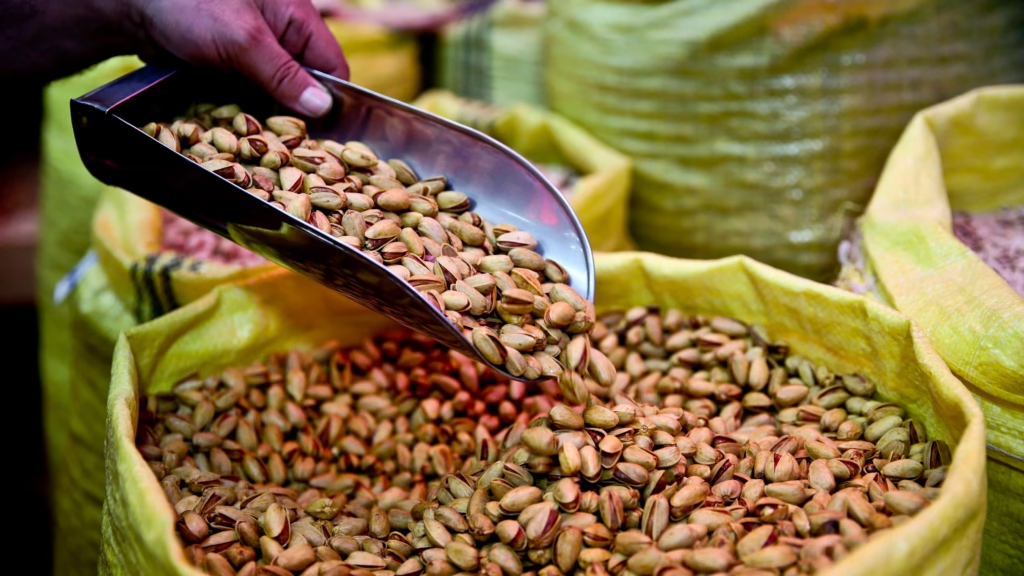
Pistachio production in Iran dates back thousands of years. In contrast, pistachio cultivation in the US began in the 1930s with Persian seeds. Just as Iranian pistachios have been affected by drought and water shortages, American pistachios have faced similar conditions. In 2014, and since 2002, pistachio prices have seen consecutive increases, which industry experts attribute to the demand for healthy snacks and rising Chinese demand.
Exports Soar
Iranian pistachio exports jumped 143% in the fiscal year ending March 2024-2025, generating $1.7 billion in revenue, according to BRICS TV.
With approximately 650,000 hectares dedicated to pistachio cultivation—the largest area planted with this crop in the world—Iran’s total pistachio production exceeded 300,000 metric tons, confirming its status as the country’s leading horticultural export, according to the Iranian Ministry of Agriculture.
Iranian authorities also noted an 83% increase in pistachio cultivation over the past 11 years, with Kerman province remaining the main production center.
The sector now supports 350,000 direct jobs and generates approximately $1.5 billion in foreign currency annually.