
Food & Climate
A key reason that communities are now fighting to reinvigorate taro in Vanuatu is because it’s more resilient to climate shocks.
In recent years, severe storms have led to the tiny nation’s islands being cut off from food shipments, but those with healthy taro crops were able to feed themselves and others.
Taro in Vanuatu is a traditional food, and its culture over millennia has resulted in several hundred indigenous varieties. But cassava is more commonly grown nowadays, even as communities rely increasingly heavily upon imported food.
“To the extent that ancient farming techniques continue to provide resilience in the face of a changing climate, it may also be a taste of the future,” an author who visited Vanuatu last year argues, according to a report seen by Food & Climate.
The environments of Pacific island countries such as Vanuatu, already inherently unstable due to heavy volcanic activity and frequent earthquakes with associated tsunamis, are increasingly facing extreme weather events such as cyclones, flooding and soil erosion whipped up by climate change.
It was not so lucky in 2015 when Tropical Cyclone Pam hammered 96% of Vanuatu’s crops and livestock populations, contaminated water sources and disrupted subsistence fisheries.
In the aftermath of Pam, more than half the country’s population needed immediate food aid. Cyclone Harold in 2020, and Judy and Kevin in 2023, were similarly devastating.
Number of gardens of taro in Vanuatu
The climate-related changes to agriculture in Vanuatu (higher temperatures, increased wind and rainfall, more landslides) are expected to affect the food security of 80% of ni-Vanuatu in the coming years, Vincent Lebot, a root and tuber crop breeder and researcher with the French Agricultural Research Centre for International Development in Vanuatu’s capital city Port Vila, and one of the world’s leading experts on taro in the South Pacific, said, according to “Mongabay“.
Threats also come from changing lifestyles. Since the beginning of the 20th century and the rise of a global economy, ni-Vanuatu have increasingly relied on imported foods such as white rice, wheat flour and tinned products, which, while more suited to long-term storage than local crops, are less nutritious and require cash in pocket.
More than half the country’s dietary energy is now purchased, and two-thirds of total crop production has been diverted to cash crops such as kava, cocoa, coffee and vanilla. In Vanuatu’s statement to the ICJ, Lebot affirmed that subsistence agriculture was in decline: In 1980, when Vanuatu won independence from French and English colonial rule, households on average were planting five to eight taro gardens, but 40 years later, that number had fallen to one to two gardens.
Decreasing subsistence farms
Vanuatu is no different from the rest of the world, which has seen a decline in the number of subsistence farms as agriculture has grown increasingly large-scale and positioned toward export. But Vanuatu is distinct in many ways. It is a country of 83 islands nearly 2,000 kilometers (more than 1,200 miles) from the east coast of Australia and, here on the western coast of Santo, there is no power grid to support refrigeration, no roads and no wharves, not even a formalized mail service.
Access to outside markets happens infrequently and by large vessels; people and freight pass between ship and shore on small boats.
All that to say that when a storm or a landslide wipes out a village’s gardens, it could be days or even weeks before outside food becomes available, and villages sometimes go months before they are able to start growing their own food again. Thus, it’s critical for ni-Vanuatu to have local sources of nutritious, reliable food.

Though taro in Vanuatu remains a staple food for many, a side effect of increasing reliance on imported food, Lebot said, is that many of the several hundred taro varieties in Vanuatu are now disappearing. This is partly because taro is not grown from seed but rather propagated vegetatively by replanting stems and waiting for them to root, much as one might take a cutting from a houseplant.
In other words, you need living taro plants to make more taro plants. When people eat and plant less taro, varieties maintained for specific taste and cooking profiles begin to disappear. This leads to genetic erosion of the species, making what remains more susceptible to pests such as beetles and leaf blight, as well as to environmental change.
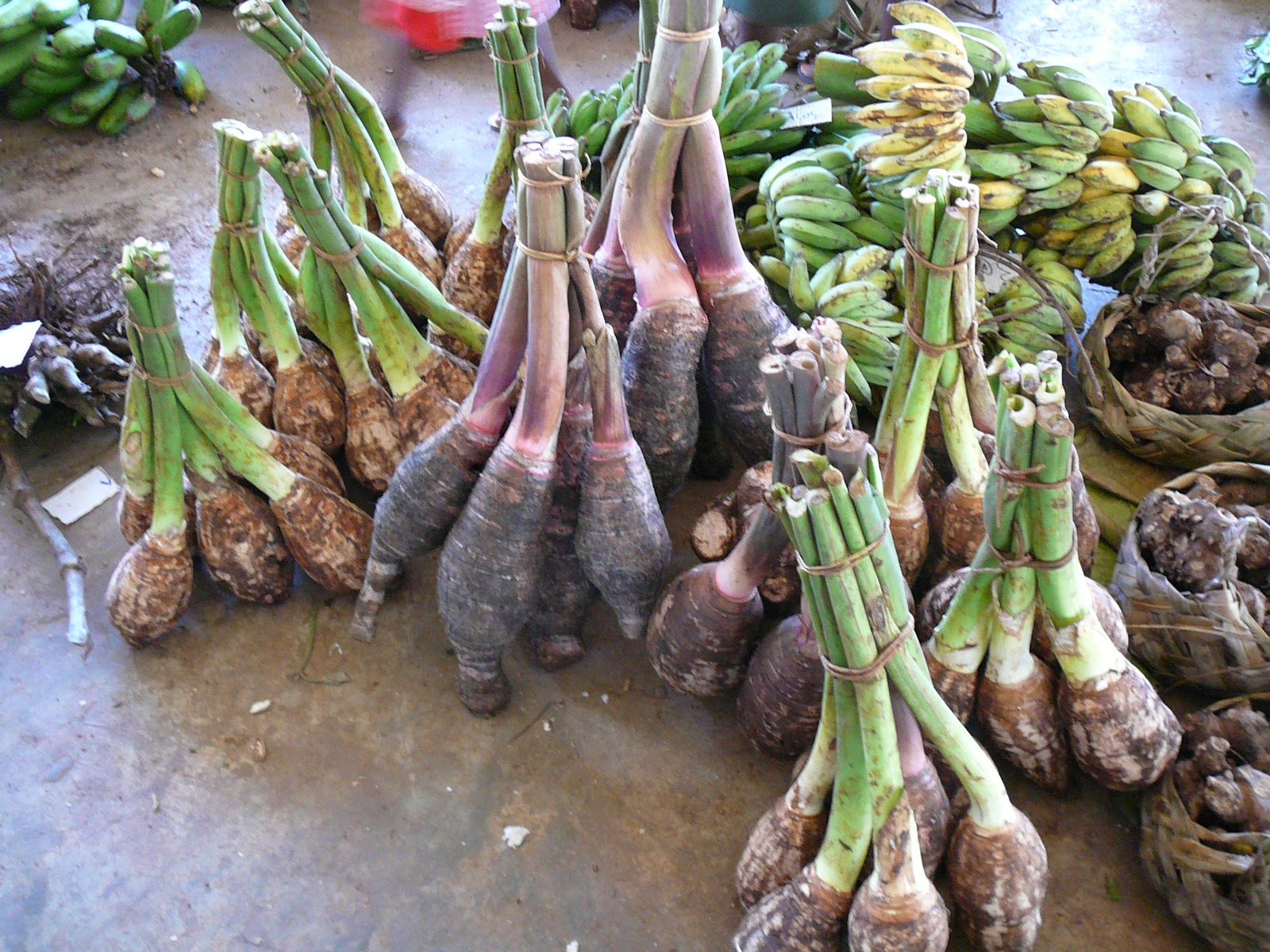
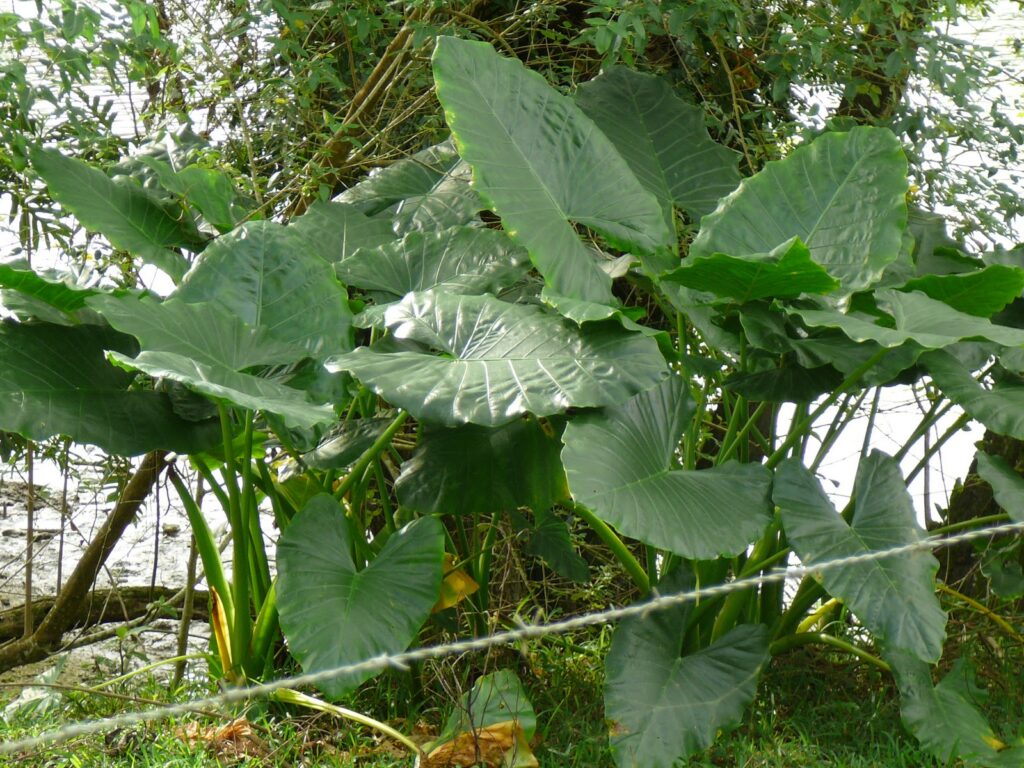
Taro resembles a root (think sweet potato) or tuber (think yam), but in fact it’s a corm — the swollen base of a stem the plant uses for energy and nutrient storage — like a water chestnut. It can be roasted over embers or peeled and boiled. It can also be grated and molded into a large pudding-like cake, topped with coconut milk and baked into laplap (something like a tamale; laplap is Vanuatu’s national dish.)
Taro is high in antioxidants and proteins and low in fat; the leaves are also edible and rich in vitamins and minerals. In that way, taro is superior to cassava, which was introduced from South America in 1850 because it can be ready for harvest in as little as six months, compared to taro’s nine months. But cassava also grows taller than taro, and is therefore more susceptible to cyclone winds.