
Food & Climate
Many European supermarkets (retailers) are experiencing an increase in total emissions, revealing that the current sustainability efforts of the food retail sector are still too often reaching their limits.
The Superlist Environment Europe 2026 report assessed the climate performance of 27 supermarkets across eight countries, including France, Germany, the Netherlands, Poland, Spain, Sweden, Switzerland, and the UK.
The report, which seen by Food & Climate, found that only five of the 27 supermarkets surveyed, including Kaufland and Rewe, have managed to reduce their emissions.
Aldi Nord is the only German retailer still operating without a net-zero target.
Across the contenant, one in three European supermarkets is still lacking measures to align its protein sales with the needs of people and the planet. This means promoting plant-based proteins more widely.
The production of animal meat, especially from cattle, causes enormous emissions of methane, which is more harmful than carbon dioxide. Therefore, many see a need to shift towards plant-based proteins.
European supermarkets’ emissions come from animal products
The analysis compared 27 European supermarkets in eight national markets and examined their performance in two key areas: alignment with the goals of the Paris Climate Agreement and efforts to sell a higher proportion of plant-based foods. A well-balanced protein variety is crucial for sustainability, as the production of animal proteins is a major driver of greenhouse gas emissions.
The Paris Climate Agreement, signed in 2015, primarily aims to limit the increase in global temperature to 1.5 degrees Celsius above pre-industrial levels of the 17th century.
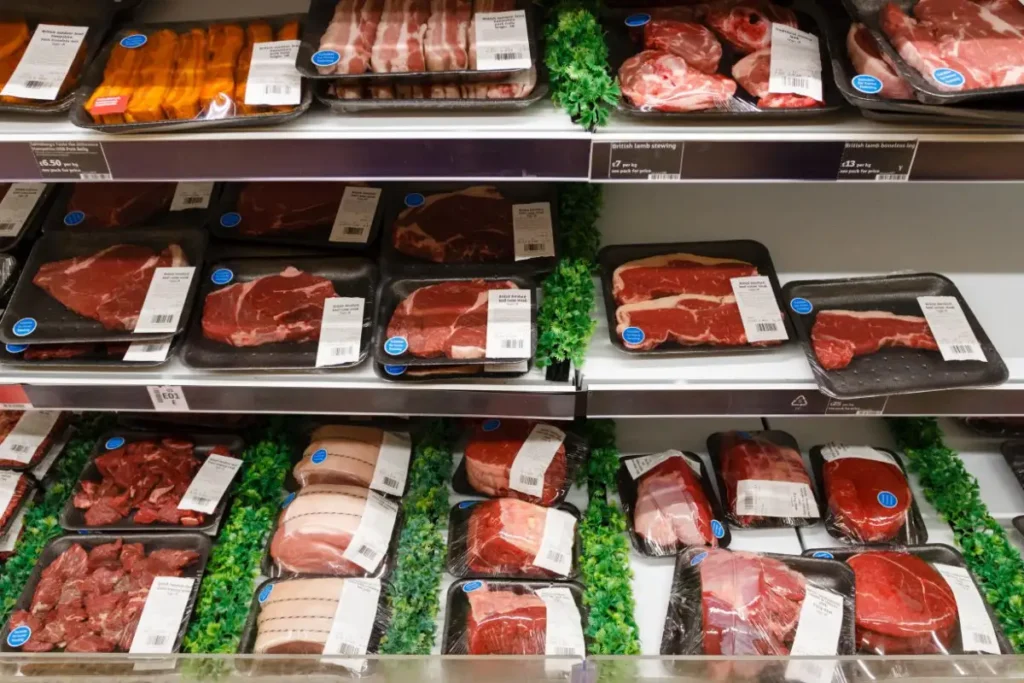
According to a report by McKinsey and EuroCommerce, approximately half of the supply chain gases (emissions) (Scope 3) of European supermarkets are attributable to animal products.
With the exception of Aldi Nord, all the German retailers examined have set short-term targets for emissions from their supply chain.
However, only Lidl has published a detailed roadmap that, in addition to short- and long-term targets for 2035 and 2050, also outlines the expected emission reductions for each food category.
Only seven European supermarkets have developed such a plan so far. Thanks to its ambitious goals, Lidl achieved a high ranking not only in Germany, but in all four markets where it was assessed.
Dutch and German supermarkets
Together with the Dutch supermarkets Albert Heijn and Jumbo, these German pioneers are setting the pace for sustainability efforts in Europe, primarily through their ambition to reverse the current ratio between plant-based and animal-based sales volumes.
Lidl has made the strongest commitment to protein diversity, with Rewe and Aldi Süd taking initial steps to follow suit.
Aldi Süd has also advocated for the development of an industry-wide protein target.
Since the national comparison in 2025, full-range supermarket chain Rewe has already made significant progress and overtaken competitor Aldi Süd in the ranking.
This was achieved thanks to combined efforts in climate protection and protein diversity. Edeka, Kaufland, and Aldi Nord still lag behind in sustainability performance.
The Netherlands leads the way in both individual national store comparisons and in the aggregated comparison of retail chains. The neighboring country is thus demonstrating the effectiveness of industry-wide targets for a high proportion of plant-based protein, which promotes sustainability and health.
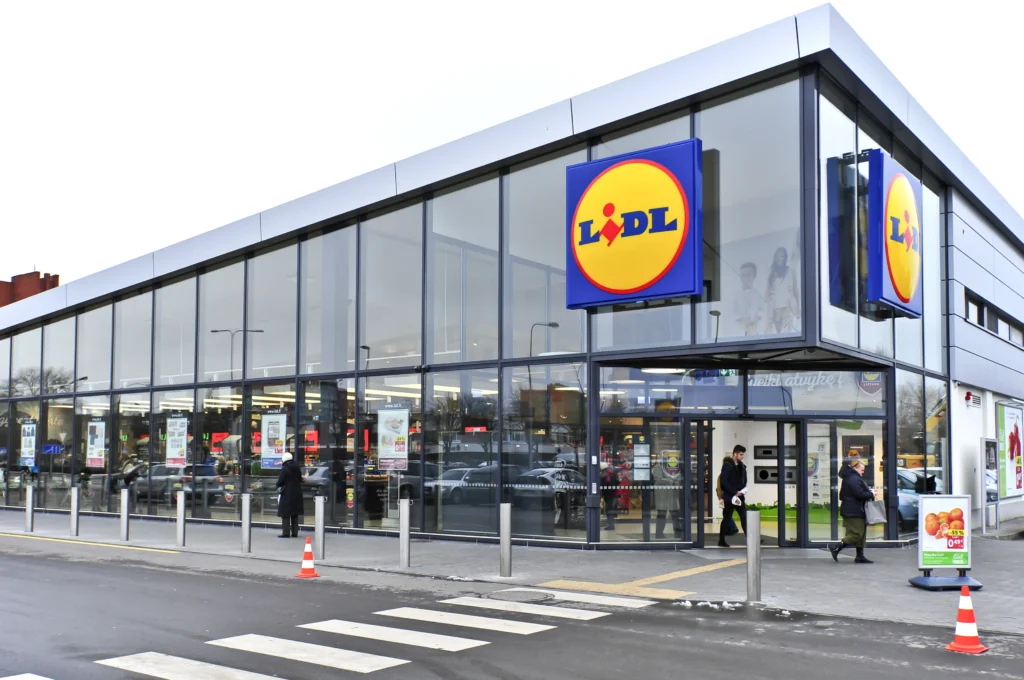
In Germany, Lidl and Rewe are effectively supporting their suppliers: Discount retailer Lidl pays a premium to milk suppliers who implement sustainable practices. Full-range supermarket Rewe supports its own-brand suppliers with a climate protection fund program. To receive funding, suppliers must submit quantified and sustainable emissions reduction targets.